
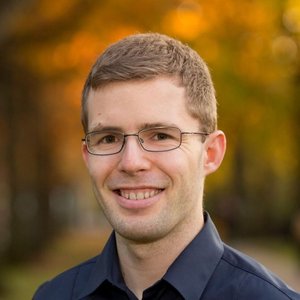
Johannes Ulf Lange Assistant Professor CAS | Physics
- Degrees
- PhD, Astronomy, Yale University
MSc, Physics, Heidelberg University
BSc, Physics, Free University of Berlin - Bio
-
I am an astrophysicist studying cosmology and galaxies using large data sets and machine learning. My work addresses some of the most fundamental questions about our Universe: What are the properties of dark energy and dark matter? Does Einstein's theory of gravity hold on cosmological scales? How does dark matter influence the formation of galaxies?
To answer these questions, I work with data from cutting-edge observatories such as the Dark Energy Spectroscopic Instrument (DESI) and the Roman Space Telescope. Additionally, I also study some of the largest computer simulations of the Universe, including Illustris and FLAMINGO. I use advanced data science and machine learning methods to analyze these extremely large data sets.
Student Research
I am passionate about mentoring students and working directly with them on cutting-edge cosmology research. By studying state-of-the-art data, they gain valuable data analysis and machine learning skills. Undergraduate students in my group have presented at international conferences and workshops. They have also published lead-author papers in scientific journals and received competitive awards and scholarships.
Past undergraduate student projects include determining the effect of supermassive black holes on galaxies, inferring dark matter properties in simulated Universes, measuring gravitational lensing in large galaxy surveys, and studying the relationship between galaxies and dark matter using explainable AI methods. If you’re a student at American University and interested in research, please reach out to me.
Current Research & Collaborations
I am a long-term member of the DESI collaboration which builds the largest three-dimensional map of the Universe. We recently found evidence that dark energy, the mysterious force that drives the accelerated expansion of the Universe, weakens with time. I also study gravitational lensing, the bending of light by gravity as predicted by Einstein. I am investigating whether our current cosmological standard model correctly predicts the measured strength of gravitational lensing. Finally, I am interested in machine learning. I developed nautilus, a software tool that makes statistical analyses easier and faster. It has already been used in more than 100 scientific studies.
History
Before coming to AU in 2024, I completed my bachelor’s degree at the Free University of Berlin. Afterward, I obtained a master’s degree from the University of Heidelberg. I also participated in a half-year exchange program at the University of California, Santa Barbara and a one-year exchange program at the Chinese University of Hong Kong. I completed my Ph.D. at Yale University. Afterward, I was a Cosmology Fellow appointed jointly by the University of California, Santa Cruz and Stanford University before being a Leinweber Fellow at the Leinweber Institute for Theoretical Physics at the University of Michigan.
- See Also
- Personal Website
- Publications
- GitHub Profile
- DESI Collaboration
- Student Projects
- For the Media
- To request an interview for a news story, call AU Communications at 202-885-5950 or submit a request. Explore all AU Faculty Experts in our media guide.
Teaching
Fall 2025
-
PHYS-396 Selected Topics:Non-Recurring: Data Mining/Mach Learn/Nat Sci
Spring 2026
-
PHYS-230 Chngng Views of Universe
-
PHYS-230 Chngng Views of Universe