
Earth Day, Every Day: AU Research Driving Environmental Change
At American University, Earth Day isn’t a once-a-year celebration. It’s part of everyday life. From experiential learning and lab-based research to a carbon-neutral campus shaded by more than 5,000 trees, sustainability shapes how the AU community learns, researches, and lives.
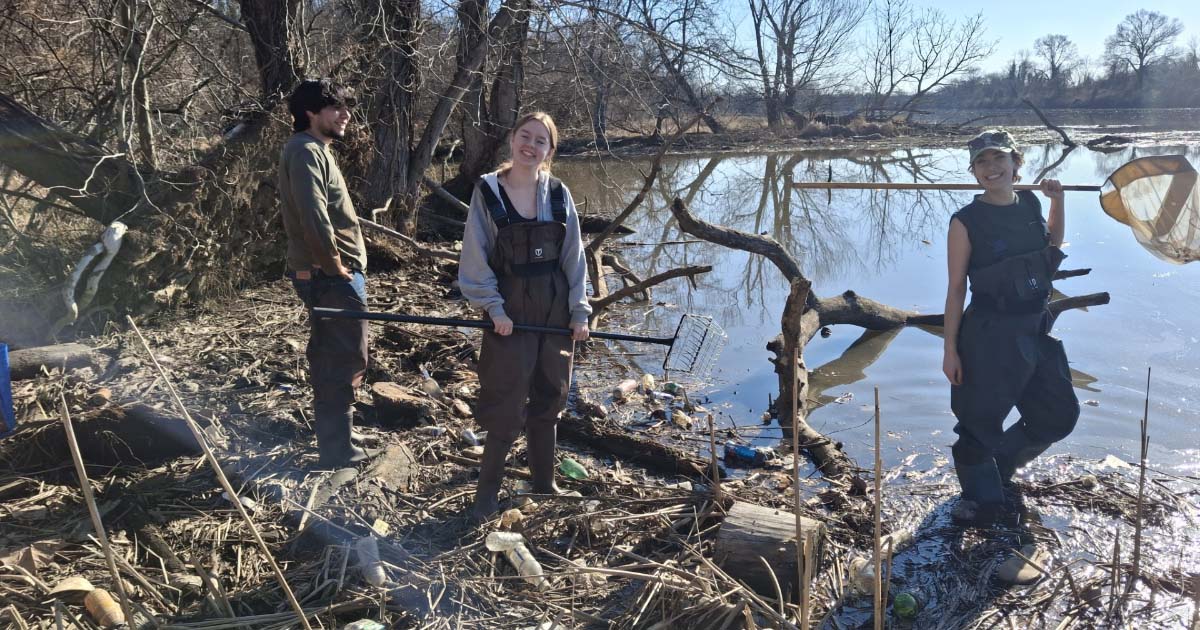
Nowhere is that more evident than in the Department of Environmental Science, where faculty and students are tackling urgent questions about climate, ecosystems, and resilience. Across rivers, coastal lagoons, laboratories, and classrooms, researchers are examining how change is unfolding across ecosystems and what it means locally and globally.
This Earth Day, we’re spotlighting just a few of the ways these scientists are pushing the field forward and helping build a more sustainable future.
Tracing Hidden Chemicals in Time
BPA (bisphenol A) was phased out of most consumer plastics years ago after being linked to serious health risks, but new research led by Professor Steve MacAvoy and his students suggests that the chemical may still be present in unexpected places.
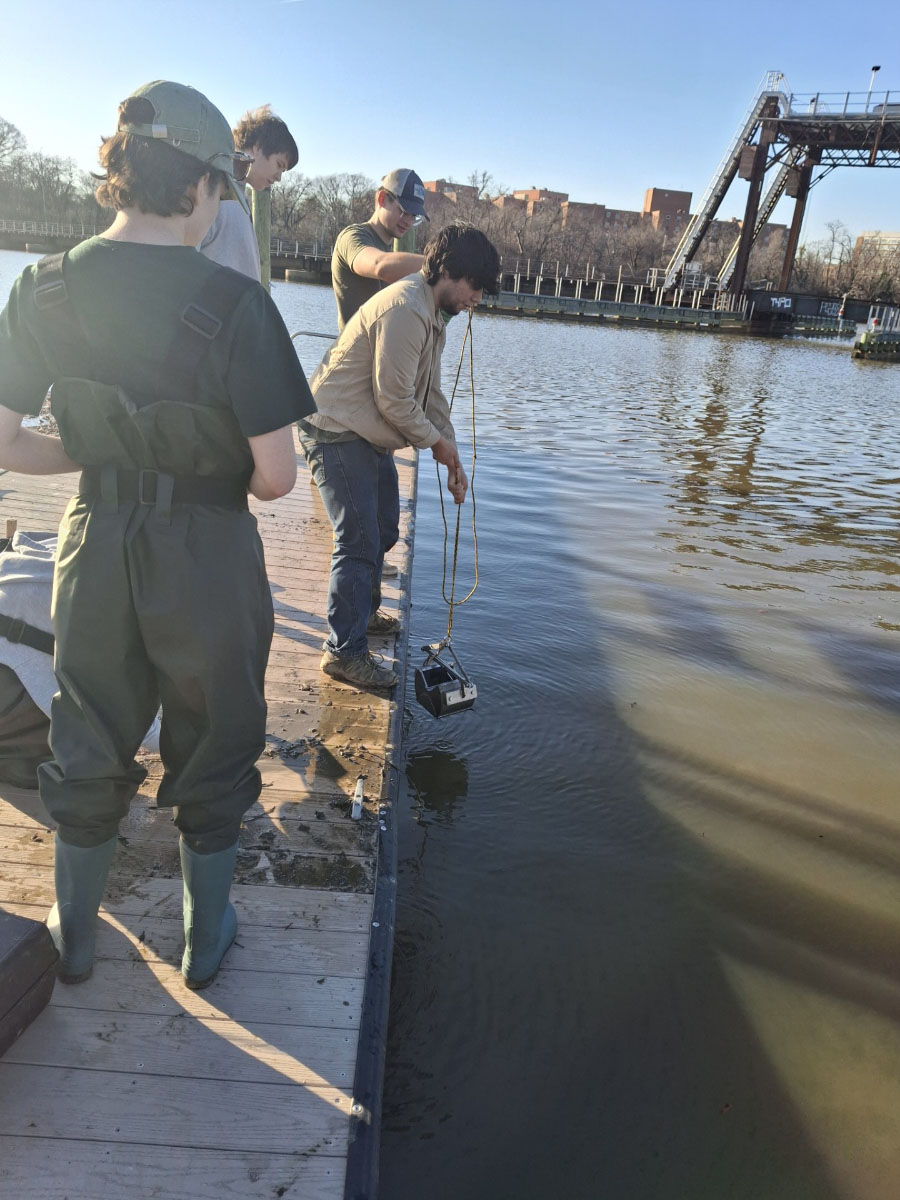
MacAvoy’s team has detected BPA in surface sediments along the Anacostia River, raising questions about how long such chemicals remain in the environment and whether they may be re-emerging from deeper, buried layers.
This summer and fall, the team will collect sediment cores, some reaching depths of up to one meter, from the Anacostia and its tributaries. The cores will be sectioned into fine intervals, dated using cesium-137 isotopes, and analyzed for BPA content. By tracking how concentrations change over time, the researchers aim to identify contamination “hotspots” and determine whether BPA is migrating back to the surface. Their work provides new insight into the long-term environmental footprint of plastics and will help guide future efforts to monitor and restore urban waterways.
Tracking Arctic Ecosystems in Flux
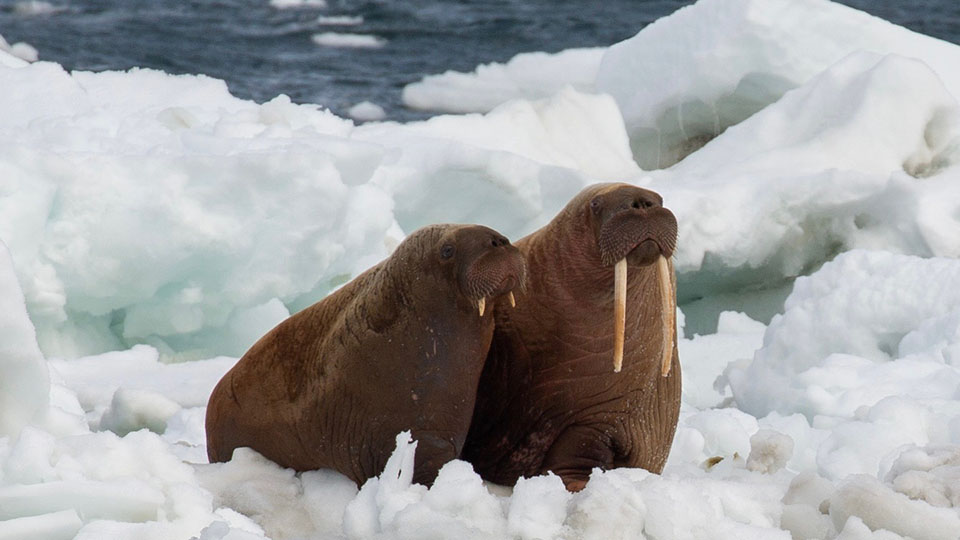
Two walruses, photo taken by Devin Johnson (USFWS) on annual walrus population research cruise last summer.
Environmental scientist Chelsea Koch is tracking how climate-driven sea ice loss is reshaping Arctic food webs, starting with snow crabs and their algal food sources.
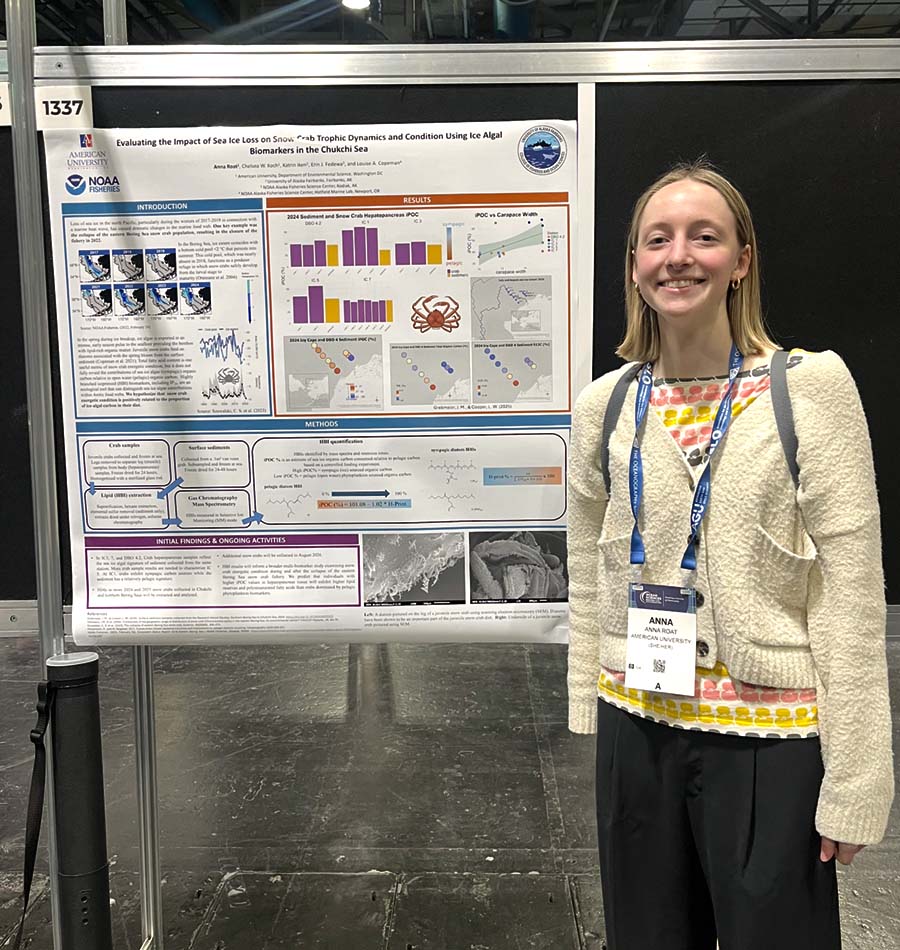
Working with student researcher Anna Roat (BS environmental science ’26), Koch analyzes snow crabs collected from the Pacific Arctic, including the Bering and Chukchi Seas. By examining algal biomarkers inside the crabs, the team can trace changes in their diet, particularly ice-associated algae that form a key part of their food supply.
Koch also partners with Alaska Native communities on St. Lawrence Island to monitor walrus populations and broader ecosystem health. By combining laboratory techniques like stable isotope analysis with traditional ecological knowledge, the research offers a more complete picture of a rapidly changing Arctic.
Koch and Roat recently presented their findings at the 2026 Ocean Sciences Meeting in Glasgow, contributing to global conversations about the future of polar ecosystems.
Translating Water Quality Research in American Samoa
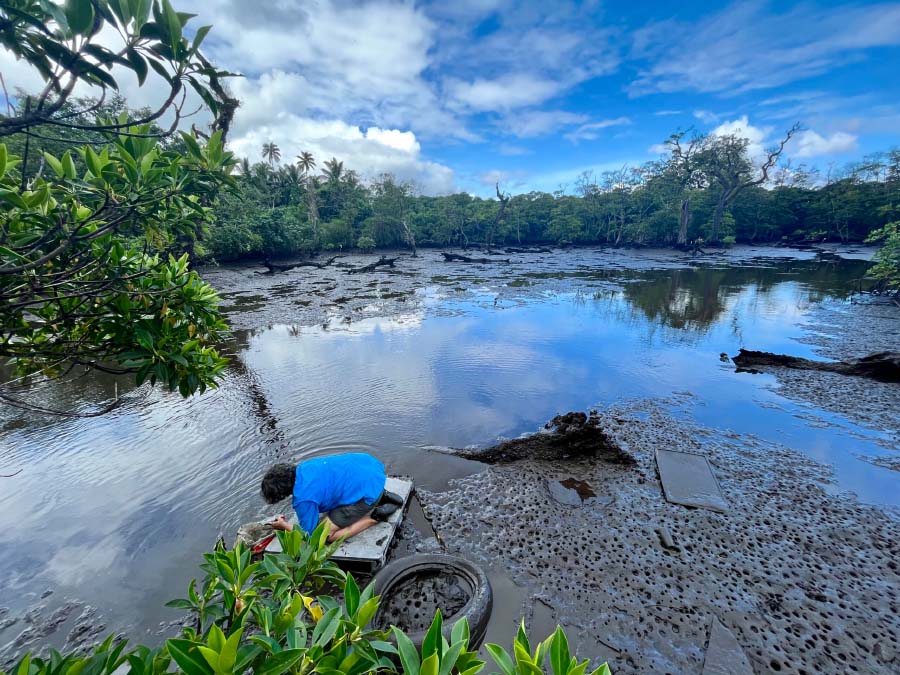
Karen Knee sampling water in a tidal creek flowing into Nu`uuli Pala Lagoon, American Samoa, at low tide. Photo by Kiho Kim.
In American Samoa, researcher Karen Knee is uncovering how groundwater sustains a vibrant lagoon ecosystem and supports local communities.
In 2022 and 2023, Knee, along with her former AU colleague Kiho Kim (now Dean and Provost of Washington College on Maryland’s Eastern Shore) and University of Hawaiʻi Professor Henrietta Dulai, studied groundwater inputs to an ecologically important lagoon. Their NOAA-funded research showed that groundwater is a key source of nutrients supporting algae growth, especially during the dry season when river flow is low.
This May, with support from AU’s NSF-funded Translating Research into Action (TRAC) Center, Knee and Dulai will return to American Samoa to teach a course in water quality monitoring at American Samoa Community College, lead workshops with local stakeholders, and provide technical support to agencies. Their goal is to strengthen scientific capacity in this remote U.S. territory through research grounded in local needs.
Building Sustainable Food Systems Through Collaboration
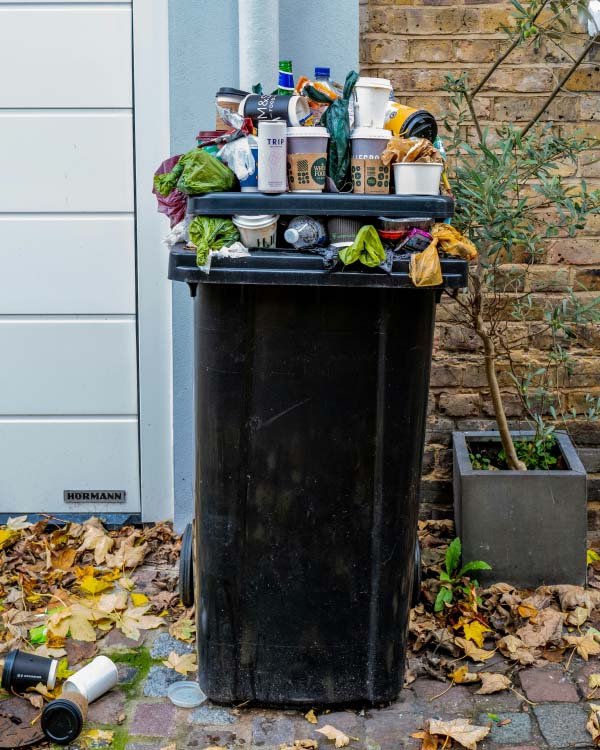
In the United States, an estimated 40 percent of food goes uneaten. It’s a complex issue that cuts across the entire supply chain, resulting in the loss of nutrition, labor, resources, and economic value at every stage.
Researchers led by AU’s Sauleh Siddiqui are helping lead a national response through the NSF-funded RECIPES (Multiscale RECIPES for Sustainable Food Systems) Network, a $15 million initiative reimagining how food systems can become more sustainable, equitable, and resilient. Since 2021, the Network has grown into a nationwide collaboration spanning 15 universities and more than 100 researchers focused on reducing food waste through interdisciplinary science.
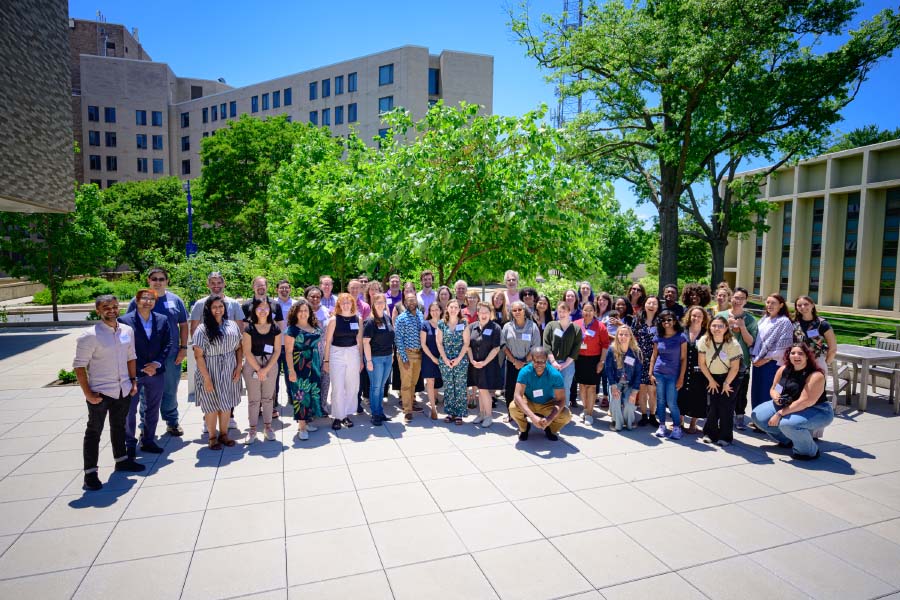 Network members from universities all over the US gathered at AU for the 4th Annual RECIPES In-Person Meeting.
This year, the RECIPES Network hosted a meeting on campus bringing together more than 50 participants from across the country. It also released the second volume of Food-Fueled, an undergraduate-run food systems journal, and is currently accepting submissions for a third volume.
An AU-designed undergraduate course, “Food for Thought: Why Waste,” is now available through Canvas Commons and has been piloted at AU, Johns Hopkins University, SUNY Albany, and Rochester Institute of Technology. The inquiry-based course explores sustainability, social justice, and food systems and has helped expand food systems education across institutions.
Research teams advanced multiple projects this year, including work on reducing life-cycle emissions from food valorization in New York State (with student findings presented at AU’s Mathias Student Research Conference) and a study of how restaurants and chefs in DC, Maryland, and Virginia are minimizing food waste in professional kitchens. Researchers also developed and published open-source code for a modeling framework to evaluate the sustainability, resilience, and equity of food waste solutions.
Data, Drones, and Scientific Method
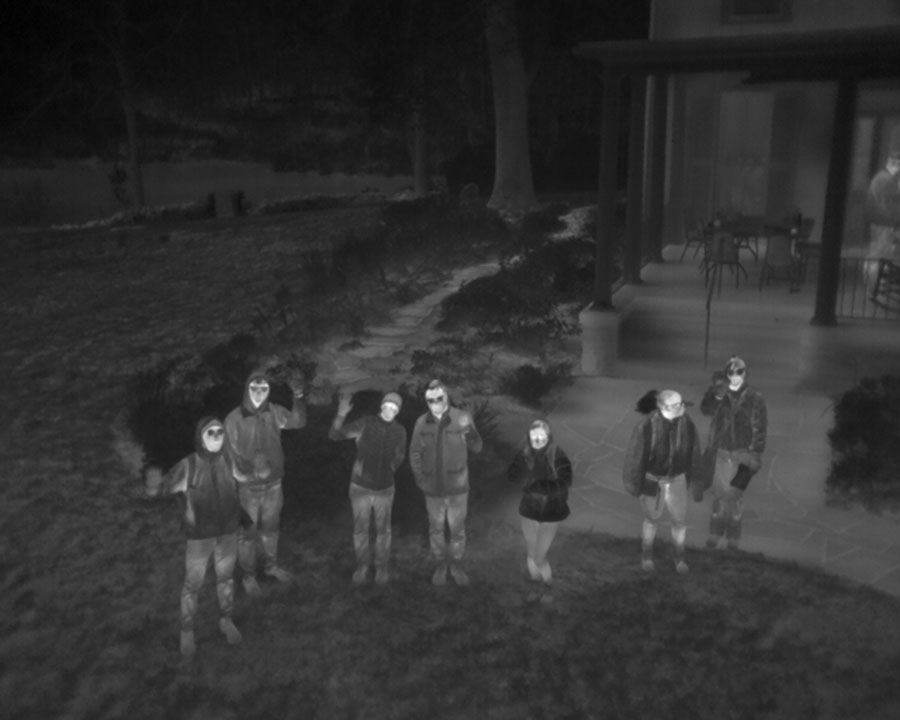
Student team takes “thermal selfie” from a drone-mounted thermal camera.
Professor Mike Alonzo uses satellite and drone imagery (plus other geospatial tools) to decipher the stories that trees can tell us about climate change. Now he and his students are taking environmental remote sensing out of the classroom and into the field. This spring, the course traveled to Clifton Institute in Virginia (the sister property to AU’s Airlie Farm), where students gained hands-on experience collecting imagery and 3D data from the air and supporting data on the ground.
They flew three different drones, ranging from a fun starter craft used for learning “the sticks” (flying by hand) to an industrial-grade workhorse equipped with a thermal camera for plant health monitoring. Back on the ground, students fanned out through meadows and woodlands, measuring tree heights with laser rangefinders and capturing leaf-level reflectance and species information with a field spectrometer. They left with a clearer idea of where their data comes from and why they need to do the data cleaning and analyses they've practiced in class.