
Play Ball! The Business of Baseball Comes to Life in AU Classroom
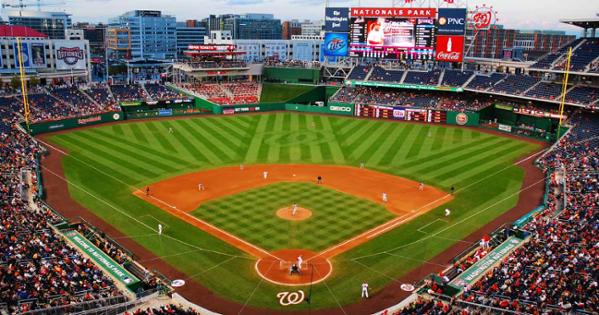
Just in time for Opening Day, a new class at American University is stepping up to the plate, using baseball to bring economic theory to life.
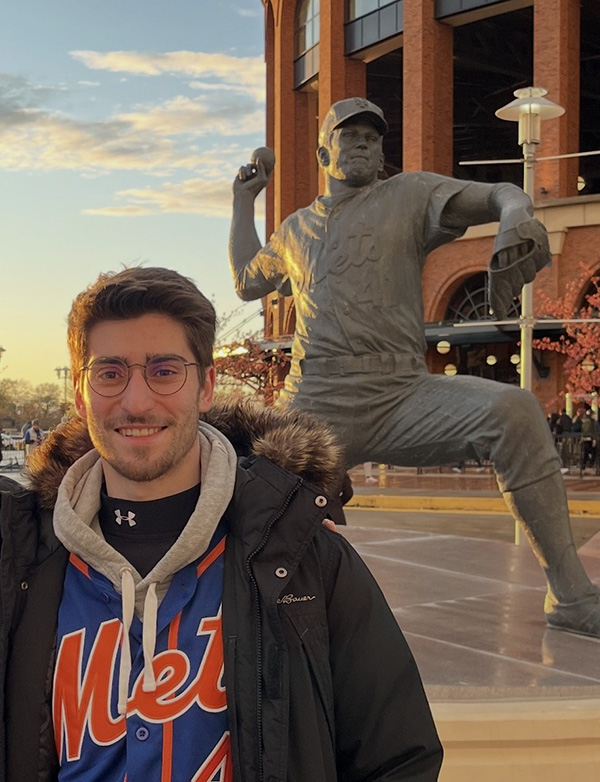
For Economics PhD candidate Luke Fiore, a lifelong Mets fan from northern New Jersey, baseball is more than a passion—it is a lens for understanding economics. While pursuing his studies, he continually found himself linking concepts from his coursework to the game he loves.
“I’d learn something in class and think, this applies to baseball,” he says. “Over time, I started writing those ideas down.”
When AU’s Department of Economics developed its Student-Designed Course Competition, an initiative inviting students to develop courses based on their interests, Fiore saw an opportunity. After working as a teaching assistant for a Taylor Swift–themed economics class, he began shaping his own idea: a course that would use baseball to explore complex economic concepts.
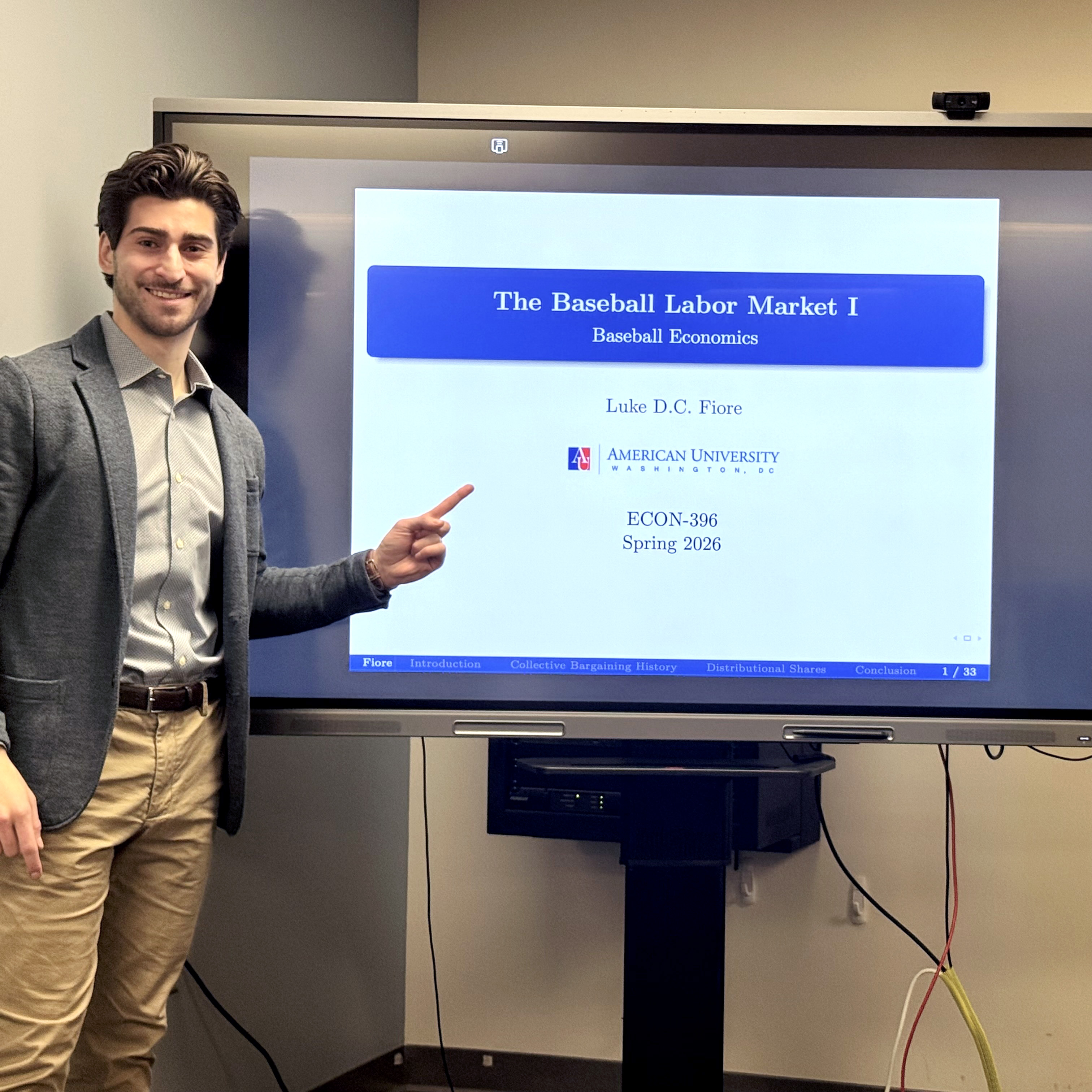
The result is The Economics of Baseball, a fun, one-credit, five-week course that turns America’s favorite pastime into real-world lessons in economic power, labor battles, superstar pay, and the high-stakes system behind the sport—all while giving students an opportunity to think like economists.
The Best Teams Money Can Buy
It’s like socialism for the rich and capitalism for the rest.
Fiore’s class dives into the numbers behind the game, revealing how contracts, negotiations, and data shape both play and pay. Students learn to connect what happens on the field to the economic forces driving professional baseball.
“Teams are trying to balance competition so the league stays interesting,” he says. “But at the same time, there’s a constant push over how revenue is shared, especially between owners and players. It’s like socialism for the rich and capitalism for the rest.”
Students explore how that tension plays out in real time, from collective bargaining agreements to salary structures. They analyze why some players earn massive contracts, while others, often early in their careers, earn far less than their market value.
“There’s a lot of focus on which teams spend the most,” Fiore notes. “But what’s just as important is what’s happening within the players themselves—the gap between average salaries and median salaries, and what that tells us about inequality.”
Students Step Up to the Plate
Even students who aren’t die-hard baseball fans are hooked. They’re drawn by the opportunity to study a topic they enjoy, applying economic concepts to a game they love—or at least find fascinating.
“I think why teaching economics through topics that students are interested in works well is that it makes economics tangible and approachable,” Fiore explains. “Some students might be frightened by complicated equations and graphs or lose interest if theory gets too abstract. Baseball is something that feels familiar, which helps turn abstract ideas into something students can actually see and analyze.”
Instead of exams, students complete a final paper, applying course concepts to a topic of their choice, whether proposing a new collective bargaining agreement, or exploring another corner of sports economics.
By the end of the course, students are not just analyzing baseball. They’re wrestling with bigger questions about the systems behind it. The class challenges them to consider whether the sport’s increasing focus on efficiency has changed the game itself, and what that might reveal about capitalism and well-being more broadly.
“By using subjects that students are interested in to teach economics, they can learn essential tools that can be applied more broadly to help them think critically about all aspects of the world around them,” says Fiore.
For him, that broader impact is part of what makes the experience meaningful. “Also, being able to finally share material you’ve worked very hard on with people who can appreciate it is a wonderful thing.”