
A Spirited Discovery: AU Students Uncover the Chemistry of Aged Gin
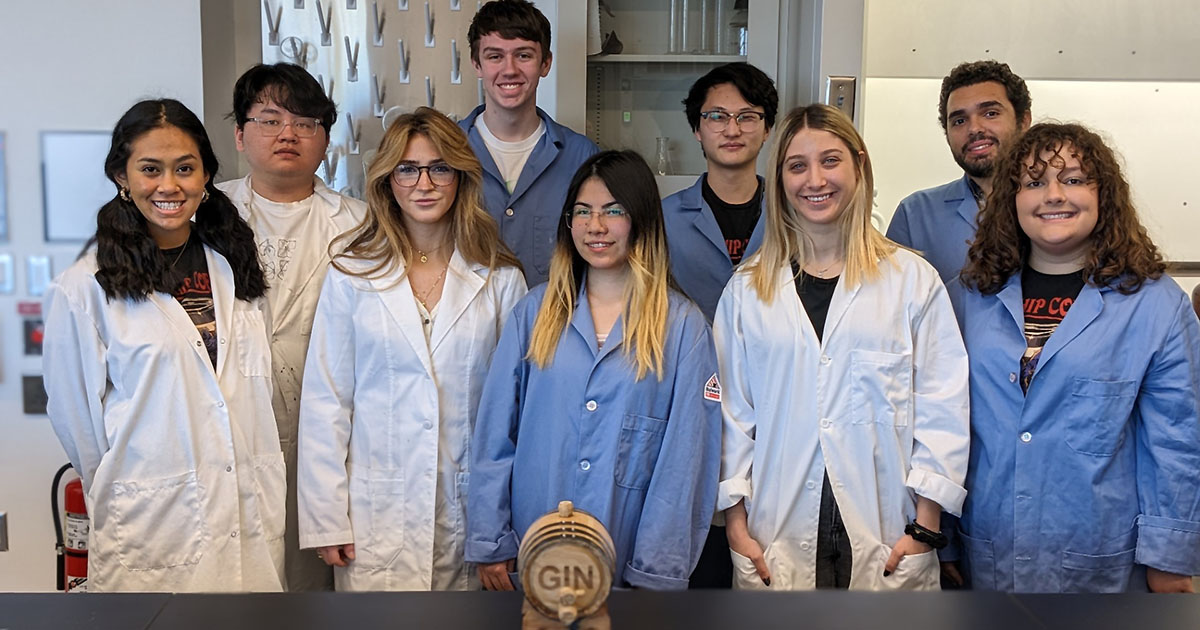 Right to left: Mary Ruxsarash, Yanwen Wang, Ariane Raymond, Logan Brenner, Sydney Ayllon, James Serventi, Rodanthi Nikopoulou, Adam Fadul, Maggie Seidel
Ten American University students. Ten tiny oak barrels filled with gin. One big question: What happens to the gin when you age it like whiskey?
Over two semesters, the students worked with Professor of Chemistry Matt Hartings to find out. Their research led to a peer-reviewed paper published October 14 in ACS Food Science & Technology, with all ten students as coauthors. The study offers one of the first detailed looks at how gin's color and aroma compounds change during barrel aging.
Hartings, a food scientist who has taught AU's popular Chemistry of Cooking course for more than a decade, has long been fascinated by the chemistry of food and spirits. Most recently, his attention has turned to barrel-aged gin, which is enjoying a revival as craft distillers experiment with oak barrels to create new flavors.
Gin gets its distinctive floral and herbal character from juniper and other botanicals. Aging it in oak can introduce a whole new set of flavors, including vanilla, caramel, and toasted wood.
But would these flavors enhance the gin or overwhelm it?
Hartings wanted his students to find out for themselves. “I think the trickiest thing about teaching chemistry is convincing people that they can understand what a teeny tiny molecule is doing as it wiggles along,” he says. “Taste and smell are different because we have some visceral understanding of chemistry in that context regardless of whether or not we’ve ever taken a chemistry class before.”
The Distillery Connection
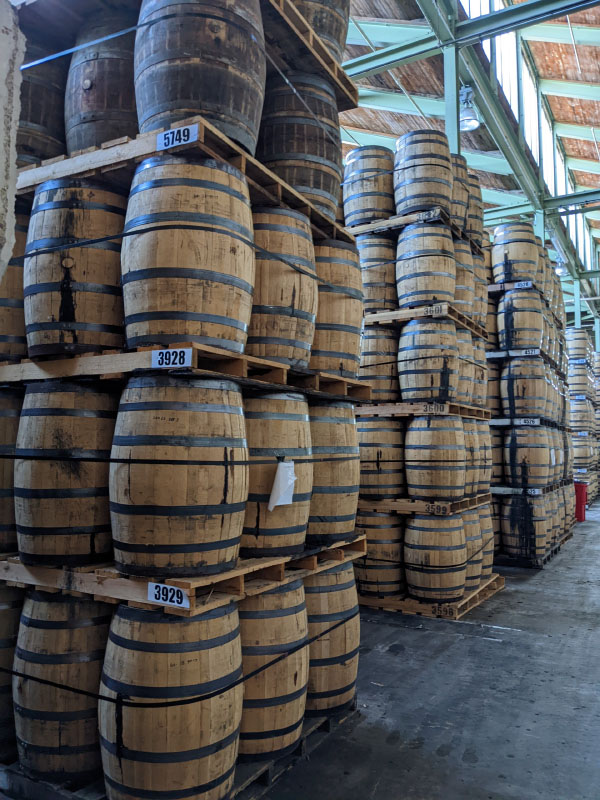
While Hartings was developing the project, he got an unexpected call from Elizabeth Brummett (Kogod MBA '21), an alumna at A. Smith Bowman Distillery in Virginia. She wanted advice about lab equipment, but soon the conversation turned to Hartings’ plans to study gin. And as it turned out, the distillery was experimenting with barrel-aged gin, too.
Brummett invited him to visit. There, Hartings sampled gin aged in barrels that had previously held sherry, port, and whiskey. One stood out: the gin aged in sherry barrels.
“It was incredible—the nectar of the gods,” he says. “It cemented in my brain that the right barrel can make a whole new spirit out of gin.”
Putting the Gin to the Test
I especially loved the little twinkles of mischief in their eyes when I told them we were going to be doing a project with gin.
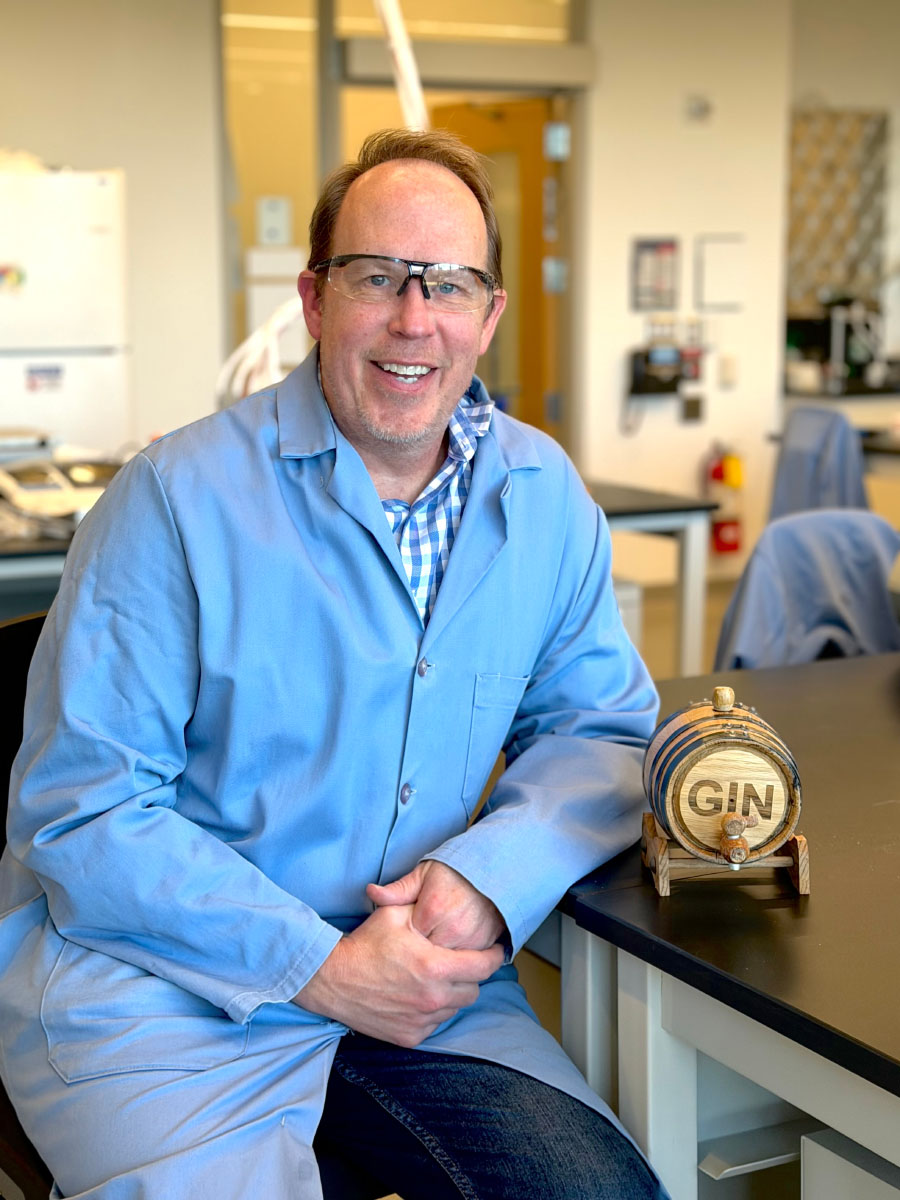
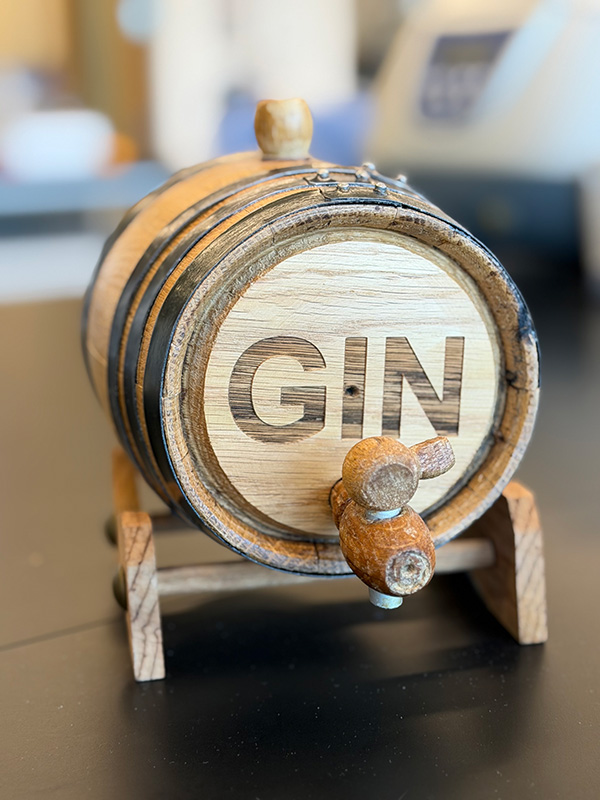
Back at AU, Hartings gave each student a one-liter oak barrel.
“I always love working with students on any research project,” he says. “But I especially loved the little twinkles of mischief in their eyes when I told them we were going to be doing a project with gin.”
The small barrels worked well in the lab because they exposed more gin to wood, speeding up the aging process so that students could track changes over weeks instead of years.
Each lab session, they uncorked their barrels and drew samples of gin. In the first semester, they learned to use sophisticated lab instruments to measure changes in color, identify chemical compounds, and track antioxidant concentrations. In the second semester, they designed their own experiments under Hartings' supervision.
They detected some compounds in the gin within an hour of barrel aging. Other compounds took more than a month to emerge. Linalool, which is responsible for gin's botanical character, first decreased in concentration, and then rose again. The students also identified compounds associated with vanilla, coconut, and even marzipan-like aromas. Meanwhile, the gin's color deepened rapidly at first, then leveled off.
To make sense of the mix of aromas, Hartings created a flavor wheel for aged gin, combining existing gin and toasted-oak flavor wheels. It maps aromas ranging from citrus and herbs to toasted nuts, spice, and smoke.
“I think that the most satisfying thing I did was to develop the new flavor wheel, which I coupled to our aroma data,” Hartings says. “I don’t know if anyone else will ever use that kind of visualization. But I had fun being creative and putting it together.”
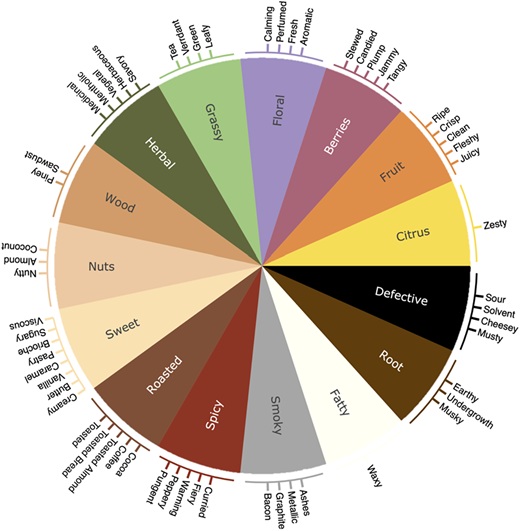 Composite barrel-aged gin flavor wheel.
These findings can give distillers a new way to track how gin develops in the barrel. But Hartings is careful to add that none of this can fully replace a distiller's palate.
“Figuring out how long to age a spirit really comes down to when the master distiller says, ‘That tastes like I want it to.’ What we’ve done is given them a chemical cheat sheet so that they have another tool to know when their gins are aged just right.”
Beyond the Lab
That's where science lives, outside of what we know. Getting students into that realm is a magical thing to do.
The course ended in spring 2024, but the research continued. Hartings and his students spent months analyzing data, preparing figures, and writing the paper, even after graduation.
For Rodanthi Nikopoulou (CAS/BS ’23), who now manages clinical trials, the project brought chemistry to life. “I could connect chemical concepts to changes in something I could touch and smell,” she says. “It was also rewarding to contribute to a research project as an undergraduate and gain confidence in my ability to work in a lab.”
“Doing this kind of research exposed me to a ton of instrumentation that I normally wouldn't be able to use as an undergrad,” says James Serventi (CAS/BS ’24), who now works for a water quality testing company.
Since then, Ariane Raymond (CAS/BS ’24) and Adam Fadul (CAS/MS ’24) have gone on to medical school. Logan Brenner (CAS/BS ’24) is pursuing graduate studies at UC Davis, Mary Ruxsarash (CAS/BS ’24) at Georgetown, and Maggie Seidel (CAS/BS ’24) recently earned a master's degree from the University of Virginia. Yanwen Wang (CAS/BS ’24), now in China, plans to attend graduate school.
Sydney Ayllon (CAS/BS ’24) manages a laboratory for a major chemical supply company, while Sanjana Sureshbabu (CAS/BS ’25) works as a product designer at a healthcare technology company.
When the paper was ready, Hartings reached out to all ten students. Every one of them responded, excited to see their research through to publication.
For Hartings, that curiosity and commitment are what make undergraduate research so rewarding. “That's where science lives, outside of what we know,” he says. “Getting students into that realm is a magical thing to do.”