
CAS Rock Stars: Environmental Science Students Hike Billy Goat Trail
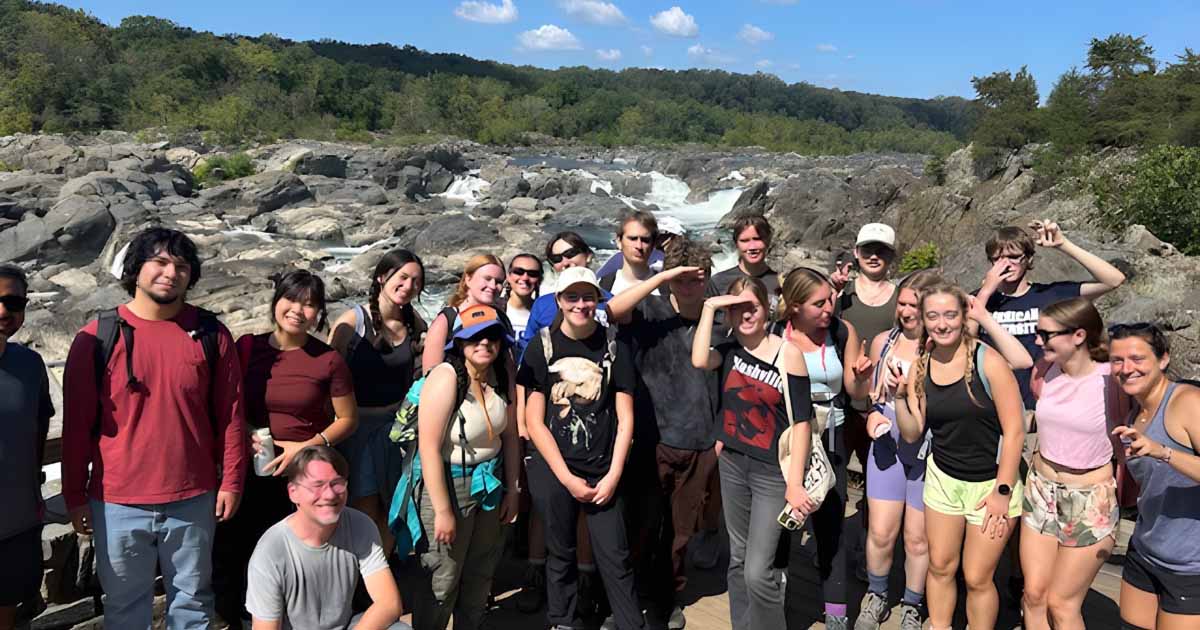
Great Falls National Park, overlooking the Potomac River and only a short drive from American University, features a rocky landscape sculpted by millions of years of geologic change. It was the perfect setting for an AU Geology class to take their studies outdoors for a rock-scrambling adventure along the park’s iconic Billy Goat Trail.
The result was part field trip, part field day. Environmental Science Professor Stephen MacAvoy invited not only his students but anyone in AU’s Environmental Science community to join in—an offer that drew 23 adventurous souls, including 12 students in Professor MacAvoy’s geology class, nine additional environmental science students and friends, plus two faculty members: Environmental Science Professors Barbara Balestra and Sauleh Siddiqui.
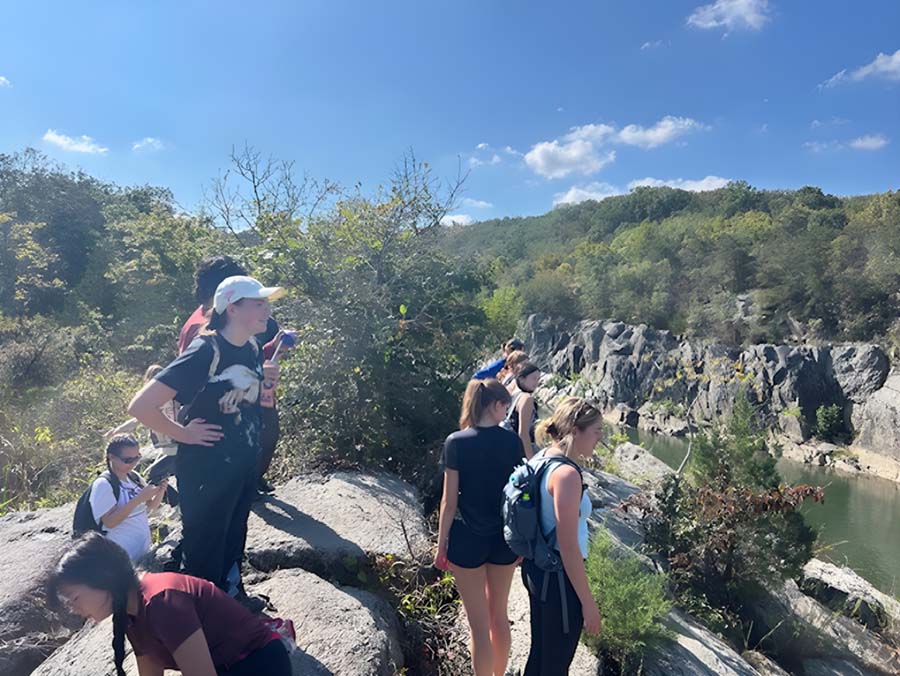
The group scrambled over the Billy Goat’s famous rock outcrops, stopping for spontaneous lessons on metamorphic formations, river erosion, igneous intrusions, and the region’s geological history. Between the steep climbs and spectacular river views, the trip was a mix of community building and learning.
“Billy Goat trail A is one of the few places around AU where you can clearly see the bedrock and the stories it tells about the geological history of our region,” says MacAvoy. “The trail is mostly metamorphic rock that was once oceanic mud and sand but was compressed into "metagraywacke" 460 million years ago. But you can also seehow it was uplifted, flipped from horizontal to vertical, and riven with igneous intrusions over the following 300 million years or so. So, it is a fun way to learn about geology as we scramble over the rocks.”
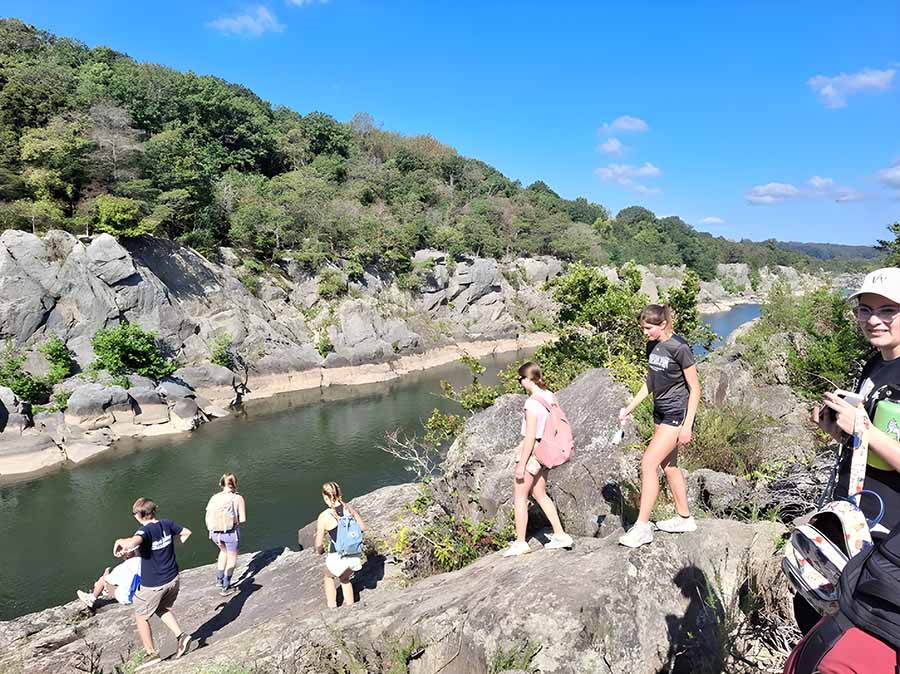
The trip was a big success, said the students. “It was a lovely hike on Billy Goat Trail A,” says Estella Miller, “I had been on these trail systems before, but it was a completely new experience with insights from Professors MacAvoy, Balestra, and Siddiqui.”
Lauren Michaels called the hike a “once-in-a-lifetime experience that was quite helpful in understanding the geologic concepts we study in class and how those relate in real life in the local area.”
Memories and the Next Adventure
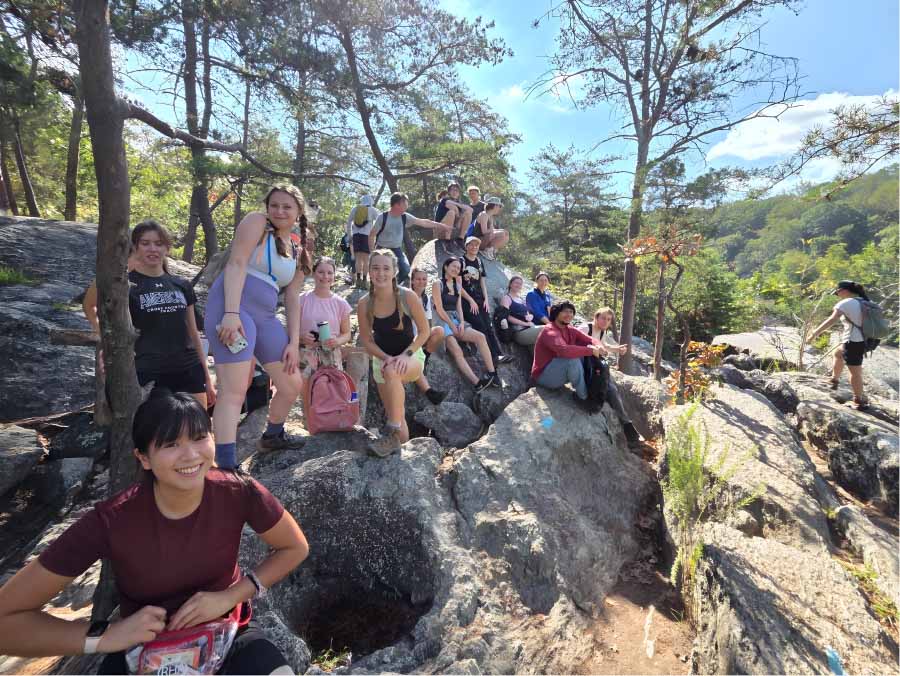
“The things we talk about in class are real,” says MacAvoy. “Now students can apply the vocabulary they learned in geology class to a real-world experience. They might not remember the details of the geology class, but they will never forget the field trip.”
He is eagerly awaiting the next trip, already in the works: Calvert Cliffs State Park in Lusby, Maryland, on November 8. “It will be huge since it includes geology and oceanography and is open to all.”
For More Information
For details and to sign up for the Calvert Cliffs trip, email macavoy@american.edu.