
Prestigious Fulbright Awarded to AU Forensic Chemist Raychelle Burks
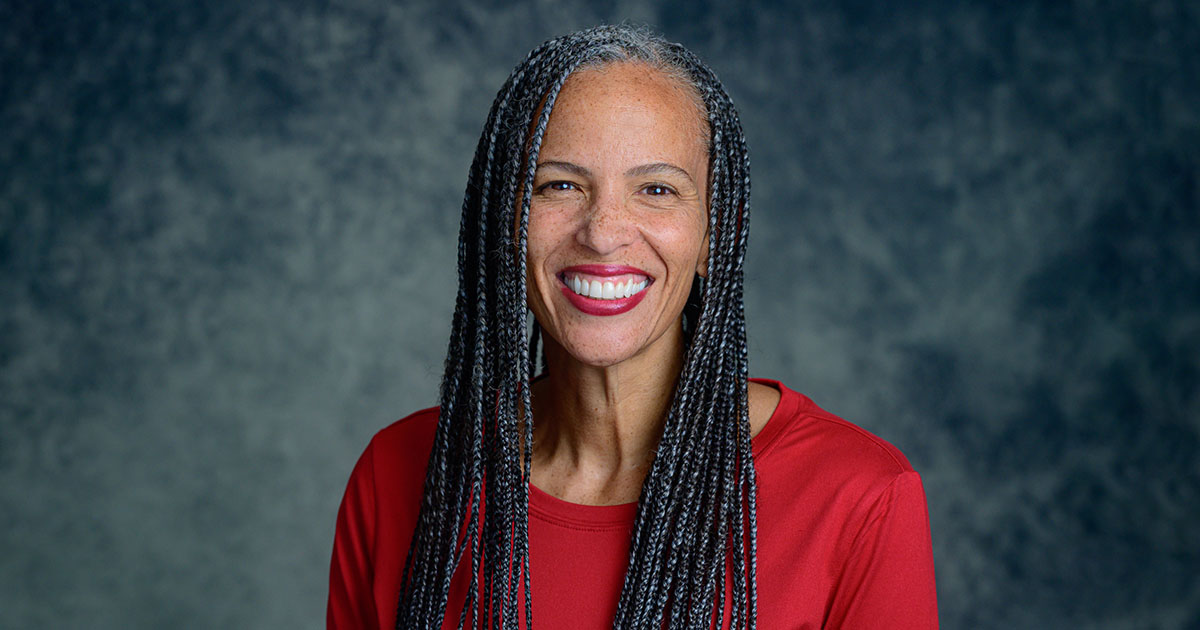
The future of forensic science might begin with something as simple as a blackberry, a grape, or a red cabbage.
For American University forensic chemist and science communicator Raychelle Burks, naturally occurring plant pigments hold real promise as tools for detecting dangerous substances ranging from illicit drugs to explosives and chemical warfare agents.
Burks, Provost Associate Professor of Chemistry, has been named a 2026–27 Fulbright US Scholar and will spend time at Curtin University in Australia collaborating with researchers on frugal forensics—creating affordable and portable forensic tools that can deliver reliable results even in resource-limited environments.
Linda Aldoory, dean of the College of Arts and Sciences, says Burks’s work reflects AU’s commitment to research that connects scientific innovation with real-world impact. She adds that “Professor Burks brings together cutting-edge scholarship, global collaboration, and public engagement in ways that exemplify the kind of work that prepares students to tackle complex challenges far beyond the classroom.”
Portable, Inexpensive, Easy to Use
The phrase frugal forensics may sound simple, but its implications are global. Traditional forensic testing often depends on expensive instruments, sophisticated laboratories, and supply chains that are not always accessible in the field or in lower-resource settings. Burks and her collaborators hope to develop tools that are portable, inexpensive, and easy to use without sacrificing scientific rigor.
At the center of the project are anthocyanins, naturally occurring pigments that give foods like blueberries, purple cabbage, black rice, and red-skinned grapes their vivid colors. The compounds can also undergo dramatic color changes when exposed to different substances, making them promising tools for chemical detection.
“Anthocyanins are globally abundant and highly responsive compounds, making them promising candidates for simple, low-cost chemical detection,” Burks says.
Many people have already seen anthocyanins in action without realizing it, Burks notes. Red cabbage, for example, releases pigments into water that can shift through a rainbow of colors depending on what substances are added. The same chemistry behind that kitchen experiment could someday support low-cost forensic detection tools used far beyond the laboratory.
In this project, Burks will study 15 to 30 plants from around the world alongside Curtin University researchers Simon Lewis and Georgina Sauzier. Both are members of the university’s Forensic and Analytical Chemistry Research Group within Curtin’s School of Molecular and Life Sciences.
Burks says the collaboration is a natural fit. “My collaborators Professor Simon Lewis and Dr. Georgina Sauzier are frugal forensics innovators, and we share a commitment to this work,” she says. “Our collective expertise spans the analytical toolkit, enabling us to develop tools that meet frugal forensics goals.”
Scientific Research, Public Engagement
Burks’s Fulbright appointment marks another milestone in a career that has consistently bridged scientific research and public engagement.
Before returning to academia, Burks worked in a crime lab, an experience that helped shape both her research interests and her approach to teaching. Today, her own lab at American University develops colorimetric and luminescent detection systems for compounds connected to forensic science and national security. To make those systems as portable as possible, her team uses smartphones, tablets, and laptops for image collection and data analysis.
Burks is also widely known beyond the laboratory. A gifted science communicator, she has appeared on television, podcasts, and major fan conventions including DragonCon and GeekGirlCon, bringing forensic science to audiences far outside traditional academic spaces. She also writes the popular “Trace Analysis” column for Chemistry World, the magazine of the Royal Society of Chemistry.
If her research succeeds, the implications could extend beyond academic laboratories. Burks envisions anthocyanin-based sensors eventually becoming practical tools for a broad range of forensic service providers, similar to technologies already used in food safety and freshness monitoring.
“We hope to bring similar readily available options to forensic applications,” she says, “the United States and Australia have sustained a long-term science, research, and education collaborative relationship for decades, with the benefits of this partnership positively impacting the world. It is an honor to be part of this long service scholarship tradition!”
To Learn More About the Fulbright Program
The Fulbright Program is the US government’s flagship international educational exchange initiative, designed to increase mutual understanding between the people of the United States and those of other countries. Since its founding in 1946, the program has supported more than 400,000 participants from over 160 countries—selected for their academic merit and leadership potential—as they exchange ideas and pursue solutions to complex global challenges. Fulbright alumni include 44 government heads of state, 62 Nobel Prize winners, 82 MacArthur Foundation Fellows, and 90 Pulitzer Prize recipients.