
Creating Actors with Agency: Devising a Family Drama for the Stage
Most theater actors are handed their characters. But in I Lay Awake, students aren’t just stepping into roles—they are creating their own characters, shaping the story, and sharing creative control with director Nancy Bannon.

The production has challenged the actors to rethink their understanding of theater, pushing them beyond memorized lines into a more collaborative, immersive creative process. “I want to create artists with agency,” says Bannon. “I want them to be actively participating in the images we make and the stories we’re telling.”
I Lay Awake runs at Katzen’s Studio Theatre February 26-28. Few tickets remain! Tickets are free for AU students with ID; $10 for AU alumni, staff, and faculty, children (under 18), and senior citizens (55 and older); $15 for the general public.
Building a Story
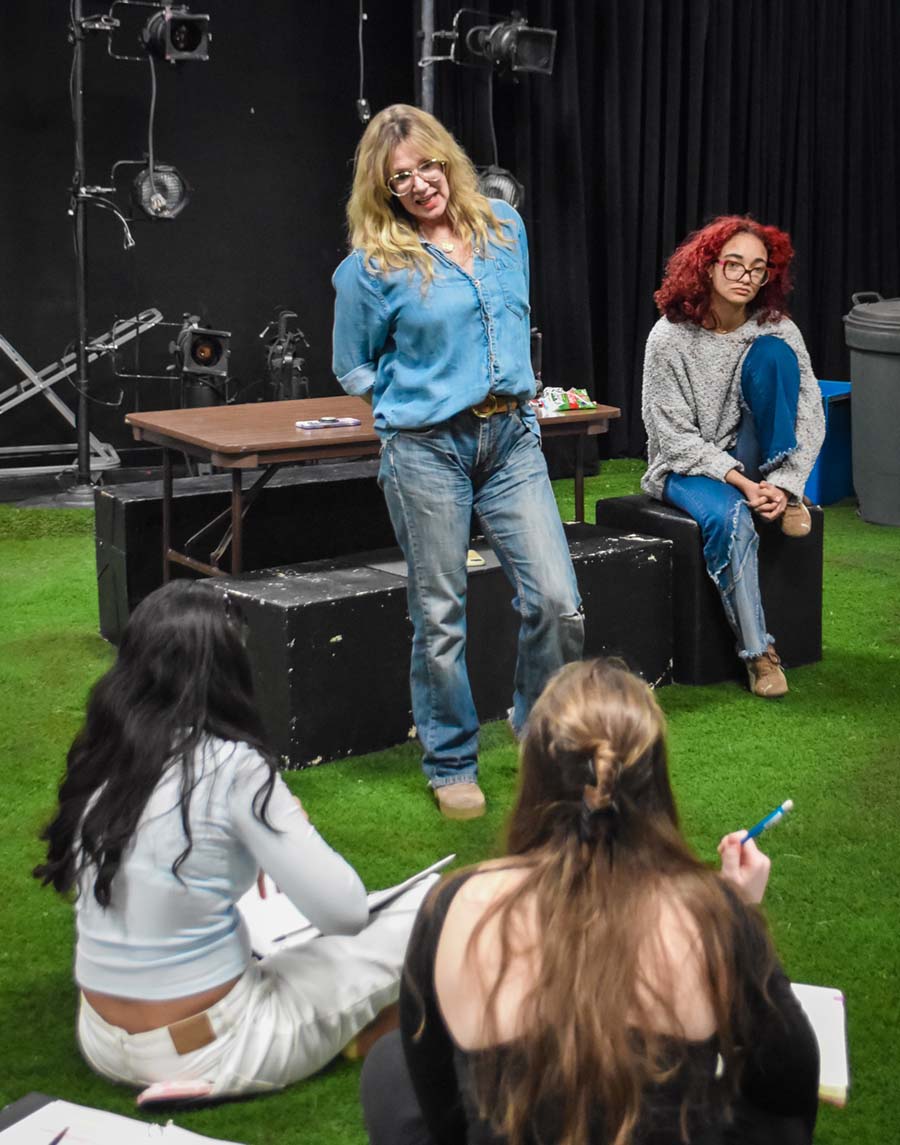
When Bannon was invited to bring an original play to the Katzen Arts Center’s Studio Theatre this spring, she returned to familiar terrain—the working class. Bannon’s repertoire spans acting, writing, and directing, and much of her work draws on her roots in a working-class town, asking about various complexities that American individuals, families and communities are facing right now.
In her mind, Bannon imagined the play unfolding in a working-class home, where college-aged siblings, cousins, and significant others gather after a funeral. Then, she invited the cast into the creative process, collaborating with them to develop the characters who would inhabit this world. The students drew on both external research and personal reflection, taking on the additional challenge of portraying a family strained by old tensions and resentment, conflict, and substance use, with the looming presence of homophobia, xenophobia, and racism shaping their interactions.
Self to Stage
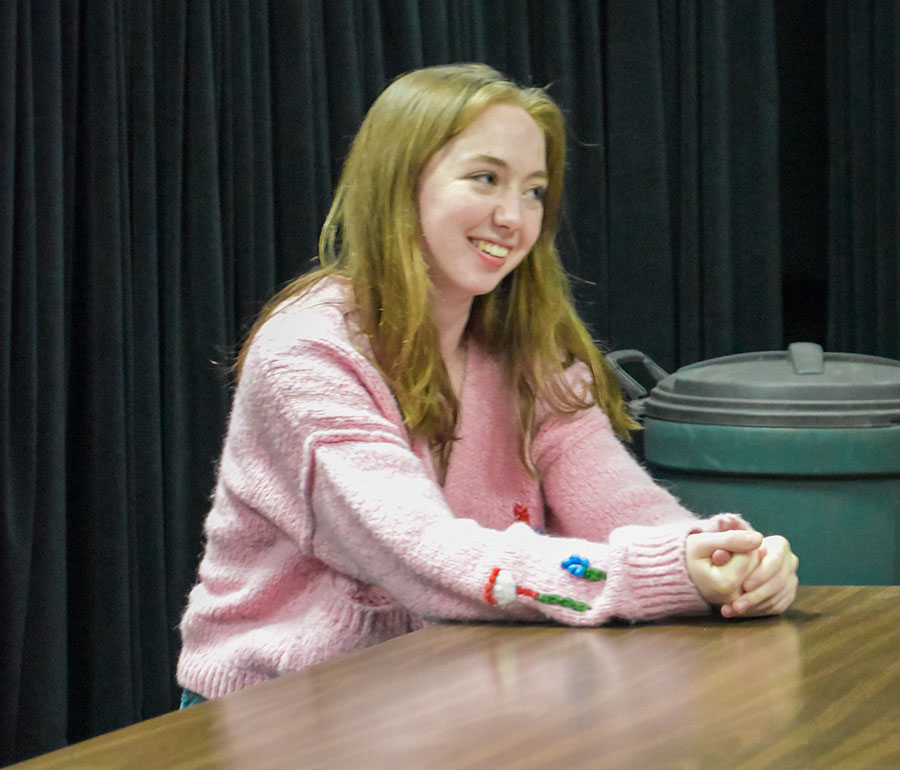
Madison Troost (CAS ’27) developed her character through self-examination. “I asked myself: What are the parts of myself I wish I was less apologetic for? What are the parts I feel shame about? What are the parts I’d be interested in empathizing with?” She describes her character, Parker, as more abrasive, more aggressive, and funnier than she is herself. “She’s not afraid to show up exactly as she is—even when she’s not a good person,” Troost adds.

Matthew Carver’s (SPA ‘28) character Kenny is deeply nostalgic for a childhood that everyone else has moved on from. While Carver relates to Kenny’s nostalgia, he notes that his character is far more aggressive and rude than he is. “I think back to the moments where I want to scream or lash out. I don’t—but Kenny does. For Kenny, those guardrails don’t exist because he has nowhere to go but up. He’s as low as he can be,” he says.
Once the students created their characters, Bannon and the cast focused on understanding the relationships between them. From there, through improvisation, the story began to take shape—a troubled family's history weaving into a single afternoon in a backyard. “We unearthed the family’s shame, anger, and resentment, as well as their attachment, love, and joy,” says Bannon. From there, she went on to write the script for I Lay Awake while leaving room for improvisation and input from the actors.
Love, Fracture, and Family

The actors rose to the challenge, grappling with heavy topics while immersing themselves in the emotional intensity of the play. In the intimate Studio Theatre, the audience is brought directly into the drama, heightening the gravity of the play’s fast-paced dialogue. “We’re acting out serious issues of substance use, grief, and trauma. What is your duty as an actor to represent that?” says Carver. “We’ve all felt that weight.” However, this cast is as funny as they are talented. Their ability to generate sharp, humorous dialogue has brought joy to each other and helped shape the family dynamic on stage.
The play challenges audiences to engage with characters whose behaviors may be difficult to accept, asking us to look beyond their faults. Troost hopes audiences will arrive with open hearts, choosing empathy over judgment. “It’s a really beautiful picture into how love and care can cradle our faults and keep us above water,” she says.
Bannon and the cast share the hope that audiences will leave with a renewed sense of compassion. “Ultimately, I hope people are inspired to call their families,” says Bannon.