
A Poet in the Eternal City: David Keplinger’s Reflections on Rome
As winner of The Rome Prize in Literature, American University Professor David Keplinger spent half a year at the American Academy in Rome, surrounded by art, ruins, and a garden filled with green parakeets. He planned on traveling around Italy to write about every Caravaggio artwork he encountered, but soon he found himself also drawn to Bernini’s fountains, Giotto’s frescos, and the canals of Venice where he “found the present moment inside the ancient.”
We asked Keplinger to share his reflections on Rome, his days there, and his forthcoming body of work:
PH: Could you tell us how you came to be in Rome, and what you worked on while you were there?
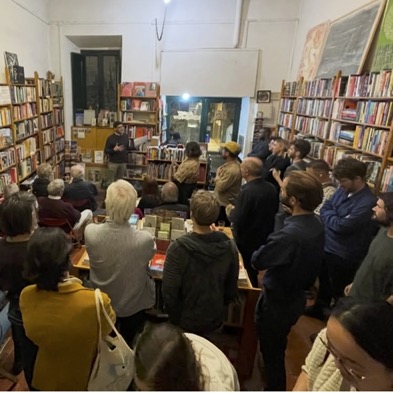
DK: I received what's called officially the Joseph Brodsky Rome Prize, which is specifically awarded to poets. Each year, the American Academy brings one writer, or it splits the fellowship into two half-year awards. I received a half-year award in poetry, joining writers like Anthony Doerr, June Jordan, Ralph Ellison, and many of my literary heroes over the last eighty or so years. For even longer, the American Academy has been offering Rome Prizes to folks in Architecture and Visual Art. These fellowships the Academy have been ongoing since 1894. So, I already felt the rush of joining in a long tradition of creativity on the Janiculan Hill overlooking the city.
I had been working on poems around the subject of religious conversion. It began with a study of Caravaggio's Conversion on the Way to Damascus. But I have been writing about Rome and Florence for years, going as far back as 2006 when I published The Prayers of Others, a contemporary adaptation of The Divine Comedy. Then in 2008 I traced Dante's exile from Florence to the city he died in, Ravenna. In later books I wrote about Rome after having lived there several summers in a row. Nevertheless, there was so much of Rome I still wanted to investigate. I was blessed to receive the chance to return and to receive the support from both the Academy, and from AU, too, who made it possible.
PH: Can you tell us a bit about your daily routine in Rome?
DK: Visual artists were given enormous studios in which to complete their projects, but I landed, thankfully, in a small room overlooking the land where Galileo first presented his telescope to the scientific community four hundred years ago. There was an enormous garden and trees and green parakeets flying around constantly like bats. I couldn't have been more content. In the morning I would walk down to a small cafe near the Academy and write poems by hand. Then, before noon, I would return and type out everything I'd written. By that time, it was lunch, when all the fellows would gather at a long table and talk and share at a meal prepared by a kitchen founded by Alice Waters. If there was a heaven on earth, it was those meals we all shared.
PH: Were there particular historical sites, artworks, or even everyday scenes that found their way into your writing?
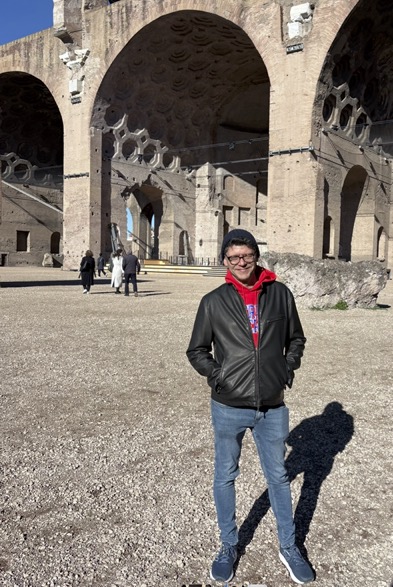
DK: Yes, I decided that since that first Caravaggio inspired the book—which went under contract with Milkweed Editions by early October, and which will appear in early 2028—I would travel around Rome and write a little something about every Caravaggio I saw. I got to many of them. In the churches and in the Gallerie Borghese. But then the Berninis found their way into the book, Daphne and the fountains, and then the famous Boxer at Rest, found in the nineteenth century after resting underground for over two thousand years. The more I wrote, the more pieces I found—Apoxyomenos and the wall frescos of Giotto at Assisi—and I think I'd still be there; maybe part of me still is. It was an experience that instilled in me a sense of antiquity within the modern, the way the ruins are ingrained in daily life in Rome. So you can see the very old in just about anything you look deeply into. It is still finding its way into my poetry.
PH: What was it like being the only literature fellow among artists from other disciplines?
DK: I loved this fact of the fellowship. Not that I don't enjoy the company of poets—I spend just about all of my professional life speaking with and enjoying the company of poets—but I was forced out my comfort zone in this situation and found myself a translator, sharing with ancient scholars and artists what my experience in Rome was restoring in me as a writer. At the same time, there wasn't shop talk like when you're working around other poets. I kept all of that to myself, and it proved to offer me a lot of creative nourishment.
PH: Do you have a special or meaningful experiences or favorite moments there that you could share?
DK: At the end of my fellowship period I took a trip alone to Venice, which had been a favorite city of the namesake of my award, Joseph Brodsky. I wanted to thank Brodsky, I suppose, and booked a little trip to stay in one of the narrow hotels along the canals surrounding San Marcos. In all of my trips to Italy I had never seen Venice; I'd been saving it. So I went. I just wandered the warrens for four days writing and people watching in the cold December, when there weren't that many tourists at all. I can't yet describe what happened to me there. I felt completely enclosed in this miracle of a city; floating on logs somewhere underneath the stone; still held up despite 1600 years of tromping. In Venice I found the present moment inside the ancient. I just put my phone away. I walked around with a book and a notebook and a pencil. I was "there." It was a feeling we all experience so rarely now. Just being there. Highly recommended. I was completely there.