
The Making of Monster Storm Hurricane Melissa: A CAS Conversation
In CAS Conversations, we sit down with students, faculty, staff, and alumni to share their stories, expertise, and ideas. From exciting research and classroom innovations to personal reflections and community impact, CAS Conversations brings forward the voices shaping our campus and inspiring change beyond it.
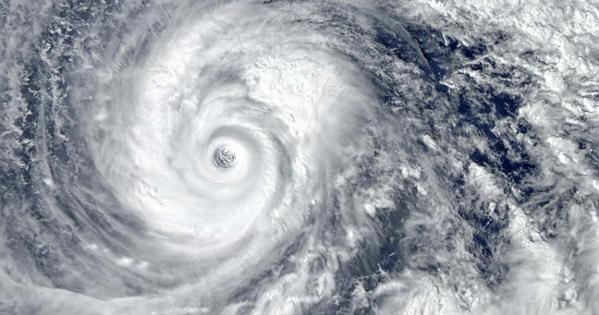
Hurricane Melissa reached peak winds of 185 mph, ranking among the most powerful Atlantic storms ever to make landfall and tying as the third strongest on record. Forming over just a few days, it intensified with unusual speed before striking on October 28, devastating Haiti, Jamaica, and the Dominican Republic. More than 60 people were killed, and homes, hospitals, and roads were destroyed, leaving many communities cut off without power or shelter as international aid continues.
We asked AU Professor Stephen MacAvoy in our Department of Environmental Science to answer some of our questions about how this storm grew so fast and became so powerful—and whether we can expect more monster storms like this over the Atlantic.
PH: Hurricane Melissa has intensified faster than any hurricane ever recorded—going from a tropical system to a monster storm in barely a day. How did this happen?
SM: While the total number of tropical cyclones hasn’t increased, we’re seeing a higher proportion of very strong ones (Category 4 and 5 storms) rising from about 20 percent to roughly 35 percent of storms over the last 50 years. Rapid intensification like Melissa’s has also become more common.
Scientists have improved their ability to predict where storms will go, but we still struggle to model which storms will suddenly strengthen like this. It tends to happen near coastlines—within about 400 kilometers of land—where several factors converge: warmer ocean currents (especially boundary currents like the Gulf Stream), shifts in mid-level humidity, and changes in how wind speed changes with altitude (vertical wind shear).
PH: Is climate change making rapid-intensification storms like this one more common or more extreme?
SM: Climate change is contributing to rapid intensification, though it’s not the only factor at work. We’re seeing more Category 4 and 5 hurricanes than in the past, which suggests an increase in the frequency of the strongest storms. However, their peak wind speeds haven’t necessarily grown higher. What has changed is their size—the diameter of these powerful storms is getting larger, allowing them to affect a wider area and cause greater overall impact.
PH: Even with ever-improving satellites and computer models, why is it still so hard to predict a hurricane's path—or when it might suddenly explode in strength?
SM: The models are getting better at predicting the path. When it comes to strength, meteorologists can make educated guesses about what might cause rapid intensification, but the models rely on high-quality data. They need to be able to “see” variations across many factors within rapidly intensifying storms and compare them to storms that don’t intensify as quickly. That data comes from instruments called dropsondes being released into the storms. It’s a difficult process, but as the amount of real data increases, the models will continue to improve.
About Professor Stephen MacAvoy
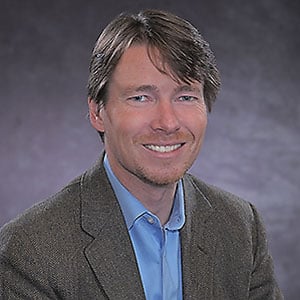 Working in biogeochemistry and ecology, Professor Stephen MacAvoy has been particularly interested in how both nutrients and contaminants flow through, and are incorporated by, aquatic ecosystem components. Research and consulting activities have taken him to the Gulf of Mexico hydrocarbon seeps, Barbados, 11 USA States, and other locations. Professor MacAvoy obtained his PhD from the University of Virginia in 2000 and conducted post-doctoral work at the University of Georgia. He joined the faculty of American University in 2003 was chair of the Department of Environmental Science from 2016 to 2022. He has been the Graduate Program Director for 22 years. Recent publications have appeared in Applied Geochemistry, Environmental Science and Pollution Research, Ecological Engineering and Marine Mammal Science. He is currently conducting research on the inorganic and organic geochemistry of the Anacostia River in Washington, DC.