
Patricia Park on Writing, Stand-Up Comedy, and Her Latest Young Adult Novel
 Patricia Park in New York
Before writing her latest young adult novel, Patricia Park did something most authors wouldn’t dare: she got up on stage and tried to make people laugh.
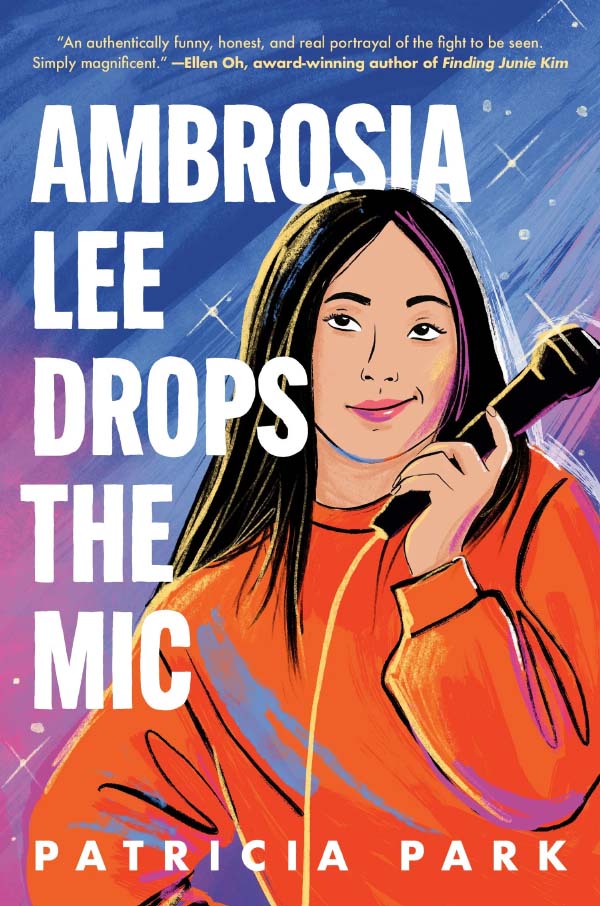
The American University professor of Literature and Creative Writing took a method writing approach to Ambrosia Lee Drops the Mic (Crown Books, release date April 28), studying comedy for six weeks before testing out her jokes in real clubs. She got laughs—and some heckles—and then she turned it all into material for the book.
Humor and heart run through all of Park’s work. She has built a wide readership with novels that explore identity, self-esteem, belonging, and the complicated process of growing up. Her books, spanning adult and young adult audiences, are linked by what she calls the “Queens Multiverse,” inspired by her upbringing in New York as the daughter of Korean immigrants.
Ambrosia Lee Drops the Mic follows a former child actor trying to reinvent herself through stand-up comedy. It’s full of sharp jokes and truths about body image, stereotypes, family problems, and ambition. In this conversation, Park reflects on performing, writing for young people, and how humor can be a powerful way to tackle difficult subjects.
You performed stand-up while researching Ambrosia Lee Drops the Mic—what was that experience like, and how did it shape the novel?
It was exhilarating and nerve-racking and all the things! I enjoyed the creativity of writing something that day, performing it, and getting feedback in real time. Whereas novel-writing takes years. Every time I was humiliated onstage—which was a lot—I kept telling myself, “I’m suffering for the research, lol.”
And were there any moments from the stage that made their way directly onto the page?
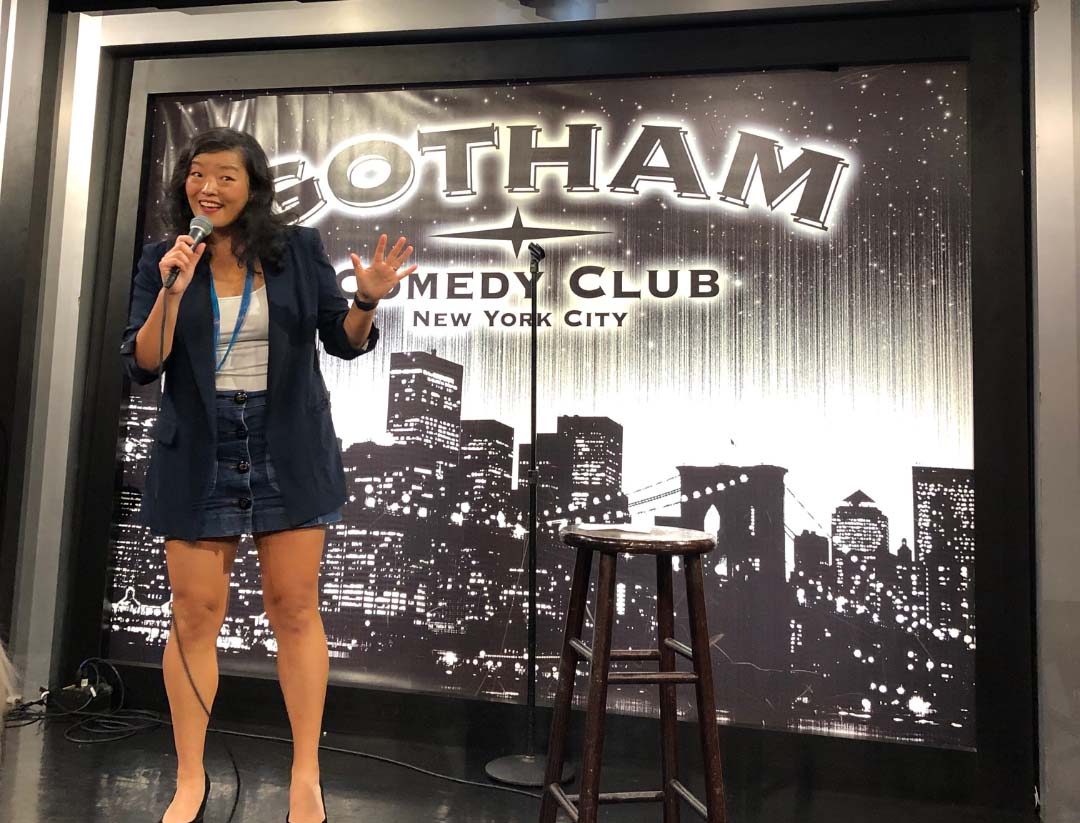
I got heckled a lot in comedy clubs, so I drew from those experiences when writing Ambrosia Lee. But I got heckled more as an audience member than when I was actually onstage. I’d just be sitting there, minding my own business, and some comics would pick on me and make jokes about my race and/or gender. It wasn’t the most fun.
Then again, I’m a native New Yorker, and people say all kinds of stuff when you’re walking down the street. So in some ways it was just another Tuesday.
The book sparkles with comedy and Hollywood glamour, but it also takes on body image, misogyny, identity, and family problems. How do you thread humor through those heavier themes?
I think you need refreshing bursts of humor to cut through heavy themes—because at the end of the day, a novel should entertain and transport the reader (while also teaching them something new). If it’s all downtrodden vibes all the time, who wants to go on that journey? Similarly, I think you need richness and complexity of story to support humor—or else it’s just a bunch of wocka-wockas. But I know a lot of comics who would disagree with me.
You’ve written for both adult and teen audiences, but your recent novels center on young people. What draws you to teen protagonists? And do you find that their struggles echo the ones you remember from your own youth?
I remember feeling constantly misunderstood and unseen as a teen—and that can be a very alienating experience. I think all my novels, adult and teen, try to speak to that sense of alienation, but teens especially have big feelings and big firsts. So I wanted to give voice to that and maybe help take away some of the reader’s loneliness.
How do you bring your writing into the classroom? Do your students shape your work, too?
I once asked my students if they could look at a couple of text messages I wrote for my YA character. They stripped the texts of all punctuation and subject pronouns and caps (no cap!). It was an incredibly useful, if cringey, experience for me. I felt like such a Boomer, even though I’m a Millennial.
What’s one lesson you hope your creative writing students carry with them long after the semester ends?
Strive to make every description original and uncliched. As with good writing, as with good comedy.
More About Patrica Park
Patricia Park is the author of the award-winning novel, Re Jane (a Korean American retelling of Brontë’s Jane Eyre), and the YA novels Imposter Syndrome & Other Confessions of Alejandra Kim (an NPR Best Books of 2023 and a Gotham Book Prize finalist), What’s Eating Jackie Oh? (Kirkus Reviews’ Best YA Books of 2024), and the Ambrosia Lee Drops the Mic (2026). She is a tenured professor of creative writing at American University, a Fulbright scholar, an Edith Wharton Writer-in-Residence, a Jerome Hill Artist Fellow, and other awards. She has written for The New York Times, New Yorker, Guardian, and others. Patricia was born & raised in Queens, NY. Her novels are all linked in the “Queens multiverse.”