
AU Student Wins National Award for Research on Cancer-Linked Enzymes
What does a single nickel atom have to do with cancer?
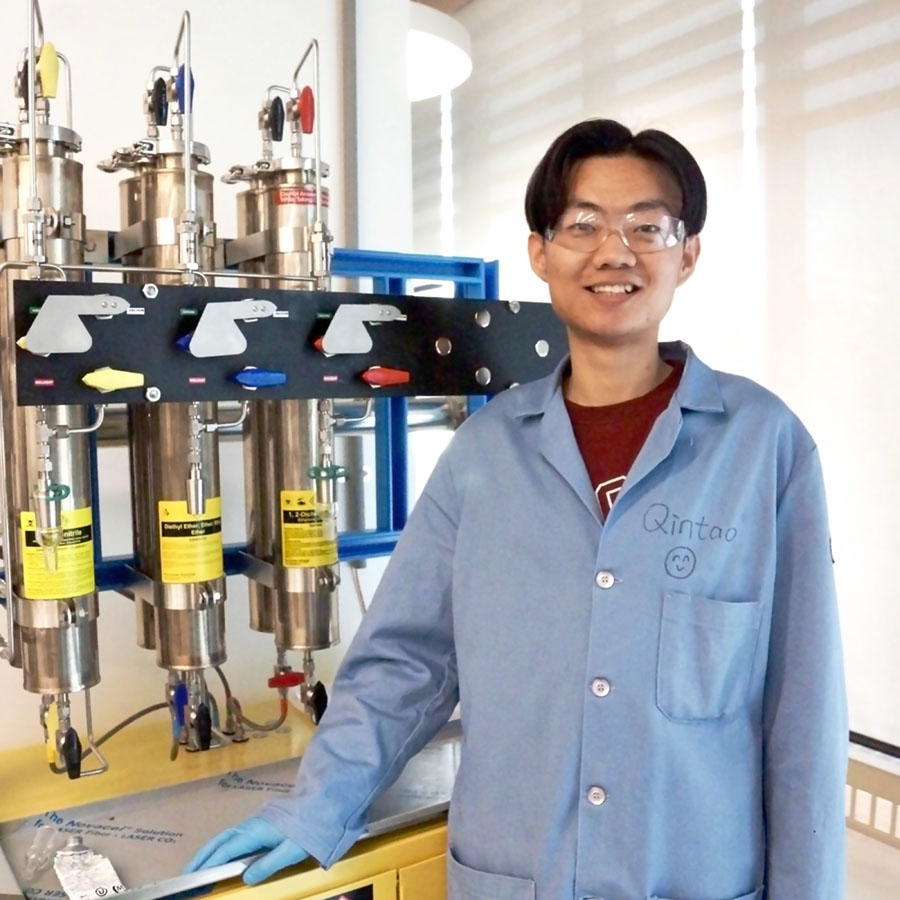
For chemistry master’s student Qintao Jia, that question has taken him from American University’s Toledo Lab to one of the largest scientific conferences in the world.
Last summer, Jia took the national stage at the fall 2025 American Chemical Society Meeting. He competed against more than 100 student presenters in the inorganic chemistry poster session, and by the end, he was one of just four to receive a prestigious poster award.
The conference drew more than 10,000 chemists, making it one of the largest gatherings of its kind in the world. Jia, however, felt confident. “Presenting was exciting—and honestly a little intense—because you’re sharing your work with people who really know the field,” he says. “The best part was seeing genuine curiosity, people stopping, engaging, and offering ideas that could improve the project.”
For Jia, the award validated all the work happening in the Toledo Lab, run by Department of Chemistry Professor Santiago Toledo. “It was reassurance that the science is solid, and the work matters beyond our lab,” he says. “It also felt like recognition of the day-to-day persistence behind the scenes—failed runs, troubleshooting, repeating experiments, and slowly building confidence in the results.”
The recognition also comes at a pivotal moment for American University. In 2025, AU earned R1 status, the highest possible designation from the Carnegie Classification of Institutions of Higher Education, which recognizes the university as one of the top doctoral research institutions in the country. Jia’s national award reflects the caliber of scholarship now defining AU’s expanding research profile.
When Metabolism Goes Wrong
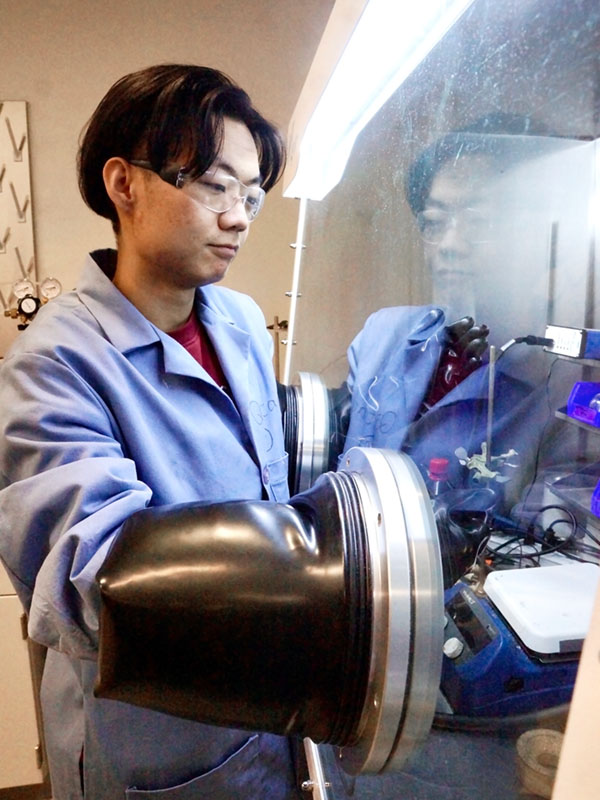
At its simplest, Jia’s research looks at what happens when one tiny part of a cell starts behaving differently.
Our cells rely on carefully balanced chemical reactions to grow, repair damage, and stay alive. In cancer, that balance shifts. “Cancer cells often ‘rewire’ metabolism to grow faster and survive stress, so understanding enzymes in key pathways can reveal vulnerabilities,” Jia explains.
Jia focuses on one enzyme within a key metabolic pathway—a kind of cellular recycling system that helps cells recover and reuse important molecules needed for healthy growth. When this pathway doesn’t function properly, trouble can follow. “If this pathway isn’t working properly, certain byproducts can build up to unhealthy levels, which lead to the cancer,” Jia explains.
What makes this enzyme unusual is the metal at its center. Many enzymes rely on common metals like iron or zinc, but this one uses nickel. “Nickel-containing enzymes are particularly fascinating because nickel is less common in human biology,” Jia says. “When nickel is used, it often enables very distinctive and powerful reactivity.”
A Metal That Changes the Outcome
That nickel atom doesn’t just sit there—it can actually change what chemical reaction happens. Jia compares it to “almost like swapping a part in a machine and getting a different output.”
In this case, that different output can have serious biological consequences. One of the chemicals the enzyme can produce is carbon monoxide—a molecule that can help cancer cells survive when they would normally die.
To study this chemistry more closely, Jia built a small nickel compound in the lab that mimics the enzyme. This allows him to examine each step of the reaction in detail, something that’s nearly impossible to isolate and observe inside a living cell.
The breakthrough came when the results consistently matched the team’s predictions. “Getting consistent data that matched what we’d expect for the enzyme-like reactivity meant we went from ‘this might be happening’ to ‘we can reliably demonstrate this chemistry,’” Jia says.
Training for Scientific Independence
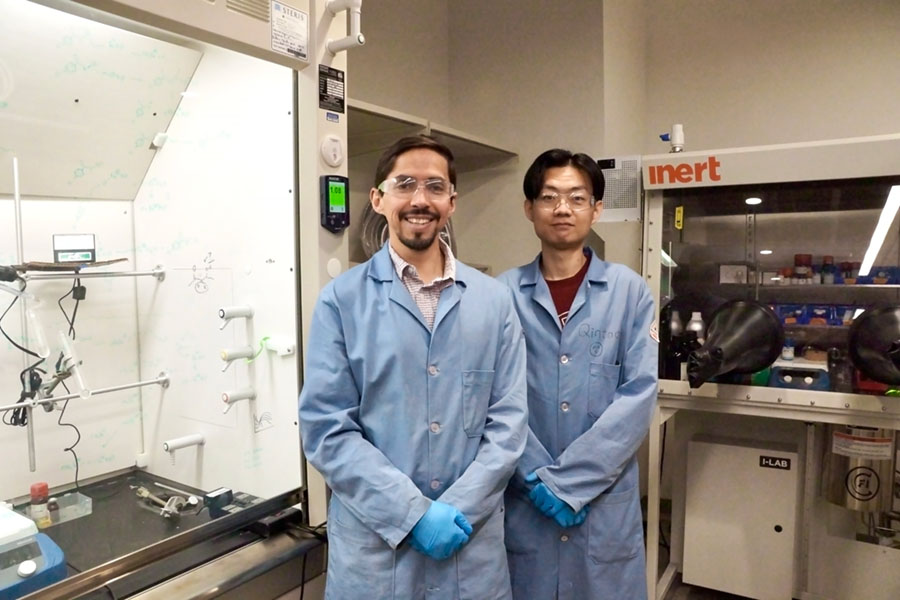
Jia credits the Toledo Lab with shaping him as a researcher. “The Toledo Lab has trained me to think mechanistically: not just ‘what happened,’ but ‘why did it happen,’ and what evidence truly supports a claim,” he says. “I’ve become much more comfortable with scientific independence: planning experiments, interpreting messy data, and defending conclusions carefully.”
For Jia, the award affirms that all his careful work in the lab can illuminate how even a single metal atom might influence the biology of cancer. Next, he plans to pursue a PhD and continue exploring bioinorganic chemistry at the intersection of metal chemistry, oxygen activation, and biological relevance.
Ultimately, the experience has pointed Jia towards a simple but powerful goal: he hopes to keep studying how metals help power essential biological reactions—and how those reactions can influence human health.