
Where History Lives: AU’s Humanities Truck Takes to the Streets of DC
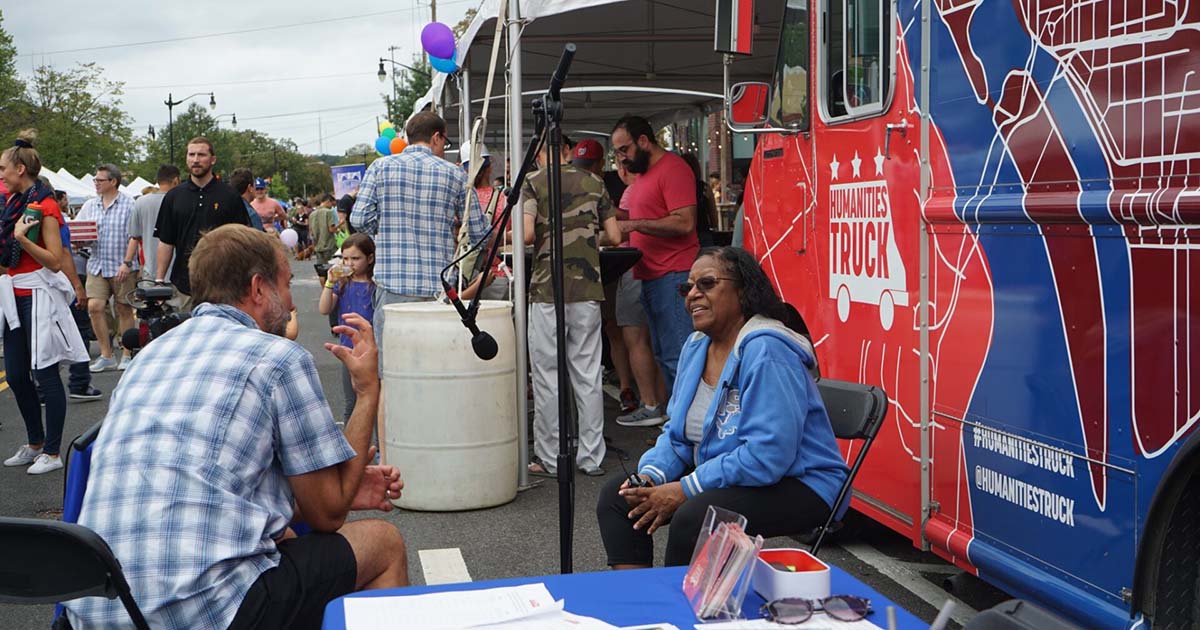 Dan Kerr interviews Paula White
In Washington, DC, history is everywhere. It's in the monuments and museums, but also in neighborhood parks and gathering places, music and food, protests and traditions.
It's at a roller-skating pavilion in Anacostia Park, where generations of Black Washingtonians have gathered for decades. It's outside the White House, where anti-nuclear activists held a peace vigil for more than 40 years. And it's at Chinatown’s Wah Luck House, a senior living building where elders share stories about arriving in America and going to work in neighborhood restaurants.
Much of this history, though, never finds its way into museums or archives.
AU historian Dan Kerr wants to change that. He launched the Humanities Truck in 2018 and has been taking it into DC's neighborhoods ever since, collecting stories from the people who know them best. Along the way, AU students have become part of that work, learning about Washington firsthand from the people who live there.
Since 2018, the bright red-and-blue Humanities Truck has traveled to festivals, parks, and neighborhood gathering places across the DMV. Part research lab, part recording studio, and part exhibition space, it comes equipped with screens, speakers, and room for pop-up exhibits, performances, interviews, and workshops.
Kerr wanted the Truck to be impossible to overlook. Its colorful appearance was designed to draw people in. “Nothing about it was meant to be discreet,” he says. “Rather, the truck's aesthetics were intentionally about joy, creativity, and performance.”
Here are five of the stories the Humanities Truck is helping preserve.
Still Rolling After 50 Years
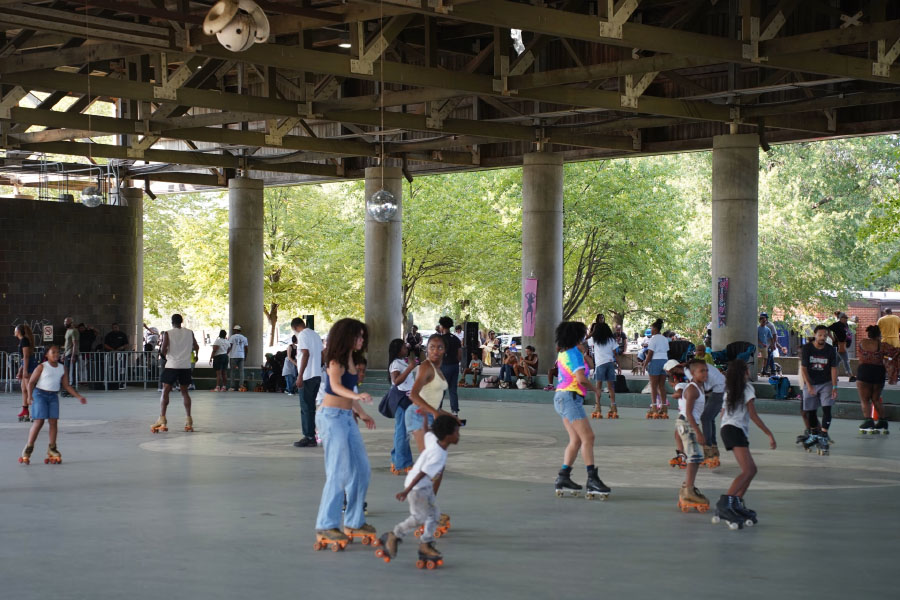 Skaters in motion at Anacostia Late Skate in 2026
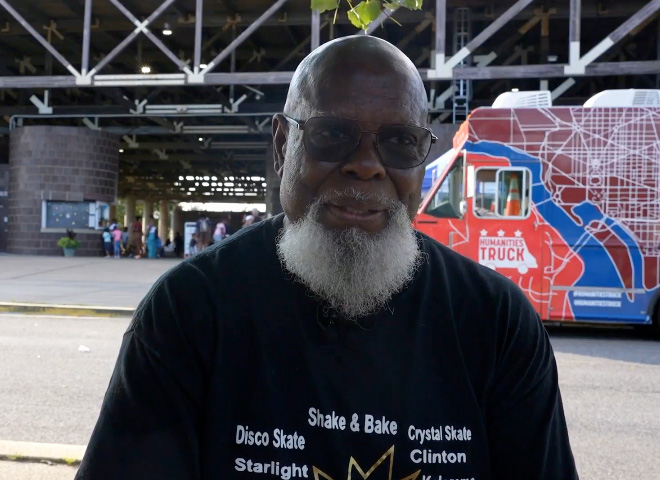
At Anacostia Park's skating pavilion, James Allen has watched generations of Washingtonians grow up on roller skates.
Allen, better known as Big Jim, helped beginners learn to skate and let children stand on top of his skates as he glided along. Sometimes dressed as a clown, he led a parade of 30 or 40 children around the rink. Those children are grown now, but many still recognize him.
Since opening in 1976, the pavilion has been more than a skating rink. For generations of Black Washingtonians, it's been a free place to gather, listen to go-go music, show off their moves, and teach younger skaters new steps. Families come to spend time together, and friendships stretch across decades.
In August, Allen shared his memories with AU graduate student Ethan Norris-Weber outside the Humanities Truck, which had come to Anacostia Park for the pavilion's 50th anniversary. He recalled how skaters passed down moves with names like the Shuffle and Reverse Eagle, along with their love of skating and a tradition of welcoming newcomers.
“I'm proud to say I'm 71 years old. I love roller skating. I will be roller skating until I can't roller skate anymore,” Allen said. “If I'm in a wheelchair, that won't stop me from going to the rink.”
Forty-Five Years of Protesting for Peace
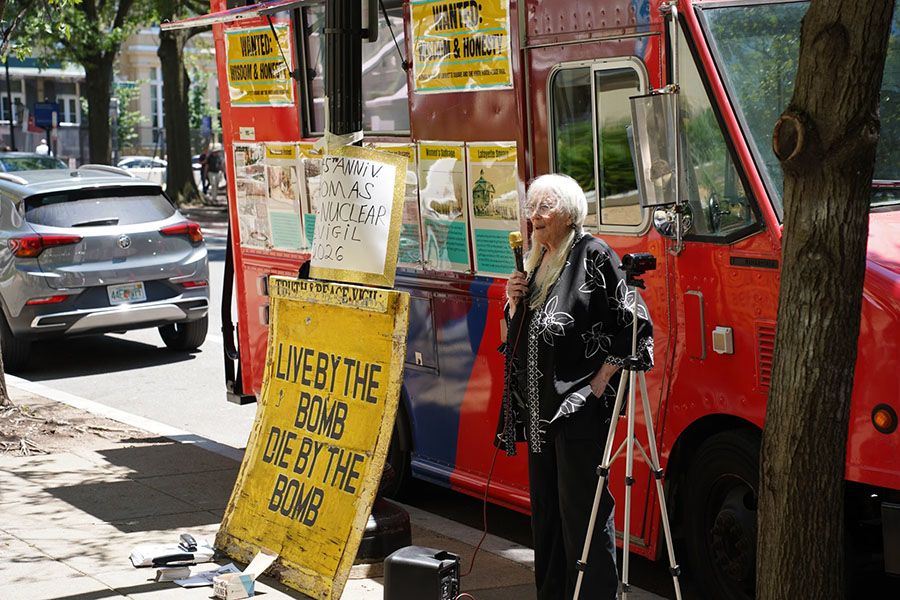 Ellen Thomas at the peace vigil's 45th anniversary, 2026
For more than four decades, anti-nuclear activists kept a peace vigil across from the White House in Lafayette Square, through one presidential administration after another, until the Trump administration ordered its removal in 2025.
Longtime activist Ellen Thomas wanted to preserve the vigil's history. She filled an entire trailer with photographs, documents, and other materials and brought it to American University.
The Humanities Truck team worked with AU Special Collections, the university library's repository for historical records and rare materials, to organize the collection. They also carried old photographs back to the activists, who identified faces and shared memories that filled gaps in the historical record.
For the vigil's 45th anniversary in June 2026, the Truck recorded more interviews and created an exhibition featuring photographs and an original protest sign, ensuring that the activists' firsthand accounts would become part of the historical record.
The Beat Goes On in Adams Morgan
The Truck returns every year to Adams Morgan Day, where Kerr interviews residents and is struck by how much the neighborhood has changed and how much remains the same. Many buildings still stand, but the businesses, music, street vendors, and people who once filled those spaces have changed.
At the 2026 festival, the Truck gave those memories a new soundtrack, mixing snippets of interviews collected over the years with musical beats and playing them for festivalgoers.
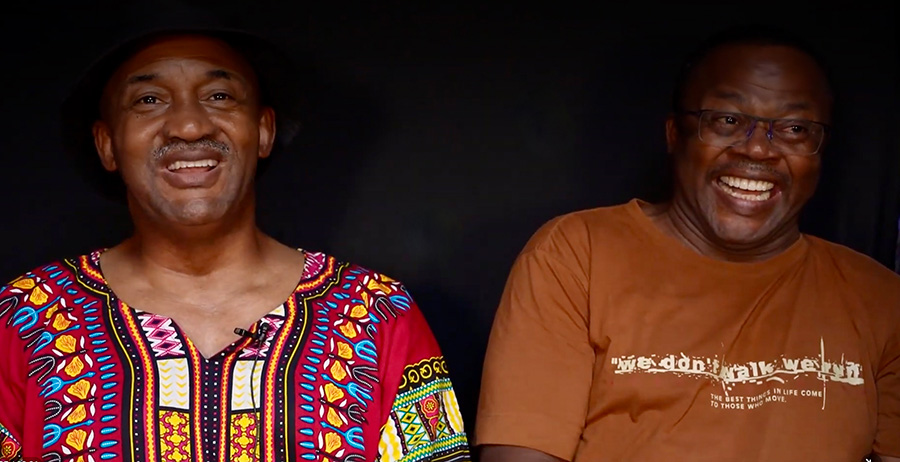
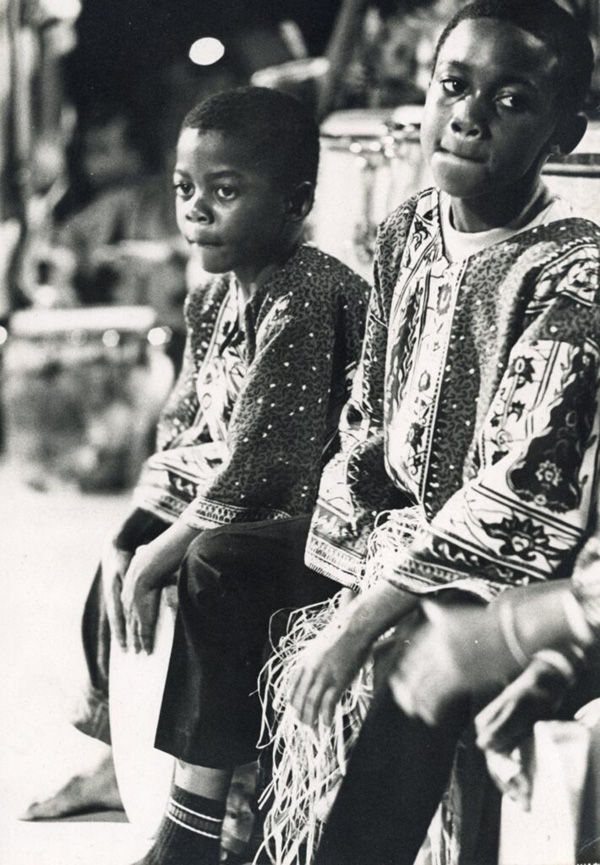
Brothers Vernon and Perry Suggs grew up on DC's Belmont Road in the 1960s. They remember quieter streets, neighbors looking out for one another, and attending Morgan Annex, a neighborhood school since converted into condominiums.
One of the neighborhood's gathering places was the New Thing, they say, an arts center founded by filmmaker Topper Carew. At first, Perry was reluctant to go. But when the center introduced him to African drumming, he was hooked.
“Once I got here and seen what was going on, couldn't keep me away,” he says.
The brothers learned to drum, performed in shows, and traveled around the country. The adults who ran the program made sure they were fed, sometimes handing out certificates for the McDonald's that still stands on 18th Street.
The Humanities Truck has helped bring that history back to life. Working with the National Park Service, Jackson-Reed High School, and DC Public Library, the team organized an event at the former New Thing site featuring historical photographs, DJs, and the jazz-funk group the Blackbyrds. Vernon and Perry even returned to lead an African drumming workshop.
More Than a Day's Work
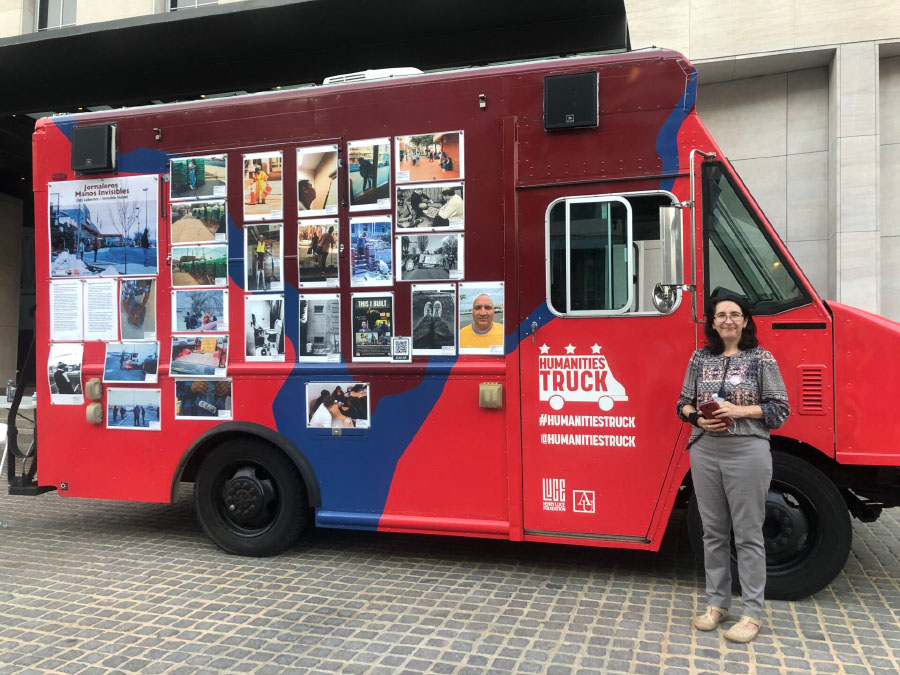 Ludy Grandas and exhibition photos shared on truck outside AFL-CIO headquarters
On May 1, 2025, day laborers arrived at the Trabajadores Unidos headquarters in Washington and found 17 large portraits of themselves on display. The International Workers' Day exhibition was called Faces of Migration: Stories in Every Gaze. Some of the workers laughed when they saw themselves. Others shed happy tears. A few photographed their portraits to send to family back home.
For more than a decade, AU professor Ludy Grandas had worked with the city’s day laborers to document the hardships they faced, but also the joy, creativity, relationships, and beauty in their lives.
Her approach helped shape the exhibition, a collaboration among Grandas, her students, the Humanities Truck, and Trabajadores Unidos, an organization that supports day laborers and immigrant workers. Students created colorful backgrounds for the workers' photographs, then met the people whose portraits they'd helped bring to life.
The Humanities Truck parked outside for the celebration, welcoming visitors and offering a place to gather, talk, and share memories.
Beyond the Parade
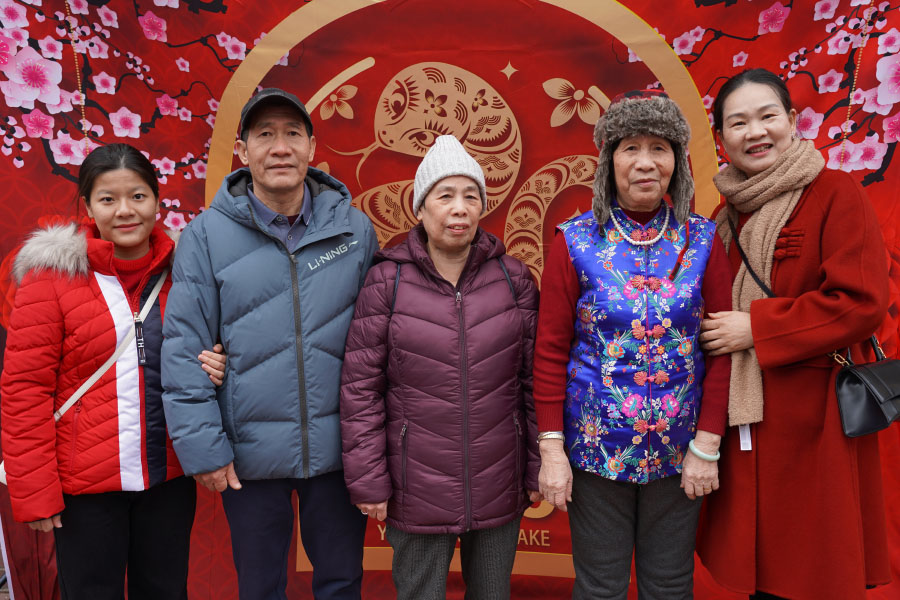 Multigenerational family at Lunar New Year celebration, Chinatown, DC
Every Lunar New Year, crowds fill DC's Chinatown to watch the parade and learn about Chinese American culture.
It's a neighborhood that has changed dramatically over the years. Many Chinese-owned businesses have closed, and families have moved away to the suburbs.
But at the same time, Chinatown remains a living community. Half a block from the start of the parade is Wah Luck House, a senior living building, home to elders who have lived in the neighborhood for many decades. Their memories are an essential part of Chinatown's history. Many worked in Chinatown's restaurants, in the kitchens and behind the scenes. Some speak neither English nor Mandarin, which has made finding interviewers a challenge. But the Humanities Truck has spent years working with the 1882 Foundation and multilingual AU students to earn their trust and record their memories before they are lost.
For DC resident Ren Lee, preserving the stories of the elders critically important—and so is acting on them.
“Chinatowns are diminishing all across the country,” Lee said. “What is so beautiful about America is that we are truly an amalgamation of different cultures, heritages, generations. So protect them.”
Next Stops
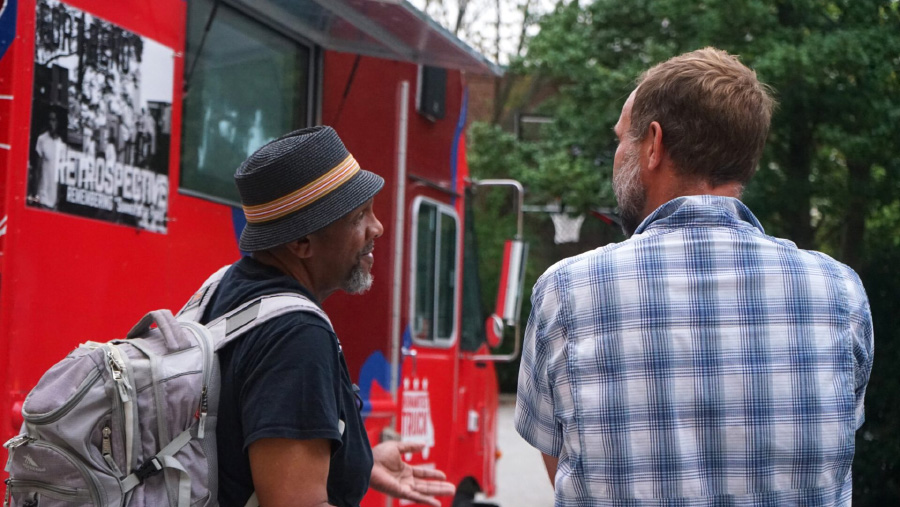 Dan Kerr talks with DC resident
Kerr is excited about the program’s future. A new $250,000 grant from the Henry Luce Foundation will largely fund a second truck, building on $750,000 from the Mellon Foundation. Together, the two foundations have invested $1 million in the project.
For Kerr, a second truck means more opportunities to bring history into the neighborhoods where it happened.
“For eight years, we’ve been transforming playgrounds, parking lots, sidewalks, and parks into places where people can reflect on their communities, remember what's been lost, and share their dreams for the future,” he says. “And every story helps us understand Washington a little better.”