Stay up-to-date
Be the first to hear our new episodes by subscribing on your favorite podcast platform.
Like what you hear? Be sure to leave us a review!

School of International Service on a map
4400 Massachusetts Avenue NW Washington, DC 20016 United StatesIn this new episode, School of International Service professor and former US Ambassador to Mongolia Piper Campbell joins Big World to share reflections on her 30-year career in diplomacy and provide practical advice for aspiring foreign service officers.
Campbell, the chair of the Department of Foreign Policy & Global Security, begins our conversation by explaining why she chose to pursue a career in diplomacy (2:01) and discusses the multiple stages of her career (3:49). Campbell also describes the various pathways available within the State Department to engage in diplomacy (8:11) and shares advice for how future diplomats can prepare for the variety of situations they are likely to encounter in their career (10:24).
What are the different “cones” within the State Department, and what do they mean for a diplomat’s career path (14:53)? Why does it remain important for students to continue studying diplomacy amid recent changes in the federal hiring landscape (19:42)? Campbell answers these questions and shares her biggest piece of advice for aspiring foreign service officers (26:17).
0:07 Madi Minges: From the School of International Service at American University in Washington, this is Big World, where we talk about something in the world that truly matters.
0:15 Piper Campbell: The State Department is going to need in the future to be able to reinvest and rebuild some of the soft power that we're losing right now. And I believe that our students...I really encourage our students to look to be part of not building back, but building forward.
0:38 Madi Minges: That was SIS professor and former US Ambassador Piper Campbell. She joins us today to share reflections on her career as a Foreign Service Officer. More than a century ago, legislation dubbed the "Rogers Act" established a professional United States Foreign Service. Over the past 100 years, the Foreign Service has employed thousands of professional diplomats who carry out and guide the foreign policy of the United States. US diplomats are nonpartisan public servants who are dedicated to representing and advancing America's interest in national security abroad. Today, diplomats operate out of embassies and consulates at 276 posts around the globe, according to the American Foreign Service Association. But how does someone become a diplomat and what do the pathways within the Foreign Service look like?
1:25 Madi Minges: Today we're talking about what it looks like to forge a career path in diplomacy. I'm Madi Minges and I'm joined by former US Ambassador Piper Campbell. Piper is a professor here at the School of International Service where she is also the Chair of the Department of Foreign Policy and Global Security and Director of American University's ASEAN and Indo-Pacific Studies Initiative. Before joining SIS, Piper's diplomatic career spanned 30 years, during which she served both as US Ambassador to Mongolia and Head of the US mission to ASEAN. Piper, thank you so much for joining Big World.
1:59 Piper Campbell: Hi, Madi. Thanks for having me on the show.
2:01 Madi Minges: Piper, to start off our conversation, can you tell us about how you decided diplomacy is what you wanted to do for your career and what made you want to be a Foreign Service Officer?
2:11 Piper Campbell: So, in retrospect, I'm not sure that I knew what being a Foreign Service Officer would entail when I first joined the Foreign Service. I should explain that I was 24 when I became a diplomat, when I joined the Foreign Service, and I sometimes feel like I made two decisions. The first was at that point when I joined as a management officer, and I know we'll get into this in more detail later, but there's different cones or career tracks within the State Department. And as a girl growing up in Buffalo, I knew I loved international things, I knew I wanted to travel the world, but I didn't have much exposure to the federal government or really understanding what types of jobs and opportunities were available. So, my first decision to join the State Department was, "Wow, somebody is going to pay me and let me travel around the world."
3:04 Piper Campbell: After I had been in for about 10 years, I really reached kind of a fork in the road, and I needed to decide whether I was going to stay in the State Department, continue working for the Federal Government, or kind of forge a path out. And I actually took a year of leave from State and went and got a master's degree, which gave me a great opportunity to kind of reflect and to look inside State and out. And I made a decision that I loved the work that I was doing and that I wanted to continue with the State Department, but I sometimes think of the first part of my career as kind of I was doing what the State Department directed me to do, and the second half of my career was very much more I was in the driver's seat.
3:49 Madi Minges: When you think back over your 30-year career, can you talk about how you describe those different stages? And maybe take us through some of the highlights from your time as a diplomat.
3:59 Piper Campbell: Yeah. When I explain my career, it's easy for me now looking back on the career to see how I had sort of four issue areas or areas of expertise. And at times, one of those areas would sort of be more in the front, but over the whole career there were aspects of all of them. And so those sort of four buckets are that I always loved the area of East Asia. I joined the Foreign Service speaking Japanese and thinking that I might serve in Japan at some point during my career. Never did, but having the Japanese language and skills was certainly helpful. I also kind of shifted in focus from Northeast Asia to Southeast Asia. I really kind of fell in love with the drama, the complexity of Southeast Asia. And as you noted, I continue to run the ASEAN and Indo-Pacific Studies Initiative, so even at AU, Southeast Asia is a big area of focus for me.
5:02 Piper Campbell: So, my regional area was East Asia. I enjoyed tackling some of the big management challenges of the State Department, the budget, the process of deciding where and how the US should be represented overseas, especially in conflict zones. And so that introduces my third bucket, which is that I found that I actually was both very good at and enjoyed working in conflict and post-conflict situations. And so a number of my tours were in and around conflict areas. And the fourth area was working multilaterally. So, many people think of diplomacy as bilateral diplomacy when the United States engages with one other country. So, for example, when I was posted at the US Embassy in Cambodia or the US Embassy in Mongolia, I was dealing with the Cambodian Government and the Mongolian Government.
6:01 Piper Campbell: But I had other posts like I served at the US Mission to the United Nations in New York, so I was the East Asia expert, so tapping that regional expertise, but working in a multilateral setting. You mentioned ASEAN, that I was the Head of the US mission to ASEAN. That's another multilateral setting where my job as head of the US Mission was to understand what the 10 Southeast Asian countries that are part of ASEAN, what their interests were, how they worked within the ASEAN structures, and how to advance US interests in engagement with those 10 countries. In terms of the conflict and post-conflict, I mentioned that, oftentimes the conflict and post-conflict and the multilateral diplomacy kind of meshed together.
6:48 Piper Campbell: So, I was loaned from the State Department, and served two years working in a peacekeeping operation, a UN peacekeeping operation in the Balkans. In terms of the conflict and post-conflict space, I also worked in Iraq. I was the Consul General in Southern Iraq in Basra in 2011, 2012, which was a pretty tough period of time as the US Military was withdrawing. So, that was also one of these sort of nexuses of... or nexi I guess might be the word, of kind of connecting these big management issues in the State Department. The question of: how were we going to be represented as diplomats in Iraq outside of a US military footprint?
7:35 Piper Campbell: And I felt so passionately that it was key to have diplomatic representation in Iraq at that time that I actually pulled my name out of... I was sort of slated to be heading some place as ambassador at that time, but I pulled my name out of that and said, "Send me to Southern Iraq." So, I spent a year there. So, that kind of gives you a little bit of sense of kind of the different flavors or different activities of different times. And like I said, when I look back, it's coherent, but I'm not sure that that whole path was always so clear to me.
8:11 Madi Minges: Yeah, absolutely. You are definitely someone who has had a career with a lot of variety it sounds like. Could you talk more about...For students or people who want to be a Foreign Service Officer, what would you say a day in the life is like, and I guess how would you best prepare for the variety that you experience in your career?
8:35 Piper Campbell: So, first I want to explain that there are multiple ways to work for the State Department and also that there's multiple ways to engage in diplomacy, not all of which are being a Foreign Service Officer. So, let me run through that really briefly before I answer your question. So, in the State Department, we have Foreign Service Officers, people who take the Foreign Service Officer Test (FSOT). There is also civil service positions in the State Department where the hiring occurs via USAJOBS. And that process looks a lot more similar to sort of the hiring process across the federal government. We then overseas have locally employed staff. And people are sometimes surprised to realize that in our embassies overseas, we often have Americans who happen to be living in that place or who have married a national of that country who actually work at US embassies abroad in these locally employed positions.
9:38 Piper Campbell: And there is a couple other very specific intake mechanisms, like a pathways process where somebody can get an internship in the State Department, and then from that internship, shift into a full-time civil service position. There's been a lot of flux in the State Department recently, and I think it's important to recognize that, and just to note that some opportunities that existed in the path---in the past aren't clearly available right now, but I think we're continuing to watch that space and optimistic that more intake mechanisms are going to become available. You asked about how does somebody that... You've noted how various the work of diplomacy is, and that's absolutely correct.
10:29 Piper Campbell: And it's one of the things I liked best about diplomacy, was arriving somewhere new and having not just that opportunity to learn about and figure out the complexity of a new place, but also the fact that even though there's some sort of through lines, threads of how we advance US interests that are sort of consistent from country to country. A lot of the work in each country is going to be determined by the dynamics of that country and the US relationship with that country. So, for example, in Mongolia, when I arrived in Mongolia as Ambassador, that was in 2012, Mongolia was the fastest growing economy in the world, which is amazing. In part, that was because Mongolia was starting from a relatively small economy. And so when a huge copper and gold mine went into production in Southern Mongolia, Mongolia saw very quick growth related to mining.
11:41 Piper Campbell: And Mongolia---I learned as I arrived there or was preparing to head to Mongolia---Mongolia has an amazing array of different sorts of mineral riches from to copper to gold, and one I had to learn about, which is molybdenum and some other rare earth. Mongolia even has uranium, and so I got a chance... As Ambassador, I got a chance to go and see a coal mine, and not just a coal mine, but learn about the process of how you clean coal, how you have a coal cleaning process. I saw the copper and gold mine. I even had the opportunity to see the elevator where you go down into the shaft, the shaft that you go down in. And so that's just sort of one example of how in each country you're learning about this. You need to become an expert in these highly technical subjects.
12:37 Piper Campbell: When I was the Head of the US Mission to ASEAN, we were...the United States put forward a resolution about the importance of safeguarding nuclear material. And this is not nuclear material... People think of nuclear material as primarily being weapons, but there's a lot of civilian uses of nuclear material, in hospitals, for example, and in science. And there was a real concern at the time that not all countries had the proper mechanisms, the proper structures in place to manage and control those sorts of civilian nuclear materials. Well, this isn't something I necessarily knew much about before we put forward this resolution, but since I was leading the negotiation, I had to learn a lot.
13:28 Piper Campbell: I had to get smart about civilian use of nuclear material pretty quickly. Luckily, you have lots of expertise, not only in the State Department, but in other branches of the US Government, so I had a lot of people backing me up and getting me smart. I think that the ways that you prepare are not so much focusing on a specific area, but developing skillsets in terms of being able to kind of find the key point and look at a lot of data and quickly build an argument in your mind, understand what you know and what you don't know, and be able to ask questions in order to sort of shore up that knowledge quickly. And the challenge is: how do you ask the questions in order to find the answers to inform your thinking, so that you can make good policy recommendations? And it's that skillset that we really focus on in the Foreign Policy and Global Security Department. And I think that that's one of those key skillsets, along with communication and empathy and teamwork, that are the skillsets that a good Foreign Service Officer.
14:53 Madi Minges: Piper, you mentioned earlier some of those pathways within the State Department. You also mentioned briefly this idea of "cones" and the cone system in the State Department. Could you explain what those different cones mean, and what it means to get filtered into them or selected for different cones within the State Department?
15:13 Piper Campbell: Yeah. And it's such a funny phrase, isn't it? It's much easier to talk about career paths, I think. But in any case, "cones" is the term that the State Department uses. And there's even a terrible phrase for somebody who starts in one cone but wants to move to another, and that phrase is "conal rectification." That's also a way to say that you may start in one cone, but there are some mechanisms to move from one cone to another. And not all jobs are sort of reserved for a single cone. So, let me explain the cones first, and then I'm going to explain a little bit of that. So, when you join the State Department as a Foreign Service Officer, you are actually asked to express interest in a cone, so the type of work that you want... that you hope to do, and you're hired into a cone.
16:07 Piper Campbell: So, when you're hired, you're hired as either a political officer, an economic officer, a management officer, as I noted, that was the cone that I entered, the Foreign Service in---a public affairs, a public diplomacy officer, or a counselor officer. Those are the five cones for Foreign Service Officers. There are also Foreign Service specialists who work alongside Foreign Service Officers, including in overseas posts and in the Department, and they focus on things like finance, personnel, the actual physical structure of the embassies, the security of the embassies, and the tech, the IT of the embassies. So, those are the specialists.
16:58 Piper Campbell: Let's go back to the generalists, to the five professional cones. When you enter the Foreign Service, you are hired into a cone, and then your training begins with a process where you're sort of oriented into the State Department. Even though you are hired into a cone, let's say the management cone, almost everybody entering the Foreign Service expects to serve their first tour overseas as a Consular Officer. So, my first tour in the Foreign Service, I went to the Philippines, about which I was delighted because, as I noted, I had developed this interest in Southeast Asia. And while I was in the Philippines working as a Consular Officer, I did visa interviews for Filipinos interested in traveling to the United States as tourists or for other types of non-immigrant visas, so people who were going to stay in the States for a little while and come back.
18:00 Piper Campbell: I did immigrant visas for Filipinos who were immigrating to the United States because they had married an American citizen or they had a mother or father or brother or sister or somebody who wasn't a US citizen. I did American Citizen Services, which is the way that embassies support Americans overseas when they lose a passport, when they get arrested, when they have a problem or a need where they need the US Government to step in. I also handled a couple crises. We used to joke that we had a little bit of everything in the Philippines when I was there, including a major earthquake, a typhoon... well, a couple typhoons and a volcanic explosion. So, got to do a little bit of everything in my very first tour as a Consular Officer.
18:54 Piper Campbell: When you continue in the Foreign Service as you go from job to job after those first or second tours, in general, you tend to do two tours overseas and then one tour in Washington. And in general, most of the jobs in Washington don't tightly kind of align with one of those career tracks. If you're going to be, let's say like the country desk officer for Mongolia, you can be in any of those career tracks and get an express interest in that job and get that job. But then as you move up in the State Department, and especially when you head back overseas, you're probably going to work in a section of the embassy that aligns with that cone.
19:42 Madi Minges: Thank you so much for that explanation. I want to turn now to talk about how you mentioned that the State Department is kind of in flux right now. I want to acknowledge that this is a challenging time for diplomacy with State Department layoffs and just the general shrinking of the overall Federal workforce. When you think about the future, why do you feel it's important for students to pursue working in this field? And why do you believe it's important to continue training students for this work?
20:12 Piper Campbell: One thing that I'm actually kind of hopeful about right now is I am hopeful that there are going to be new and more opportunities for younger people to join the State Department. Over the last couple years, I've found myself telling students that the average age of people successfully entering the State Department was going up and up. And so two years ago, the average age of people joining the State Department was 36, 37 years old. That means almost everybody had 10-plus years of experience at the point where they were joining. And in addition to teaching at AU, in the past, I regularly actually taught the incoming classes, the new Foreign Service Officers, which was awesome. I loved having that opportunity to engage with them when they were sort of starting their adventure as Foreign Service Officers. And I would ask them, among other things, "How many people in this room have already lived overseas? How many people have already worked for the US Government?" Even at that point of starting their State Department careers.
21:22 Piper Campbell: And the last class that I taught would've been in the summer of 2024, so a year ago, just over a year ago, and at that point, almost 80% of the class had prior experience living overseas and working for the US Government. So, I think the State Department clearly was getting really high caliber, really experienced people, but it was also missing out frankly, on the people like me, who joined at 24 and bring this enthusiasm and this new skills and the desire and the energy to kind of grow with the State Department. And so as the State Department shifts sort of some of the criteria by which they're looking to hire new Foreign Service Officers, I am hopeful that that may create more opportunities for some of our younger students, both undergrads and grads, to actually position themselves as being really well-qualified.
22:34 Piper Campbell: For anybody who's interested in the Foreign Service, the careers@state.gov is a great website and a really good source of information about the cones, about the Foreign Service Officer Test and about the whole process. And that careers@state.gov also describes the skillsets that the State Department is looking for when they test Foreign Service Officers, whether they're young or old. And I think something that I'm really happy about is I feel like in the US foreign policy and in the IAPA programs, I feel like we really develop the skills. We're not doing it intentionally. We're not saying, "We're going to make Foreign Service Officers," but the skillsets we focus on are the skillsets that the State Department is focused on as well.
23:36 Piper Campbell: I don't want to whitewash things, Madi. I'm really concerned about...I'm deeply saddened by some of the steps this government has taken. And obviously right now, at this moment with the government shutdown, that's really distressing. And there's a lot of important work that isn't being done. And some of the changes to the State Department are not things that I support, but at the same time, I think there's new opportunities right now. I hope that there's new opportunities right now, and I'm really encouraging our students to grab those opportunities. I also think, and this is a somewhat different tack, the State Department is going to need in the future to be able to reinvest and rebuild some of the soft power that we're losing right now.
24:35 Piper Campbell: And I believe that our students... I really encourage our students to look to be part of not building back, but building forward, building better as we look to what skills and what areas the State Department of the 21st and even 22nd century, dare I say it. What does the State Department of the future need and what should that look like? One thing I know for sure is that the State Department of the future should look like the American population, and it should speak to the American population as well as it speaks to populations overseas.
25:21 Piper Campbell: A challenge for the State Department, and we see it right now, we've seen it over the last month, and we saw it with the destruction of USAID, is that State and USAID have often not made the case to the American people as to why our diplomatic efforts overseas are so critical in supporting US national security and in providing the things that Americans care about the most. And so I think a really important area for focus is thinking about how to make those connections more explicit and to ensure that the work of the State Department and future development, however it is delivered on behalf of the American people, that those efforts make those connections with the American people.
26:17 Madi Minges: Piper, last question. For students of today who want to be diplomats, what is the biggest piece of advice you would give them?
26:23 Piper Campbell: It used to be read a newspaper every day. I've had to modify it slightly to: find a reliable news source, and I would actually say find multiple. In fact, look for news sources that are going to provide you different perspectives and read them on a daily basis. Read the foreign policy aspects. And the reason I say that is I sometimes see people who become really focused on a single issue area, or sort of pop in occasionally, but they're not reading consistently. And a key aspect of reading the news every day is to understand not only the headlines, not only sort of the key developments in the last 24 hours, but making those connections between what happened today, what happened yesterday, what happens tomorrow.
27:23 Piper Campbell: And I think that's one of the things you get when you read religiously and consistently. And I also sometimes advise my students to actually read with a map or a globe or something open, so that they're not just reading about these places, but they're actually thinking about how these places overseas connect to each other and connect to the United States. So, having a sense of the geographic realities is something that I think better positions people to absorb the news.
28:04 Madi Minges: Ambassador Piper Campbell, thank you so much for joining Big World to share insights from your 30-year career in diplomacy. It's been a pleasure to speak with you.
28:12 Piper Campbell: It was my pleasure. Thank you, Madi.
28:13 Madi Minges: Big World is a production of the School of International Service at American University. Our podcast is available on our website, on Apple Podcasts, Spotify, or wherever else you listen. If you liked this episode, please leave us a rating or review. Our theme music is "It Was Just Cold" by Andrew Codeman. Until next time.
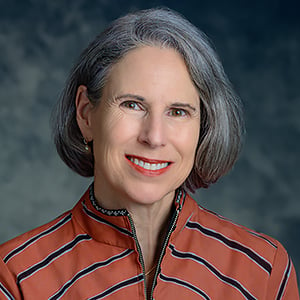
Ambassador Piper Campbell,
Hurst Senior Professorial Lecturer; Chair, Department of Foreign Policy and Global Security
Be the first to hear our new episodes by subscribing on your favorite podcast platform.
Like what you hear? Be sure to leave us a review!