Stay up-to-date
Be the first to hear our new episodes by subscribing on your favorite podcast platform.
Like what you hear? Be sure to leave us a review!

School of International Service on a map
4400 Massachusetts Avenue NW Washington, DC 20016 United StatesIn this new episode, SIS visiting scholar in residence Laura Field joins Big World to discuss the intellectual backbone of the New Right.
Field is a writer, political theorist, and the author of the recently published book Furious Minds: The Making of the MAGA New Right. In this episode, Field explains why she wrote this book (2:15) and what surprised her most in her research (3:30). Field also explains why Donald Trump was not the New Right’s first choice for the 2024 Republican nominee (6:38), discusses the differing factions that make up the New Right (10:20), and shares why she decided to focus her book on the intellectuals behind New Right ideology (19:04).
Is there a gender divide on the New Right? (22:44) How much influence do the intellectuals in the New Right have on Trump’s voter base? (26:16). Field answers these questions and considers where the New Right movement goes from here (28:59). The episode concludes with Field sharing what she hopes readers will take from her book (31:36).
0:07 Madi Minges: From the School of International Service at American University in Washington, this is Big World, where we talk about something in the world that truly matters.
0:16 Laura Field: Take any given dictator in history and he's going to have a little circle of intellectuals around him you know, pumping him up. And so, I sort of felt like that's what I was watching happen. And there's something important about the intellectuals in that their dramatic takeover and sort of gradual takeover of the GOP I think does help to explain the extremism of the second administration.
0:38 MM: That was author and SIS visiting scholar in residence, Laura Field. She joins us to discuss the intellectual underpinnings of the MAGA new right, and the highly influential PhDs shaping the movement from behind the scenes. The Make America Great Again movement, commonly known as MAGA, was popularized as the slogan and rallying cry of Donald Trump's 2016 presidential campaign. Today, the MAGA movement is synonymous with Trump voters, and remains a prominent part of the president's messaging. But behind the trademark slogan in the campaign messaging lives a vast world of conservative intellectual thought that forms the backbone of new right ideology. I'm Madi Minges, and today my guest is Laura Field. Laura is a visiting scholar here at the School of International Service. She's a writer, a political theorist, and an expert on American far right populist intellectualism. Her new book, Furious Minds: The Making of the MAGA New Right, chronicles the movement's emergence and coalescence, and charts the network of PhDs and intellectuals whose ideas have shaped it.
1:49 MM: In this episode, we talk about why Laura wrote this book, how the ideas of the intellectual new right translate to Trump's voter base, and where the movement goes from here. Here is my conversation with Laura Field. Laura Field, thank you so much for joining Big World, and welcome to the show.
2:13 LF: Thank you, Madison, thank you for having me.
2:15 MM: Could you tell me a bit about why you wrote this book?
2:19 LF: I wrote the book because I had been watching the new right, what I call the MAGA new right movement, unfold over the last...You know, since Trump first took office in 2016, and I had been writing about it quite a bit, and my own background is such that I studied in conservative intellectual spaces, and was familiar with some of the ways in which they speak. And so, I took it upon myself to write about these guys during the first Trump administration, and honestly, I thought they would leave the scene after January 6th.
2:55 LF: And so, I didn't expect to be writing this book, but then over the course of the Biden administration, it became clear that they were still having a lot of impact in the GOP. And then, of course, Trump came back in and won the nomination and so forth... Well, there was no real primary, was there? So, Trump came back in, and it seemed like there would be a need for this kind of book. And so, I pitched the book in 2022, and then I started writing it through 2023 and 2024.
3:30 MM: I'd love to know, you mentioned this familiarity with some of these figures on the new right and kind of being familiar with some of these conservative spaces. But as you were in the process of researching and writing this book, can you tell me what surprised you most?
3:49 LF: So, there were a lot of things that were surprising to me, but I'll name a couple of things. The book kind of chronicles the emergence of the movement during the first administration, and its coalescence, all these different factions coming together, and then in the second half, it's sort of all about their consolidation of the movement. So, it sort of spans 2016 through 2024, and it doesn't reach back that much into history. But one of the things I found really interesting was just how much some of the early people who were defending Trump from an intellectual perspective... Because I really am focused on people with PhDs, and people who are involved in movement conservatism, but in the upper tiers. So, the people who are doing in the think tanks and so forth, and who are writing articles and that kind of thing.
4:43 LF: And one thing that surprised me is just how steeped these people were in sort of fringe paleo conservative ideology. And I won't go into all of the details here, but in the conservative movement, if you do look at that history, of sort of William F. Buckley, Frank Meyer, and the old sort of fusionist conservatism that I think most Americans understand as the old establishment, sort of the Reagan-Buckley conservatism, and that stands for free trade economics, right? Sort of classical liberal economics, social conservatism, and a kind of liberal internationalism, but grounded really in anti-communism. And this other, what we could call paleo conservatism, which was very popular, sort of rose up again in the 1990s as a response partly to Reaganism, it stands for a much more isolationist foreign policy, and really small government, and also a kind of nativism. It was infused with a kind of nativist, and there's antisemitism on this... It's kind of fringe, right?
6:02 LF: And I was very surprised by just how steeped the new right thinkers were in that form of conservatism, and how attached they were to some of that. And when you look at what they were reading and who they were citing, it was a lot of these paleo influences. And then what happened, I think, and what was interesting is they saw that Trump, whether he knew it or not, had the instincts of the paleo conservatives. And they saw that Trump resented, even in policy terms, a lot of what those older fringe conservatives celebrated and had always been trying to bring back in.
6:38 MM: I wanted to turn now to one of the points you made in the book that really stuck out to me, and that is, you write that, you know Trump wasn't necessarily the new right's first choice in the 2024 election, that really struck me, but you talk about after they failed to prop up Florida Governor Ron DeSantis as their candidate, they really rallied behind Trump. And I found this so interesting because when I think of, when I first read the title of your book, the first thing that struck me was, "Oh, this will be MAGA new right, oh, this will be a book about Trump." But really, really it's not. Of course, Trump is mentioned, and Trumpism is discussed, but it's really not a book about Trump.
7:28 MM: So, I kind of expected this movement to be very synonymous with Trump and Trumpism, but you take a different path, talking about the intellectual undergirding, I guess. So, I'm wondering if you can talk about why the new right didn't have Trump as their first choice in 2024, despite him being what I think a lot of people see as the face of MAGA.
7:55 LF: That's a great question. I don't fully... I think they recognize that he has some liabilities, this guy. I think from the beginning, they've not... I think, my impression is that some of them have a genuine affection for this man, right? They just do. But I think that... And that maybe he's grown on them, or they've worked with him and they kind of have a genuine affection. But when you go back to even 2016, it was very clear that they were like, no, he's just our vehicle, this guy, it's our opportunity, he's imperfect, but they were also like, sometimes you just need somebody like that, despite all his flaws, to really get things done and smash things.
8:45 LF: And so, there's some of that that's still there, but I think that they were trying, I think partly honestly in the wake of January 6th, in 2021, and the attack on the Capitol, I think that seemed very unclear that Trump would have a political future.
9:00 LF: I mean, my own view is that some of these Republicans refused to impeach him and so forth because they just assumed he would be a dead letter. And then there was the commission and there was all this investigation and he got really bad press for a while. And so I think that there was a genuine uncertainty then that's not so palpable now. And so they were flirting with DeSantis. There was a little battle between DeSantis and Trump. They would leak... They would have these stories against each other. And so I think that they thought that it was maybe time for something different that people maybe have been exhausted by Trump.
9:36 LF: And Trump is this incredible politician who seems to have this incredible staying power. And so that of course didn't happen, but I think they know that he's got these liabilities. He's also though got this big base. And so it's very difficult for anybody to maneuver around it. And so I don't know what would have happened if they had succeeded with DeSantis. It's all very unclear what will happen in the future. Their boy is J.D. Vance. I think they're probably happy with Rubio too, to be honest. They're very pragmatic. But I think that all of this, it's kind of thorny and complicated because Trump is such a big personality and it's very unclear that somebody else will be able to continue with the movement.
10:20 MM: Something I found really interesting when reading the book is just how broad the network seems to be. You really, I feel like, do a great job in the book of, yeah, laying out the network, especially of the intellectuals in the new right. That's especially a huge focus I know in the first part of the book. In one section, I actually want to read from a section of the book here, but you write, quote, "The new right consists of many extremely smart people who occupy positions of power and prestige in American institutions. They are professors at Harvard and Notre Dame and have graduate degrees from Duke and Yale. They are concentrated in places like the Claremont Institute in Southern California and Hillsdale College in Michigan, but also have a footing in Silicon Valley, Viktor Orban's Hungary and edgy New York neighborhoods and the think tanks of DC."
11:16 MM: And so as you're kind of laying out this network in the book talking about some of these, I would say figures, I guess, of the New Right movement, you identify these three groups that make up the new right. So you talk about the Claremonters, the post-liberals, and then the national conservatives. And then you also talk about this more amorphous group, the hard right underbelly. I would love if you could walk us through these three groups, kind of, what are the main differences between them, and then how do they come together on their ideology?
11:53 LF: Okay. Yeah, I can do it. I think that it's useful to think about what unites them first. So let me just say, I think a good definition for the MAGA new right as a whole and sort of what they stand for. It stands for the rejection of the universal rights-based liberal order and internationalism and its replacement with nativist populism. And so the three different groups, and the book sort of moves chronologically and tries to profile these different main characters and to explain their ideas and to give a map of this. It's a pretty strange sort of motley world. And so I tried to choose some important representative people. And I started with the Claremont Institute people just because they were really at the vanguard of this intellectual defense of Trumpism.
12:48 LF: I call them the Claremonters. They sort of tend to be affiliates of the Claremont Institute in California, which is a right-wing think tank that was founded in 1979 by students of a famous Lincoln scholar named Harry Jaffa. And without going too much into the details, the Claremont Institute's mission is to restore the principles of the American founding as were understood by Harry Jaffa and really with a focus on equality and liberty as they're understood in the declaration and presented there. And Jaffa was very famously devoted to Lincoln and to anti-slavery. So they've got these high ideals, but the way in which they've come to understand the founding is very rigid. So there's a real kind of dogmatism to how they understand things. And they, I think it's important to note, are also very committed to a small administrative state or to kind of the rejecting the administrative state as it stands today. And so they're kind of small government people who have never really made their peace with the New Deal. So what this all boils down to is that their version of what the Constitution stands for is very rigid. And how they see it is that any departure from that, whether it's the New Deal or the Civil Rights Act or what have you, becomes a real thorn in their side and becomes justification for a sort of counter revolutionary energy. So it's very radical and extreme and sort of was from the outset. And that's how they justified voting, this idea that you should be voting for Trump as a Republican.
14:35 LF: Okay. So that's the one group. I like to contrast them with the post-liberals because that's where there's the most sort of difference in divergence. The post-liberals are generally, they're Catholic conservative thinkers. They, in contrast to the Claremonters, they're much less worried about the growth of the administrative state or the sides of government. They call themselves the post-liberals because they have a very radical critique of liberalism as a sort of flawed political philosophy. And so they want to replace liberal democracy with a different kind of state that is oriented towards what they call the common good. Some of these figures are neo-integralists, which is basically a group of radical Catholics, conservatives who want to sort of depart from the Catholic Church's settlement with modern liberal democracy. So the Catholic Church has documents that say, "We accept religious freedom. We can live alongside religious freedom. We don't need to, as in the olden days, control the state and have a theocracy or even try to do that."
15:52 LF: They've sort of made their peace with it. And these integralists, which include people like Adrian Vermeule at Harvard University, who's a very famous law professor there, of the administrative state, he's saying that by embracing neointegralism, he's saying that conservatives should basically reorient the whole of government towards Catholic social teaching and sort of impose their values on the country and reinterpret the Constitution to have this very thick moral valence. So I mean, it sounds kind of crazy, but he does speak quite explicitly about basically infiltrating the bureaucracy, that Catholics should integrate the bureaucracy and take it over. So J.D. Vance is close to this group. They're sort of the most highbrow and the most radical, I would say, of the new right.
16:49 LF: The national conservatives are the sort of umbrella organizing group for the whole movement. And so they're the ones who are very activists gathering people together at conferences, inviting politicians and influencers to come and give talks. So they've been hosting these conferences around the world and in DC since 2019. And the unifying thing there is just nationalism. And it's sort of the leader of this movement and the sort of head organizer is a man named Yoram Hazony, who is an Israeli American and he's written a book called The Virtue of Nationalism, which is basically this attempt to give a very full-throated defense of nationalism with a capital N, meaning---and his idea is that---to have a flourishing place or country, you need to have a unified culture, people speaking the same language, sharing a history, sharing a religion. And he's gone so far as to basically promote Christian nationalism for America, despite the fact that he's an Orthodox Jew.
17:55 LF: So it's kind of perplexing, but the idea is that what we need in the world are these distinctive nation-states that each have their own identity that is very homogenous. And that's the best way to have a flourishing international order, is this diversity of sovereign states. Which brings us to the far right or the hard-right underbelly that I discuss, which is basically just my way of capturing the fact that there are these sort of hardcore, influencer fascist types, spanning the different factions of the new right, who are connected in important ways to people in the White House, and certainly have had a massive impact on the kind of culture of MAGA and the culture of the staffers on Capitol Hill. So you have these different types of people, some of whom are Christian nationalists, some of whom are more pagan Nietzschean, but have sort of ties to the manosphere, and I think are having a very nefarious and ugly impact on the culture of the GOP.
19:04 MM: Yeah, yeah. It was interesting, because it really wasn't until I got to the kind of hard right underbelly section of the book that I started to read names that were familiar to me.
19:19 LF: Really?
19:20 MM: Yeah.
19:20 LF: That's fascinating.
19:21 MM: Steve Bannon and Stephen Miller, kind of these voices. But I think it plays on something interesting, and something you acknowledge in the book is that a lot of the people, a lot of the intellectuals who are involved in the New Right movement are a lot of people that many have never heard of. And I was one of them. I wasn't familiar with these scholars. So I guess that brings a question to my mind. Why focus on intellectuals? What made you want to focus on intellectuals? And then how did you kind of come up with these three different camps that you just described?
19:59 LF: I mean, partly I was just fascinated because I knew of some of these people. I haven't said too much about it, but I studied great books, not conservative thought, but great books with conservative scholars. And so the circles I was in were these were sort of Straussian circles, and we don't have to get into all of that, but there are little cliques and factions within conservative academia, of course.
20:35 LF: So when all of this started happening, I was like, "Wow, these are people, I don't know them personally, many of them, but a few of them I do." And two of the people I went to graduate school with are now in the new administration. And so I was honestly kind of scandalized at first. And then I was just watching it, and very interested. And I think one thing that the intellectuals demonstrate is I think these intellectuals, and I mean, this is a critique of intellectuals going back millennia, that they can kind of be radicalized, and disconnected from empirical reality, and be very imprudent. And you take any given dictator in history and he's going to have a little circle of intellectuals around him pumping him up. And so I sort of felt like that's what I was watching happen.
21:29 MM: Oh, interesting.
21:30 LF: And I think it's something, though, that in our society and in our, in even the academics I know, there's a kind of failure of imagination, there's a sort of failure to see that. And so I also noticed that happening over the course of the last decade, that nobody was really taking this stuff seriously, or taking these people seriously, which I understand the impulse, right? But I also found it kind of frustrating, because I think they're really dangerous. And I think that Trump's anti-intellectualism has kind of given cover to all of this, and so people haven't been prepared to see it.
22:08 LF: And there's something important about the intellectuals in that their dramatic takeover and sort of gradual takeover of the GOP I think does help to explain the extremism of this second administration, because you have all these very smart, very competent people, who I think are very foolish in a lot of ways. And certainly I disagree with so much of what's going on, but you do...I think that that really matters as part of the explanation of what we're seeing in this first year of the administration.
22:44 MM: Something that struck me when reading about, especially the intellectuals that are heavily involved in this kind of new right movement, is that there are very few women, it seems, or at least there's very few women mentioned in the book. It seems like there's almost like this gender divide. Can you talk a little bit about that, and maybe why that is?
23:11 LF: Sure. Yeah. I mean, that's another thing that I have found very surprising, even though I also knew it was, I knew from the start it was kind of like that. And I was sort of familiar with how these gender dynamics work in conservative academia, and I was not impressed with that. But when I wrote the book, I did try to think about, okay, who in my cast of characters, I've got like four pages long of people who are main characters, because I know there's a lot and it's hard to keep track of. And I was thinking, "Okay, what women should I be including? What women who have these academic credentials, and are using them, and are well-regarded in these circles, and are quoted and cited and collaborating, who can I include?" And there really just wasn't anyone.
24:06 LF: It's not to say there aren't women in the movement. Of course there are. There are women in the administration, there are the press secretary, and there are women in these institutions, and the Heritage Foundation, and all across the place, but a lot of them are relegated to communication roles, or to sort of domestic policy, or women's issues, or family issues. So anyway, I found it very interesting, but I couldn't really identify as sort of somebody who had had an impact on the intellectual side of things who warranted that inclusion.
24:47 LF: So I was struck by that, and part of what I'm doing in the book is kind of trying to account for that. And I think it's partly having to do with the fact that a lot of these men just are intellectually, I mean, there's a kind of intellectualized misogyny, where they don't believe that women should be part of public life, and should be sort of part of the political engagement, that women really, ideally, belong in the home and in the private sphere.
25:23 LF: And so they wouldn't all say that explicitly, but it's kind of ... And there are always exceptions. So conservatives are very willing to make exceptions for some talented women, but their general view is, I think, that women don't really have the chops for the real kind of sophisticated intellectual engagement that they're involved in. And so they don't welcome them in in the ways that other more normie people do, and there's a kind of just latent exclusion there.
25:56 LF: I mean, Trump himself has always been, obviously, a very questionable figure on these issues, to say the least. And so, but the intellectual side of things doesn't just mirror that. It kind of, I think, foments it and enlarges and sort of fuels the misogyny.
26:16 MM: I think something that you don't necessarily touch on in the book, but something that kept coming to mind for me was the influence that it seems a lot of the intellectuals on the new right have tend to come through. They have these various publications where they will kind of write these pieces, or at times they'll have influence in the administration, either because they're a part of it or kind of adjacent to it.
26:45 MM: But I guess I'm curious, as you were ... I'm curious, if anything, like you found anything when you were researching and writing about how this trickles down to the voters? Because you mentioned Trump's base. How much influence, and I guess how are the intellectuals on the new right influencing that base to get the votes for Trump?
27:07 LF: My honest view of this is I don't think they're helping. I think that they are really quite a bit more extreme than the average MAGA voter. I mean, I don't really know how to read the tea leaves here, but my impression is, and I do have friends who do more empirical research who have argued and shown that the American population, including the GOP voter base, is not nearly as radicalized as we sometimes assume. They're not necessarily paying attention to day-to-day politics. But on issue after issue, they're not really nearly as radical as the people I'm writing about.
27:54 LF: Partly what I wanted to do with the book is show how extreme things have gotten among these elite players because I don't think they're necessarily even doing Trump any favors because I think a lot of this is very unpopular. So that's sort of how I see it. And I think the trouble is they do have...they are trying to radicalize the rest of the party, right? So they are trying to have this sort of...They're great culture warriors, right? They're great propagandists. They're doing their best and they're very deliberate about that. And they're quite unscrupulous. They're quite willing.
28:36 LF: You see JD Vance is pretty emblematic of this and the sorts of things that he'll say on the kinds of things that his accounts will post this stuff about the Haitians eating their pets last summer. I mean, that stuff's really ugly. And that's the kind of thing that I think is coming from the people I'm writing about, or at least being legitimated by them.
28:59 MM: I mean, I guess as you think about the future of the new right, you make a point near the end of the book about how, you know, these groups are united in kind of being against liberalism. But you say, it's almost like you issue this warning of they will also miss parts of liberalism. Can you talk about, I guess, when you think about the future of the new right, based on what you know now, I know you said you can't read the tea leaves, but I'm just curious, as you're thinking about the next few years, where do they go from here?
29:43 LF: Yeah. That might have been a bit of wishful thinking on my part. I said, if this goes your way, some of you were going to regret it, is basically what I was saying. And I think, maybe the main characters are too embedded now and too committed to ever really feel that, but I think their assumption is that they will be able to manage this and control it, not just Trump, but the whole thing that has been unleashed here, right? That they will be sort of the puppeteers managing the scene and including global affairs. And I just think it's extremely naive.
30:22 LF: Trump is extremely unpredictable. Vance is...,appears to be extremely ruthless and kind of...I mean I think he's pretty vicious, right, in some of what he's been saying and in some of the lying. And so I think that their assumption is that they will be able to manage all this. Plus they're coordinating with these Silicon Valley guys who are really pretty wild in some of their beliefs about how the future should look. So I think they're making a bad calculation. I guess my suspicion is, and again, I hate to predict anything, but I don't think the American people are really loving this.
31:03 LF: The polling is very bad for Trump right now. And I think that they're taking some big risks, partly because they're listening to these people who are ideologues and fanatics, and they're making some real mistakes. And so, partly I'm just worried about the world and what the implications of all this will be, but I also am hopeful because I don't think it will...I think that the American people are not hugely in favor of a lot of what's happening.
31:36 MM: Laura, last question. What is the main thing that you hope people take from reading your book?
31:43 LF: So I think the main thing is to kind of recognize this extremism and to be willing to confront it. And I think the second thing that's sort of more of a sub thing in the book...You asked for one thing, but I'll give you two, okay? The second thing is to think a little bit more sort of deliberately about the limits and vulnerabilities of liberal democracy.
32:05 LF: Because I think one thing that has happened is in our universities and in our broader political culture, we've really been taking our political life for granted and our norms and rules and the Constitution and all of these things that we should know a lot more about and we should know more about our history. So I think we've been taking a lot of that for granted. And this is really, I hope, an opportunity to think about that, to talk about it with one another, and to be more deliberate in the future about how we take care of and manage our institutions and our liberal democracy.
32:43 MM: Laura Field, thank you so much for joining Big World to talk about your new book, Furious Minds: The Making of the MAGA New Right. It's been a pleasure to speak with you.
32:53 LF: Thank you so much for having me.
32:55 MM: Big World is a production of the School of International Service at American University. Our podcast is available on our website, on Apple Podcasts, Spotify, or wherever else you listen. If you liked this episode, please leave us a rating or review. Our theme music is, "It was Just Cold" by Andrew Codeman. Until next time.
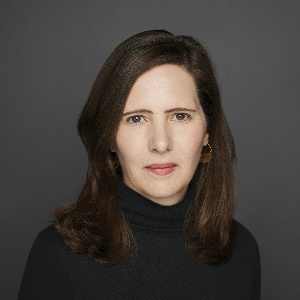
Laura Field,
SIS visiting scholar in residence
Be the first to hear our new episodes by subscribing on your favorite podcast platform.
Like what you hear? Be sure to leave us a review!