
First Drafts of History: Alex Ward on the National Security Beat
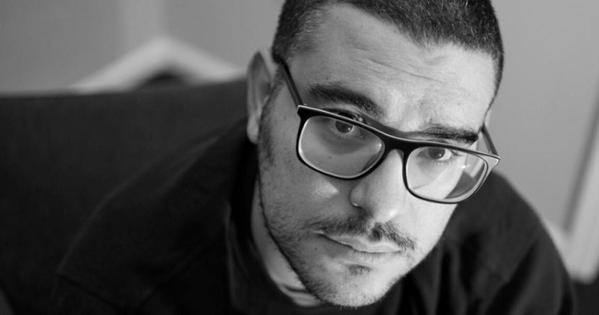
On May 9, 2017, Alex Ward (SIS/BA ’11, SIS/MA ’12) was in the office at Vox, learning the ropes for his second day on the job as a reporter. He was new to journalism, and his editors were doing their best to ease him in gently, he says. That is, until President Donald Trump fired FBI Director James Comey.
“They were like, ‘Nevermind! Go!’” Ward recalls. “It was very much trial by fire.”
The next day, Ward published his first explainer: “It’s not just Comey: the scary past 24 hours in Trump-Russia, explained.”
Nearly a decade later, Ward is now a seasoned White House reporter on national security for the Wall Street Journal. He spends his days talking to lawmakers, experts, lobbyists, and anyone in The White House who might help him piece together a story.
“It's my job to get a sense of who's advising Trump on something, what are the debates happening within an administration as they're considering big options—that kind of stuff,” he explains.
While many reporters major in journalism or attend journalism school to land a coveted beat like Ward’s, it was his specialization in international relations that ultimately landed him the job. That path started at American University’s (AU) School of International Service (SIS).
Majoring in “the World Section of the News”
Finishing high school, Ward wasn’t sure what he wanted to do next—only that, as he was applying to colleges, the phrase “international relations” caught his eye.
“It was just stuff I liked,” he says. “I didn’t know I wanted to do that, but the second I saw that you could [study international relations], I was like, ‘Great. That sounds up my alley. I guess I'll major in the world section of the news.’”
When he got to SIS, he quickly developed a taste for the material. Foundational undergraduate courses like World Politics stood out early; as did Intercultural Communication with Professor Christine Chin who, Ward says, was a mentor to him.
SIS also helped him narrow his focus. A study abroad in Brussels taught him that European Union policy was not, in fact, his calling—though it was on that trip that he met his future wife. While classmates gravitated toward specific regions like Europe or parts of Africa, Ward kept circling back to something closer to home.
“I remember being like, ‘I care about the U.S., is that bad?’” He says. “I just couldn’t get as excited about what was going on in China or India or Japan as I was about here. That’s what got me going. And, like, how is the world’s superpower not the most fascinating subject out there?”
After finishing his bachelor’s degree, Ward continued his education at SIS with a master’s in U.S. Foreign Policy and National Security. The coursework helped turn a growing curiosity in international affairs into a foundation for what he now does daily: make sense of U.S. and world events in an ever-changing geopolitical landscape.
Applying SIS Expertise to the News Cycle
After graduating, Ward taught briefly at a private high school in Massachusetts, then took an internship at the Atlantic Council that turned into four years of substantive work and a growing Rolodex of sources. Fast-forward to 2017, Vox was looking to hire its first defense reporter, and Ward fit the profile. Although he didn’t have the journalism experience, he had the connections and subject-matter expertise to guide him.
“I've been very fortunate in my career that, because of the AU training and my internships, people felt like I could do this,” Ward says.
From a U.S. foreign policy class with Professor Elizabeth Cohn, he had absorbed a skepticism toward the “official story” and recognition that things like policy decisions are rarely taken for the grandiose reasons later ascribed to them. From a terrorism and insurgency class with Professor Carolyn Gallaher, he had learned to understand violent movements on a deeper and more holistic level. From Professor Phillip Brenner, he had gained a reverence for primary source material.
“And that is great for journalism, too," he says. "Because a lot of what we do is we've been told stuff, but people can always deny that. When you have a document, that's kind of unimpeachable, right?”
Finding the Arc
Ward's academic foundation has carried him through the daily grind of three presidential terms. Through it all, Ward has always asked himself one key framing question: what is the underlying arc?
“Trump came in, you know, in the words of the philosopher Miley Cyrus, ‘like a wrecking ball,’ and tried to change American foreign policy,” he says.
The question in Trump’s first term was whether Trump would reshape the system, or the system would reshape him? With Biden’s subsequent election as what Ward describes as “the avatar of the post-World War II liberal international order,” came the promise of restoring American foreign policy to what it once was.
“Restore and refresh, I guess. Something like that,” says Ward. “And come to find that they adopted far more of Trumpism than I think they would like to admit.”
The driving question for many during Biden’s term—and the subject of Ward’s book The Internationalists: The Fight to Restore American Foreign Policy After Trump—was can America really go back? With Trump’s reelection and a doubling down on America-first foreign policy, it seems the answer is no. The world, particularly Western allies, has been forced to accept that Trump’s election and all that has unfolded since are not anomalies. Rather, Ward says, Trump is a symptom of something larger: broad discontent with a system that failed many.
“There were people for whom the post-World War II order did not work. Liberal internationalism, neoliberalism—it left a lot of people behind. And let's not forget the wars of Iraq and Afghanistan,” Ward explains. “So there was sort of a breaking point. People were just like, ‘Hey, I want something new. All this stuff is not working for me. It's time for something new.’”
This is the sort of underlying arc that is Ward’s job to unearth in order to understand the why behind the day-to-day reporting. It's the work of explaining not just what is happening on the ground in Iran or here at the White House, but why it is happening and what it means for a shifting world order.
“They say journalism is the first draft of history. I try to think in that sense, even if I'm writing a daily story. What is the big take? Why am I writing this? What am I driving towards?” Ward says. “And I'm always driving toward, I think, in my heart of hearts, this meta-narrative of: how is American foreign policy changing? Because it's changing so fast. And that's what I try to cover every day.”
Holding Power to Account
Asked what he would tell SIS students thinking about journalism, Ward does not sugarcoat it. He repeats an old reporters’ joke: “the hours are long and the pay is shit, but at the end of the day, everybody hates you.”
“You’ve got to really want to do it,” he says. “There is a mission to it. You're doing this because you want to tell the world what's going on, and you want to tell people information that you think they need—that a government or a business or whatever entity doesn't want the people to know, but that is in their interest.”
For those who do really want it, Ward encourages them to go after it—particularly in local newsrooms: “We need more local reporters, you know? That's a dwindling breed.”
If you’re an SIS student, Ward’s path offers an alternative to the traditional journalism degree—one rooted in specialization and perhaps perfect for someone interested in “the world section of the news” rather than the news alone.
It may not be an easy task, but it is a worthy one.
“At our highest, grandest ambition,” Ward says, “we are the nation’s eyes and ears holding power to account.”