
Why Do Students Lead Protest Movements? SIS Expert Explains Youth Activism
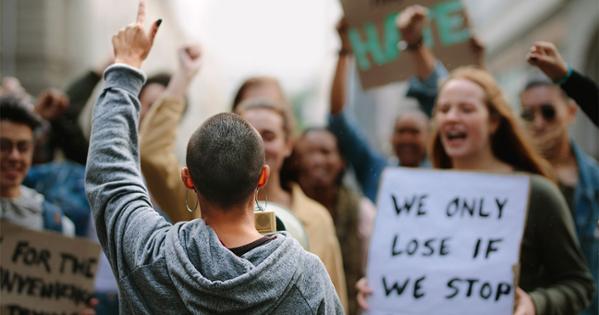
From the Greensboro lunch counter sit-ins that played a major role in the Civil Rights movement to the Vietnam War and anti-apartheid protests across college campuses, students and young people have always been at the forefront of protest movements. They make their voices heard and demand change from their governments. This September, we saw this play out in a few distinct ways in different parts of the world.
In Nepal, frustrated with government corruption, inequality, and limits to free speech in the form of a social media ban, youth-led protests resulted in the resignation of Prime Minister Khadga Prasad Oli, who was replaced by Sushila Karki. Starting on September 8, 2025, thousands of young people took to the streets of Kathmandu, Nepal, demanding an end to the government’s social media ban and corrupt practices. Protestors set fire to government buildings and vandalized homes. Police responded with rubber bullets, tear gas, and water cannons, injuring over 200 people.
On the other side of the world in Washington, DC, on September 9, 2025, students across four universities organized walkouts on their campuses to protest the federal control of the city that has been ongoing since August 11. Students organized, walked out of classes, and marched to demand that the National Guard and all federal forces leave DC immediately.
To explore the impactful role that students and young people play in protest movements, we asked SIS professor Omékongo Dibinga, who teaches in the Department of Peace, Human Rights, and Cultural Relations, to share his insights about recent events and how they connect to historical movements.
- Students and young people have played a major role in protest movements both historically and in present day. Why that is? What makes them uniquely positioned to be influential in these movements?
- There are two reasons for this. Many say that life makes you conservative (small “c”) over time. That is obviously not true for everyone but is true for more people than not. Young people are generally more fearless because they have less to lose in the present but everything to lose in the future. We rent this world from the youth. They can afford to take greater risks because they are generally not homeowners, business owners, politicians, parents, or have major bills. They fight hard because they want to be able to become homeowners, business owners, politicians, parents, and have major bills. (Well, maybe not so much the last one!) Young people who are activists have less experience hearing “no,” especially from people who do not have the power to say “yes.”
- A common theme surrounding these protests and similar protests in Sri Lanka (2022) and Bangladesh (2024) seems to be frustration with longstanding government corruption and economic inequality. Why do you think that students and young people so often take the initiative to lead these protests given that these issues affect everyone?
- Young people want to be free. Period. We all do. They fought because of frustration. Students and young people overall are generally taught that they will do better than their parents, whether their parents are rich, poor, or anywhere in between. The realization that this may not come true because of government policies or some other factor is not acceptable for young people. They have more years ahead of them than behind them, and they want to make those years count!
- Do you see students and young people today being inspired by tactics used by activists throughout history?
- There is so much that young people can learn from history, and I wish it happened more. Some young people love learning from their elders, whereas some have the mindset of “Move over. Your time is up.” I feel like many young people have learned from the Civil Rights Movement as it relates to the importance of public demonstrations. You can often hear civil rights chants at protests today. More young people need to learn from the organizer of the March on Washington, Bayard Rustin, who said that when you have the right to vote, you don’t need to protest. Young people must couple their passion for protest with the passion to vote.
- How has social media changed the effectiveness or style of youth-led movements?
- There are positive and negatives. Activism and organizing can move at the speed of light with social media, and it’s a great tool. Unfortunately, some people (not just young people) believe that just a repost is enough. That’s not activism. That’s slacktivism. Social media plus hitting the streets plus boycotting is the real trifecta! Spreading the word helps, but we need all-hands-on-deck beyond posts. Don’t be an act-as-if. Be an activist!
- This is not the first time that college campuses have been the hub for larger movements. What makes campuses well-suited to serve as these “hubs” for protest movements?
- Campuses are great hubs for this because colleges and universities are supposed to be about the free exchange of ideas. You also have a large number of like-minded individuals literally living next door to each other, so sometimes these moves are spontaneous. Most students come to campus hopeful and optimistic, and once that gets challenged, watch out!
- The protests in Nepal and Washington, DC, are geographically far apart and have different goals. Despite this, are there any similarities between these two movements?
- The goals are the same. It doesn’t matter what part of the world you live in. Young people want the right to have a future, period. I have spoken across the globe to students and with child soldiers and with corporations and non-profit associations. It’s all the same. We all want to feel like we belong and want to be appreciated. When that gets threatened, people will react. Young people will challenge their parents, their schools, their communities, and their governments in order to demand the future that they deserve. I’m here for all of it!