
Meet Interim Dean Rachel Sullivan Robinson
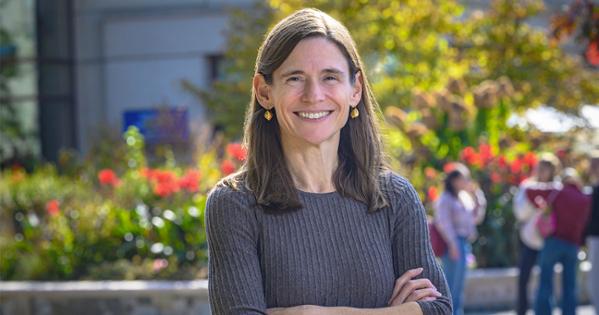
On October 15, 2025, Rachel Sullivan Robinson assumed the role of interim dean of the School of International Service (SIS). She will serve in this role while the university completes a nationwide search for the next permanent dean.
With nearly two decades of leadership and scholarship at SIS, Robinson brings a deep understanding of the community and a commitment to advancing the school during this pivotal time. Most recently, she served as the senior associate dean (and prior to that, assistant dean) for faculty affairs, including co-chairing a task force that generated SIS’s departmental structure. Prior to that, she chaired the international development program and served on various task forces around our graduate programs and organizational structure.
Now, one month into her tenure as interim dean, we sat down with Robinson to learn more about what motivates her, what she’s most excited about in this moment for SIS, and how she hopes to engage the community in shaping the school’s future.
- You’ve been at SIS for 18 years. What made you stay, and what does SIS mean to you?
- I actually ended up at SIS by accident. I am a sociologist, so I was applying for a job within AU’s sociology department. When I went to look at the AU HR page, I saw another job in something called a “School of International Service,” something I’d never heard of. I looked through its website and discovered that it was a group of social scientists who cared about things happening in the rest of the world, which also described me. Plus, they needed somebody to teach statistics, which I could do. So, I applied for the job, and here we are all these years later.
- SIS turned out to be a perfect home; it is amazing to have a place that supports international research. Most sociologists study only the United States, so to be in a place where every single person does something related to the rest of the world is incredibly valuable to me. It’s why I am excited to lead SIS now—because I have seen firsthand how the deep and rich knowledge produced through faculty research speaks to policy debates downtown, discussions in multilaterals, and program decisions in countries around the world.
- What excites you most about leading SIS at this moment in time, and what do you hope to accomplish as interim dean?
- I am incredibly honored to take on this very significant responsibility to be the leader of SIS. Now, more than ever, we need to demonstrate to the critics of higher education, as well as to the critics of US engagement abroad, that both of these things matter.
- We have all the people and knowledge that we need to do that. I want to make sure our students are trained to have the greatest possible impact in advancing those objectives. I also want prospective students to know that they should still come to Washington, DC, for all the reasons they’ve always come. There is no better place to study international affairs than here, and we have a dedicated career center that finds students internships and jobs.
- In this transition period, I want to do more than keep the lights on. I want to conceptualize the future that we collectively want for our school. To do this, we need our entire community. Alumni, I invite you to come home and visit. We are always excited to see you, even if we last saw you a week ago or a decade ago. There are so many ways to be part of defining SIS’s future—by mentoring students (we have 103 alumni mentors and 150 students already participating this year); by creating job or internship opportunities; by sharing your expertise as a speaker; or by supporting strategic investments, such as our SIS Emergency Student Fund, which has directly assisted more than 130 SIS students in staying on track to complete their degrees.
- Your research involves sitting and listening to others talk about their lives. How does that approach translate to leading a school of international affairs?
- I am always willing to listen. Partially because I want to learn at that particular moment, but also because I know that people will tell me things that may matter later.
- Everyone deserves to be able to talk about what matters to them and the contributions that they make to a place like SIS. And by listening, I am able to use that knowledge and those perspectives to help achieve the most that we can achieve.
- Listening is at the heart of both research and leadership. It’s not just about gathering input; it’s about building trust and shaping decisions that reflect our shared goals.
- What do you want the SIS community to know about your approach to accessibility and engagement during this transition?
- I want them to know that I am here to support them in the ways that they most need, which I recognize will be different for different people.
- My door is open. I want to hear people's perspectives, but I also want to be out in the building and learning about what everyone is doing in terms of curricular innovations, important events, and plans for the future. The advantage of being in this role is seeing how all the pieces of everything that's happening at SIS—courses, events, partnerships—fit together to create something bigger than the sum of its parts. I want to understand and support all of those pieces.
- What’s something people might be surprised to learn about you?
- I won a gold medal in the Junior Olympics in 1993 in women's doubles rowing.