
An SIS Student's Digital Scrapbook: The First Fall Semester in Review
A tanka is a short-form poem with five lines, each containing a specific number of syllables: 5, 7, 5, 7, 7. I attempt to incorporate a mix of tankas, prose, and photos to represent my experiences these past few months and what I would tell my pre-college self if I could go back and give her some guidance for the first semester.
I came into college with three (large) boxes worth of things from home, a set of possibly correct expectations, hobbies I had to put to the side for a while, and a ticking bomb of uncertainty. That bomb hasn’t exploded yet, and maybe it doesn’t have to (ever). Now, at the end of my first semester, I have experienced things that I had mentally prepared for and things that were completely unexpected. All have helped me grow beyond what I am familiar with and become more dynamic as a student and as a person.
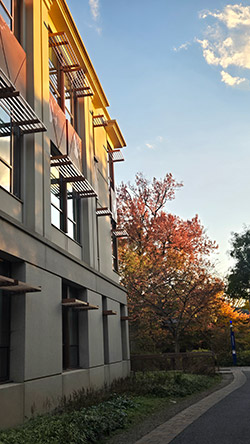 Going into college with many goals and many ways to grow on campus was a wonderful and exciting feeling that almost made me want to rush into my classes and college life. As time has passed, I’ve found the value in taking things step-by-step and pacing myself so that I am able to do the things I love while giving myself enough space to actually grow in the process.
As a writer majoring in international studies in the Global Scholars program while pursuing a pre-law undergraduate academic career, my variety of interests have intersected with each other in unexpected ways. Storytelling is everywhere, and it is woven from the strength of the voices of people that the world needs to hear. That’s how I found myself at SIS, where students are encouraged to forge their own paths of education by choosing regional and thematic focuses.
August: a new beginning
My first semester at AU started with my Global Scholars cohort and beginning to explore the opportunities for me here in DC. Before classes began, I looked over the syllabi and started to set up the system I wanted to use for notetaking and keeping track of deadlines and events. My personal style of preparing for the semester is to mark all the assignments and exams on my calendar then keep a list of the readings with dates and create pages to add to it once I took notes on it. So far, this system has been effective and has helped me stay consistent in meeting my studying goals. I also looked around campus for what would become my designated study spots, like the third floor of the library and the tables around the SIS building.
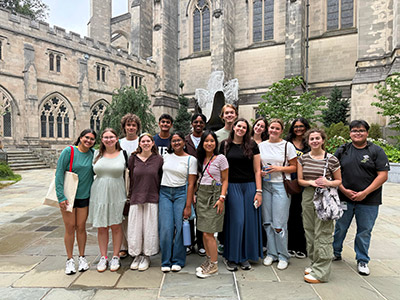 When I first moved in, I was able to appreciate the benefits of living on a real, walkable campus with plenty of accessibility to a variety of places in DC. For our first excursions as a Global Scholars cohort, we walked to the National Cathedral, went kayaking in Georgetown, and spent some time night “monumenting" and walking through the city. We also went to a game at Nats Park. Experiencing college for the first time with a cohort helped me acclimate and find a community faster. The events and community-building opportunities coordinated by the student program leaders helped introduce us to the program and to each other.
September: slowly finding my rhythm
In September I pursued more extracurricular opportunities on campus. I wanted to become a part of student organizations that reflected my creative and academic interests, and allowed me to be involved with the community while maintaining a balanced schedule. Once my classes started, I didn’t expect my schedule to become as heavy as it did in such a short time frame. To maximize the time and energy I had, I learned to focus more on my personal comprehension of the material rather than aiming for perfection in my notes and assignments. All throughout this month, I had to find my rhythm and figure out what study strategies worked for me and how to manage my time with my current schedule.
I thought I would have more free time to complete work for my classes, spend time with people, and save some time for myself. The reality is, some of the things I want to study, and have been studying, are less about the result and more about the process. Learning languages can be done with a schedule, but actually acquiring a language involves seeing how it’s used in different contexts and consistently producing it for an indeterminate period of time.
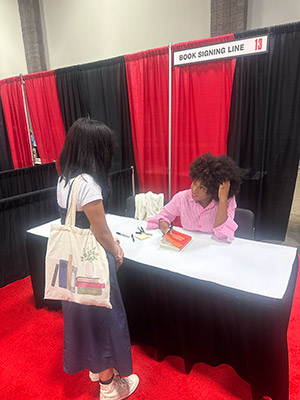 I was very lucky to have the opportunity to talk to Chimamanda Ngozi Adichie and Ada Limón, the 24th Poet Laureate of the US, at the 25th annual National Book Festival, where I received advice about representing one’s culture by staying true to one’s own story, and encouragement to continue writing poetry. The craft of creative writing is a lifelong endeavor of consuming all forms of writing, bending rules, and reflecting on the voices of other people, the experiences in other lives. My approach to finishing academic work shouldn’t translate to my creative work. There is no timeline or one end goal for creative pursuits or communicating in a different language.
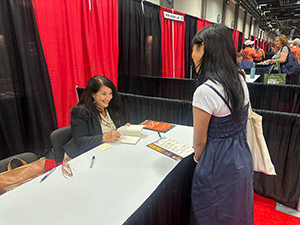 I spent a lot of my September wondering where my time was going, and now looking back, I realize that the “busyness” of my weeks is spent learning, growing, and pursuing the topics and artistic craft that I am passionate about. Taking the time to do something does not mean you are falling behind or being inefficient. A lot of college is finding that there is no one way to do things in life nor one specific purpose that should objectively be prioritized over another.
October: in survival mode
With mid-terms coming up, I really came to value the results of experimenting with different studying and note-taking strategies for each of my classes. I learned that flashcards are best for memorization-focused classes like foreign language and that notes that interact with the text are best for discussion-based classes. It was also vital for me to learn how to break large assignments into smaller tasks, especially when I had multiple papers or projects due around the same time. Since heavier assignments have more parts to them, I try to start them as early as possible and work on them in increments.
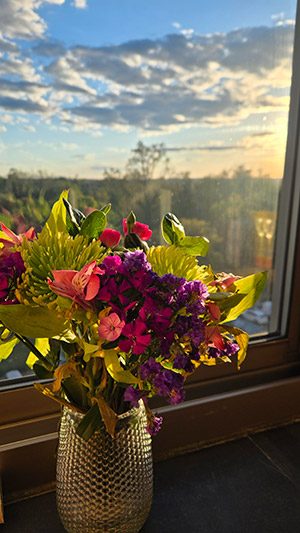 I like to begin my papers by analyzing the prompt and gathering my sources, then outlining the structure of my piece as I research. I take notes on important ideas and quotes that I would want to use later and make sure to create my bibliography before I complete my first draft. I go through my writing process in increments and start as early as possible so that I don’t get overwhelmed. I leave two to three days for editing after completing the draft so that I can come back to it with fresh eyes.
During this time, especially when I have been spending most of my time with academic writing, part of surviving “survival mode” involved connecting with my roots creatively to remind myself of my capacity to produce work that is, in fact, art, and not always analysis with cited sources. Each week I would spend about four hours on creative writing projects and read fiction in between classes or before going to bed. As a creative, I need to set time aside to consume fiction or creative media to balance out the research and journal articles I read for class.
November: the stretch between holidays
The key word is balance!
To get to this point in the semester, it has been vital for me to understand what a work-life balance looks like and how to achieve my goals while also using healthy time management skills. Since I am continuously learning how to handle more in one day, it has become imperative for me to take breaks and be aware of how to do work in increments so that I don’t overwhelm myself constantly.
Actually putting this into practice has taken lots of experimentation and flexibility and tolerance of the imperfect. Though I’m following a schedule for myself, one day can still look vastly different from another. I like having variety in my week, which involves keeping track of assignments and events for the month while also setting aside time for myself to unwind or be creative.
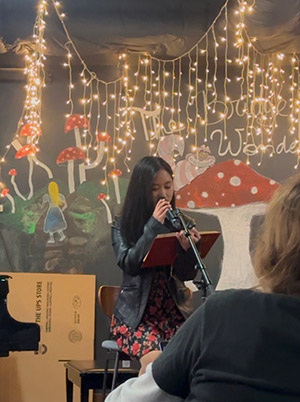 I have been trying to put the concept of knowing my own limits in relation to my goals throughout the semester. Life can look like a hallway full of open doors if you approach it with ambition and an open-minded mindset, but it is also important to know your own limits in relation to those goals, no matter how high the ceiling that you set for yourself is. Steady pacing can pave the path to achieving goals and actually process your growth in the long run. At times, the sheer volume of the moving parts in life may be overwhelming. It felt counterintuitive at first, but during those times, I had to take a step back or pause to recollect myself, though I may be compelled to rush through the tasks and deadlines.
December and the Spring Semester: brings me to a new era
I’m looking forward to my classes in the spring semester, joining new student organizations, and continuing to work on my passion projects. I hope to contribute more to the AU community by becoming more involved and finding new ways to connect my interests to student groups on campus. I have been able to learn more about myself and my interests through my classes this semester. Moving forward, I aim to continue to be intellectually curious and analyze current issues from a variety of perspectives with the skills I have learned beyond the content we discuss in the classroom. The skills I have and hope to acquire throughout college will go beyond my personal goals.
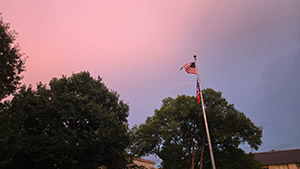 Throughout life I have been so used to consuming media and knowledge. This past semester has helped me realize the value and potential of my voice as a student and as a writer. I hope that my voice can contribute to the larger global discussion regarding issues like forced displacement and how we can move forward with humanization and diplomacy as a community.