
Can Education on Forgiveness Transform Approaches to Conflict in the Arab World?
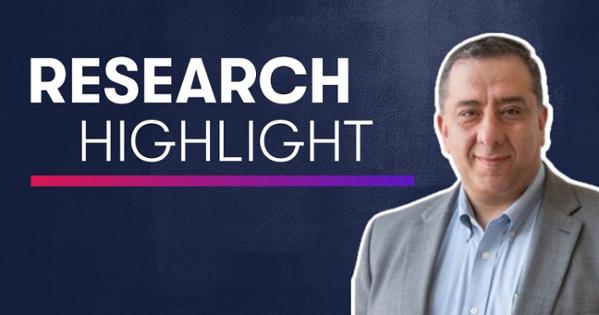
In his 20-plus years of research on peacebuilding in the Arab region, SIS professor and Abdul Aziz Said Chair in International Peace and Conflict Resolution Mohammed Abu-Nimer has contributed much to the field. He recently was awarded the 2025 Peace Educator-Scholar Award from the Peace and Justice Studies Association, which recognizes exemplary teaching and/or excellence in scholarship and dedication to forwarding peace education and peace studies.
His latest research focuses on forgiveness and reconciliation in the Arab education system and how teachers can educate students on those values to help them resolve their interpersonal and social conflicts. To learn more, we asked Abu-Nimer a few questions about what led him to this research, what impact it has had on education systems, and what’s next for his research.
- What led you to pursue this research on reconciliation and forgiveness in the Arab education system?
- My interest in research on forgiveness and reconciliation goes back to the early 2000s work that I’ve led in many parts of the Arab region on peacebuilding and conflict resolution, mostly working with civil society and leadership. After many years of doing that work, I realized that there are some root causes for many social and political problems. One of the reasons is how educators relate to the notion of how we deal with interpersonal and social conflict. There was no single curriculum for teachers to educate directly on the topics of reconciliation and forgiveness. At many schools and universities—especially in conflict areas with high levels of violence and bullying—the treatment of those conflicts was mostly through punitive approaches rather than restorative approaches.
- So, in 2009 after several decades in this field, I decided with my research partner Dr. Ilham Nasser at the Salam Institute for Peace and Justice that this would be our major project in the Arab region. We visited teachers in Jordan, Egypt, Iraq, and Lebanon, and they were really interested in this idea of how to teach reconciliation and forgiveness to help students resolve their interpersonal and social conflicts.
- To conduct our research, we interviewed over 120 teachers from these four countries and completed a survey of 780 responses, which was the first empirical study in the Arab region that looked at teachers’ perception of forgiveness. We had 12 hypothetical situations where we asked if the person would forgive in this situation, and why or why not, and we also asked about their needs for educating about forgiveness.
- The results were published in several peer-reviewed journals and in a few book chapters that were then disseminated and became the founding pieces of empirical research on the topic. And based on those results, we introduced manuals for teaching reconciliation and forgiveness and began working with teachers to incorporate that into the school system as part of students’ informal education.
- Where did that research lead, and where are you currently at with this research?
- At some point we needed to update our work on forgiveness and other values in the Arab education system, so in 2019 we came back to the idea. At a Harvard conference, we learned that there were other researchers doing work on this topic internationally, so we began exploring how to collaborate with them. From that we received support to work on this upgrade of our intervention from 2010–2016, which involved qualitative interviews. In 2024, we completed over 80 stories of forgiveness from a diverse mix of people in Arab countries, and we incorporated those stories into two manuals for teaching forgiveness. One was for elementary school and one for middle and high school, and this is the first time that anyone has developed such a tool. Now, our research is focused on how we measure the impact and effectiveness of those tools. We are also seeking to disseminate them to Arab education agencies.
- These tools are important because, based on the research we’ve done early on, there is tremendous need expressed by teachers. Over 93 percent said they found the manuals useful and were eager to apply it with their students and in social settings. Conceptually, we also think that in any given conflict, not just in Arab region, if you don’t introduce transformative values and transformative approaches to the conflict, you are risking reoccurrence and being trapped in cycles of social and interpersonal conflicts. And if educators aren’t teaching these skills, they’re contributing to lack of skills and competency of young people to handle conflict in a peaceful way, which then contributes to violence in society. The same principle applies to the US, Europe, Africa, etc., that have a lack of education in reconciliation and forgiveness. This approach and assumptions are not limited to Arab education system.
- How has your work on this topic expanded beyond schools and educators?
- Another major research project we’re doing is not for educators but for the general public. This is about an instrument that was created by Professor Everett Worthington and applied in Indonesia, Ukraine, Serbia, South Africa, and the US. We wanted to check the relevancy of it in Arab cultural contexts, so for the past year, we developed a research design in Tunisia, Egypt, and Iraq and culturally adjusted the instrument to the context of those countries. Basically, it is a self-improvement booklet about self-forgiveness that you work with alone for three weeks, and then through experimental design we measure your responses to it in terms of level of anxiety, stress, etc. Feedback has been positive and powerful for many people who have engaged with it.
- We just finished collecting data from about 1200 people in the experimental group and another 1200 in the control group, and we are now working on the qualitative and quantitative analysis from those responses. We’re hoping to be able to publish the results of this both in Arabic and English, which will be a major contribution to the field of forgiveness and reconciliation in the Arab region. It's exciting to be part of this research because it’s cutting-edge in the sense of learning how individuals experience conflict and what it takes for a person to engage in self-forgiveness and forgiving others.
- What are you hoping comes out of this project?
- In addition to developing the teaching manuals further and disseminating them to Arab education agencies, we’re looking forward to the research on the self-improvement tool in Tunisia, Egypt and Iraq being done and published in academic articles as well as a book on the topic, and we’re hoping to engage 10 universities from three countries to introduce the results. We want to encourage academic engagement and knowledge generation in this field in the Arab academic community. We also hope to be able to compare results with other countries that have completed similar interventions.
- What are some challenges you and your team have faced with this research?
- One of the major challenges has been how do you de-link the research from the macro political context. When you talk about reconciliation and forgiveness, many people immediately think of politics and national conflict. It takes a while for us to convince partners that the purpose of the research is interpersonal and small intergroup relations and is not aimed at immediate efforts to resolve national conflict or engage in broader political reconciliation. Although there are parallel tracks done by politicians in each of those Arab countries I mentioned where they have discussed reconciliation on a political level, we try to distance the research from that.
- Another major challenge we’ve faced in the past decade is how do you take what we’ve produced from the research from an informal education setting into a formal education setting. In general, formal curricula are sensitive, especially to an outside agency. So, we’re exploring alternative ways to formally introduce these themes to teachers.
- The third challenge has been trying to convince donors and foundations to support the specific research design we’re using, and in general, to support education for forgiveness and reconciliation. Many donors (including the US and European governments) have shifted priorities, especially after war in Syria, Yemen, and Libya, and the Gaza genocide. All of these are macro factors that have affected it.
- How does this project relate to your other research focus areas?
- My other major segment of research is about the role of religious agencies, institutions, and leaders in peacebuilding and reconciliation globally, but especially focusing on the Islamic society and the Arab region. I’ve invested a great deal in that research that relates to this current topic directly: When we asked teachers in early 2011 what cultural resources they would use when teaching forgiveness and reconciliation, 92 percent of Muslims and Christians we interviewed said they would go to their faith, and when you ask who their role model is for those topics, they answer with prophets and religious/historical figures. So, faith is associated immediately with reconciliation and forgiveness.
- What’s next for this project and your research in general? Has it led you to any new research questions?
- After each research project there is always a new research question! I’m hoping that in our next research phase, we can move more directly into issues of transitional justice and how one can explore the notion of reconciliation and justice in the transitional justice process in the Arab region and in Muslim societies that are affected by wars.
- A second topic is related to doing more research, looking at the role of human rights organizations and other peacebuilding agencies in responding to mass atrocities and ethnic cleansing taking place in Palestine and Sudan.