Finding Love at SIS: How Global Education Shaped a Life Together
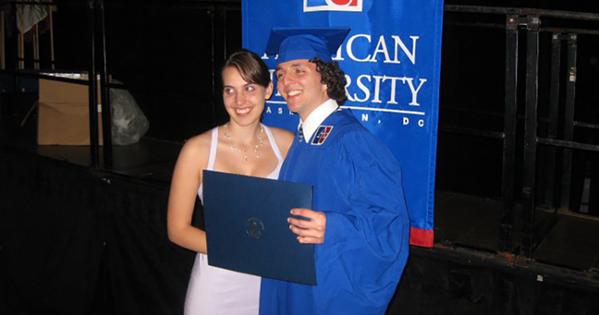
In the fall of 2008, American University’s (AU) campus was full of life. A new semester was just beginning, America was gearing up to decide on its 44th president, and the School of International Service (SIS) was welcoming its newest class of students.
Among them was a freshman named Julia Young, SIS/BA ‘12, and a transfer student named Paul Hodum, SIS/BA ‘10. Each came to SIS with the same goal: to continue building on global experiences and surround themselves with a student body that shared an interest in social topics and a desire to look outward.
It was here, amid shared values and experiences, that the two would meet and soon fall in love.
Starting Out at SIS
Julia had arrived at SIS with a clear vision of what she wanted in a school. As a high school senior, she had studied abroad in Argentina, and she was eager to keep building on that international experience. She narrowed her college search to schools in Washington, DC, drawn to programs that would allow her to study abroad again while also pursuing her interest in political science and international relations. But what ultimately set SIS apart wasn’t just the curriculum, it was the campus itself.
“Being on the AU campus,” she recalls, “You could tell people cared a lot about social issues. I remember being like, ‘Wow, this is a campus of activists.’ And I just loved that.”
Paul was similarly taken with the student body. Before coming to SIS, he had spent two years at Syracuse University, initially drawn by its international relations program and vibrant social scene. But over time, he realized he was looking for something else.
When he transferred to SIS, he found many like-minded peers and a group of friends who shared his curiosity about the world and his interest in issues beyond US borders.
“I think that's what SIS was like for me in a nutshell. ‘Oh, come to this school, we've got kids from all over the world all interested in issues, not just in the US, but global issues.’”
Julia and Paul’s relationship developed slowly, first as close friends. Both had just returned from South America—Julia from Argentina, Paul from Chile—and found common ground in the experience of re-adjusting to life in the US.
“We had so many shared interests, and she was by far my best friend, you know, before we were dating,” Paul says. “So, it was kind of a unique feeling to have feelings for someone that was your best friend.”
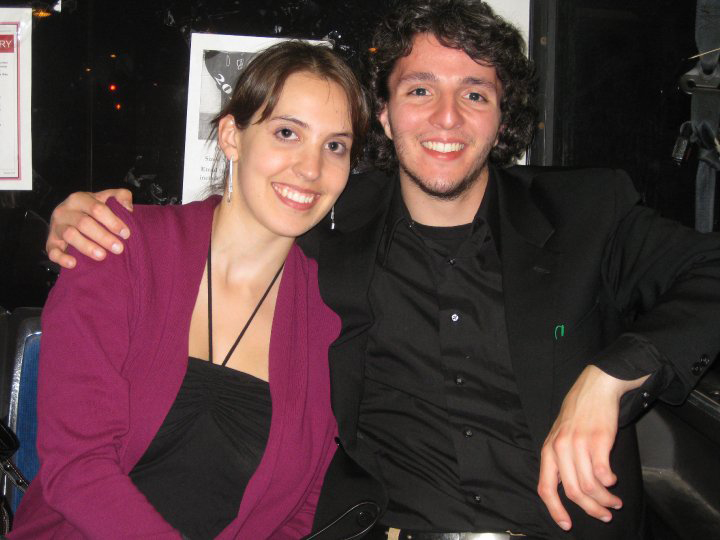 The two began dating in April 2009, with SIS and a shared friend group providing the backdrop to their relationship. Much of their time together unfolded in ordinary college moments: playing pickup soccer games on the quad or working over the summers as campus hosts. But their first year at SIS was also marked by a moment of historic national significance: the election and inauguration of America’s first African American president, Barack Obama.
“That was definitely buzzing all over campus,” recalls Julia. “That's what I remember initially, like that first year there was just a lot of excitement and hope and feeling so connected to national and local politics.”
The two found ample opportunities to get involved—on campus through student organizations, and off campus with DC internships.
Paul quickly leveraged his study abroad in Chile for an internship at the Chilean Embassy here in DC, where his team was in charge of keeping tabs on Obama’s presidential appointments and how they would impact Chilean relations.
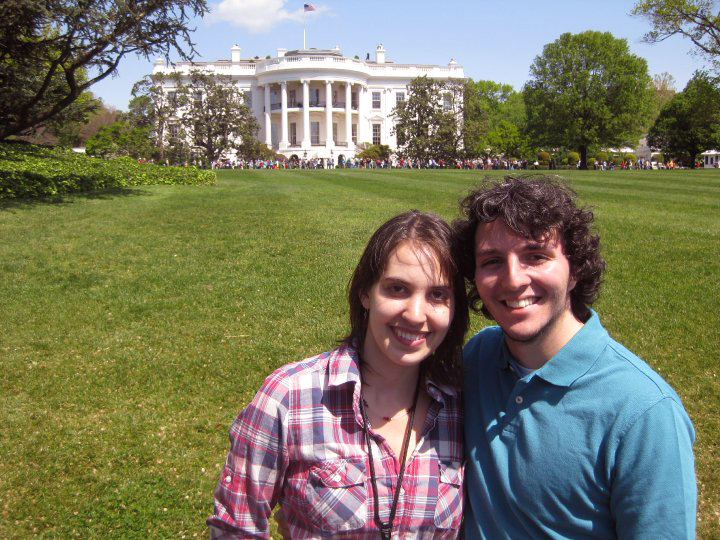 In her sophomore year, Julia secured a White House internship in the Office of Presidential Correspondence. Because she was the only intern to speak Spanish, she was assigned to work directly with Spanish-speaking constituents, asylum seekers, and dissidents.
“What I found very quickly,” she recalls, “was that the people I was working with the most who were calling in were because they were kind of slipping through the cracks. The policy wasn't working for them.”
Through that experience, Julia realized she wanted to shift from policy to more grassroots community organizing for underserved communities.
Paths Shaped by Service
For both Julia and Paul, SIS and their experiences surrounding it reinforced a commitment to service that would shape their futures.
While still on campus, Paul found his niche through the Frederick Douglass Distinguished Scholars Program, working closely with the program’s founder—a man who would soon become his mentor—Larry Thomas, during its first years. Paul helped implement the new curriculum and mentored incoming students, developing skills that would later prove essential during his time in the Peace Corps.
Serving in the Peace Corps had been a dream of Paul’s ever since hearing of the program from an English teacher in sixth grade.
“I wanted to live abroad, and I liked the community service aspect of it,” he explains. “Giving two years of your life to help other communities in need. That's essentially what the Peace Corps is.”
After graduating in 2010, he enlisted and was assigned to Micronesia where he lived with a host family for two years, integrating himself into the community through hours spent drinking endless cups of coffee and playing cards. In his volunteer role he taught English, helped develop curriculum, and worked with school leadership to improve day-to-day operations.
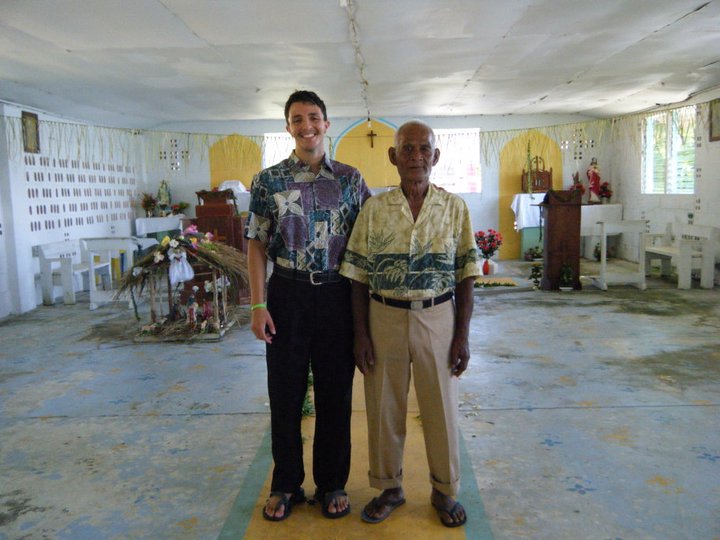 “It was this unbelievable challenge, but also exciting,” Paul recalls. “But it was also extremely lonely.”
The island he was stationed on was walkable in 30 minutes, he says, with about 200 people, none of whom spoke English. There was also no electricity, meaning very little communication beyond snail mail and a collection of pre-written letters, one for each month, that Julia had given Paul when he left.
“You create a bond with the other volunteers that are scattered throughout different islands. We'd meet up on the main island once a month, and that's when we would have access to the internet and be able to send emails to Jules, or I'd call family.”
But Paul wasn’t the only one away from home. While he was serving in Micronesia, Julia was across the globe in Kenya. With support from an AU scholarship, she spent a full academic year studying sustainable development in a large informal settlement of over 100,000 people near Nairobi. She took courses at a local university; interned as a community organizer at World Hope, a humanitarian nonprofit; and conducted independent research on men’s roles in women’s health outcomes.
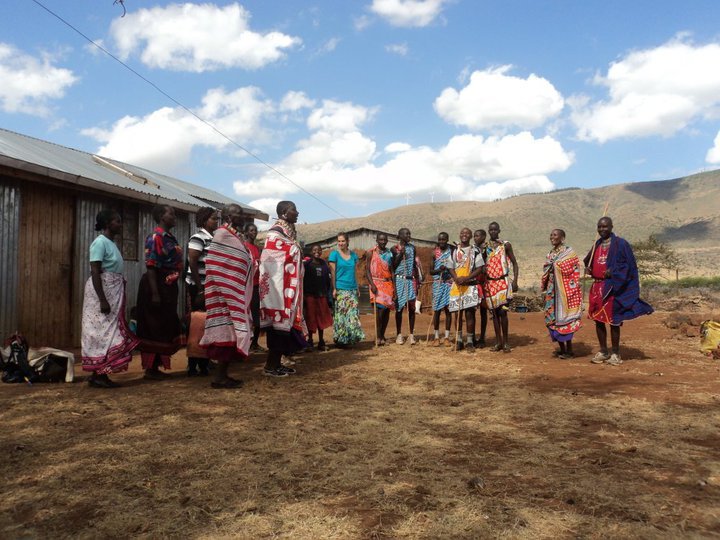 Through her internship, Julia helped establish the settlement’s first children’s library and worked on a footbridge project that gave students a safer route to school, which she says would otherwise see the area flooded with sewage in times of rain.
“That year for me in Kenya was really pivotal because it helped me see that I could make an impact at a local level and kind of helped me find a way to also navigate identity and allyship. And that led me into my current career path, which is corporate diversity, equity, and inclusion (DEI).”
After returning from the Peace Corps, Paul faced significant culture shock while reintegrating into life in DC. Technology had changed, and even crossing the street was now overwhelming, having lived without cars for two years.
Once again, mentorship from Larry Thomas helped him land on his feet. He resumed work with the Frederick Douglas Distinguished Fellows for a couple months as he reacclimated, before working at an NGO and ultimately pivoting to an MBA through a fellowship for returning Peace Corps volunteers. Over the years his career has spanned nonprofits, education, and marketing roles. He is currently a stay-at-home dad to his and Julia’s two young children.
For Julia, the impact of SIS showed up most clearly in the work she chose to pursue long term. After graduating in 2012, she worked as a federal analyst before getting an MBA herself. Along the way, she found herself increasingly drawn to DEI work—launching employee resource groups before making it the focus of her career. She has since gone on to lead DEI offices at major companies like Walt Disney and DoorDash.
She credits her international experiences with giving her a unique edge.
“It's not common in a corporate world for someone to have an international relations background or have lived abroad,” she says. “So, I find that I'm often the only person with that experience, that perspective to bring. And that's, I think, helped me in my career because it's made me more valuable.”
Happily Ever After
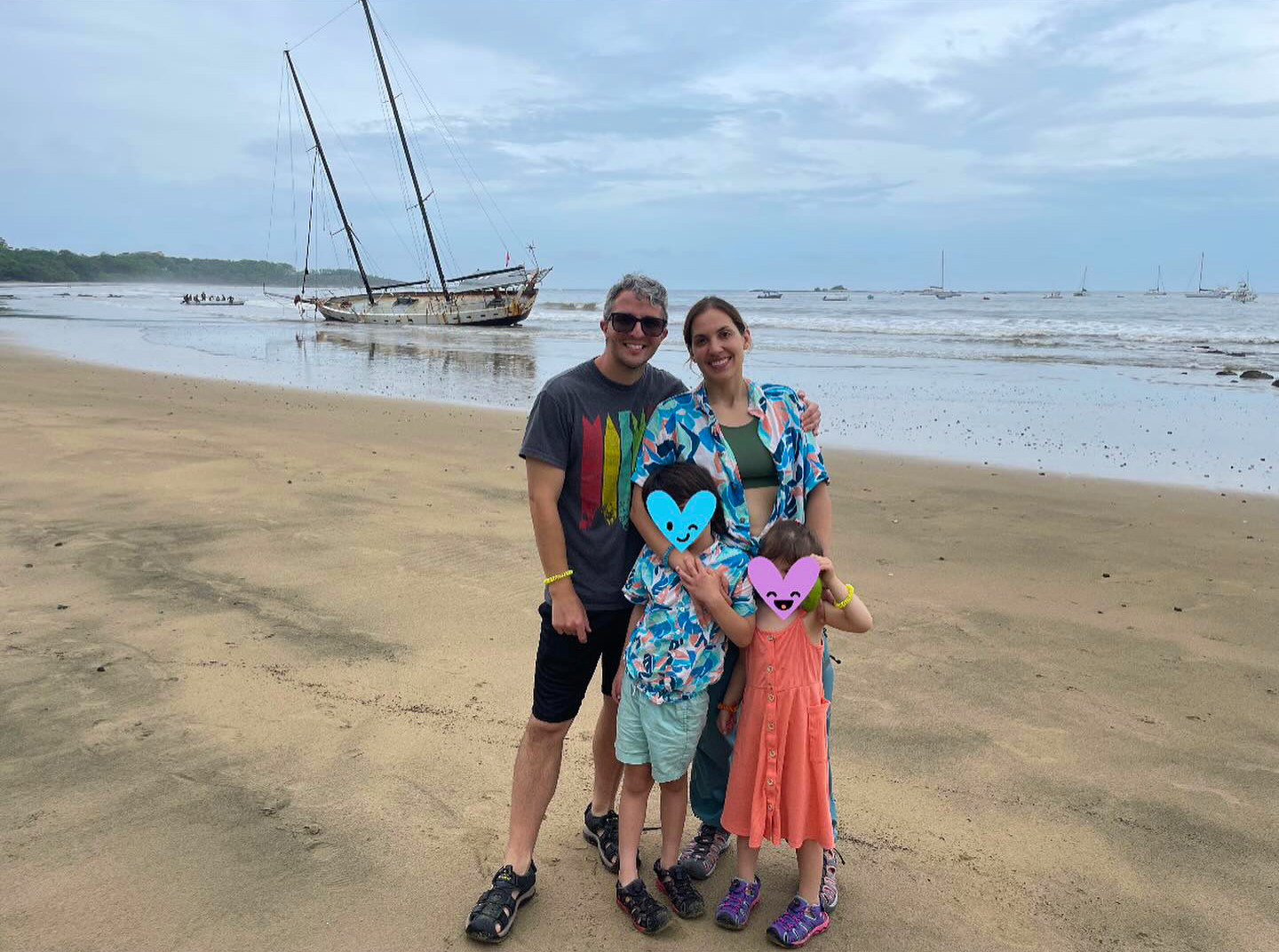
In 2014, Paul and Julia were married in her hometown of Dayton, Ohio. Years after they first met at SIS, Paul and Julia are still living out the values that brought them together and to SIS in the first place. Today, those values shape not only their work, but the way they are raising their two children—traveling often, speaking multiple languages, and engaging openly with topics like politics, democracy, and the world around them.
“I love that we can have these conversations together because they're shared values that we have,” Julia says.
What started as a shared curiosity on a college campus has now become a family ethos where those values are being passed down to the next generation.