
How Global Education is Shaping Policy at the Local Level
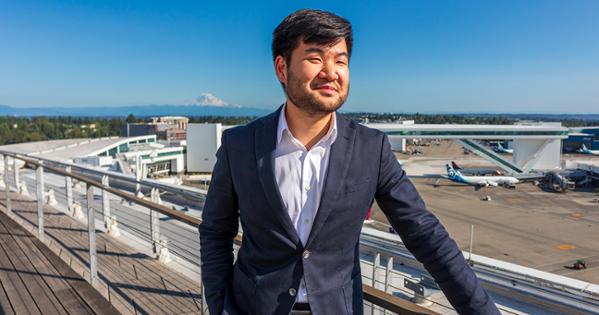
In life, finding a career path is not always linear. At times, the journey can be winding and unexpected.
For Sam Cho, SIS/BA ’13, his journey to becoming the youngest and first person of color to serve as commission president of the Port of Seattle came with its own unique set of twists and turns. But by leaning on his skills, policy background, and education, Cho has found himself in a place that allows him to apply a global perspective to local policy work through subnational diplomacy.
“Steve Jobs once said you can only connect the dots in hindsight,” Cho said. “I never would have thought that at age 29, I would run for office countywide, beat a former mayor to become the port commissioner, and start doing policy work on the local and subnational level. It’s been a really crazy journey.”
We recently sat down with Cho to learn more about his experience at SIS, his career journey, and his path to becoming commissioner of one of the largest ports in the United States.
Finding a Footing in Foreign Affairs
Cho says he always had a heart for service and helping others. So, when it came time to choose a college and an undergraduate major, Cho decided on a biology and pre-med track at a university in his hometown of Seattle.
“In my youth, I saw being a doctor as a natural and inherent way of helping people,” Cho said. “That’s why I wanted to go to medical school.”
But as he became entrenched in organic chemistry during his freshman year of college, Cho realized that the subject matter of his pre-med major did not excite him. However, a class on global affairs that he was taking as part of his gen-eds sparked his curiosity.
Around that same time, the Arab Spring was unfolding in the Middle East and former President Barack Obama’s administration began pivoting their foreign policy toward Asia. Seeing this happen in real time piqued Cho’s interest in foreign affairs, and he ultimately decided it was time to transfer to a different university to continue his studies.
Cho began looking for universities with strong international relations programs. With its reputation for being one of the top international affairs schools in the world, Cho chose to attend American University’s (AU) School of International Service (SIS).
Here at AU, Cho not only found a community of friends but a new perspective on global affairs. Being surrounded by a diverse community on campus left a “deep impression,” he recalled.
“You have students coming from not just all around the country, but really around the world,” Cho said. “To have exposure and make friends with students from Latin America, Europe, Asia, and across the US was tremendously valuable for me because it opened my eyes. As much as I learned from professors and the classes, I also learned a lot from my classmates, just from their experiences and perspectives.”
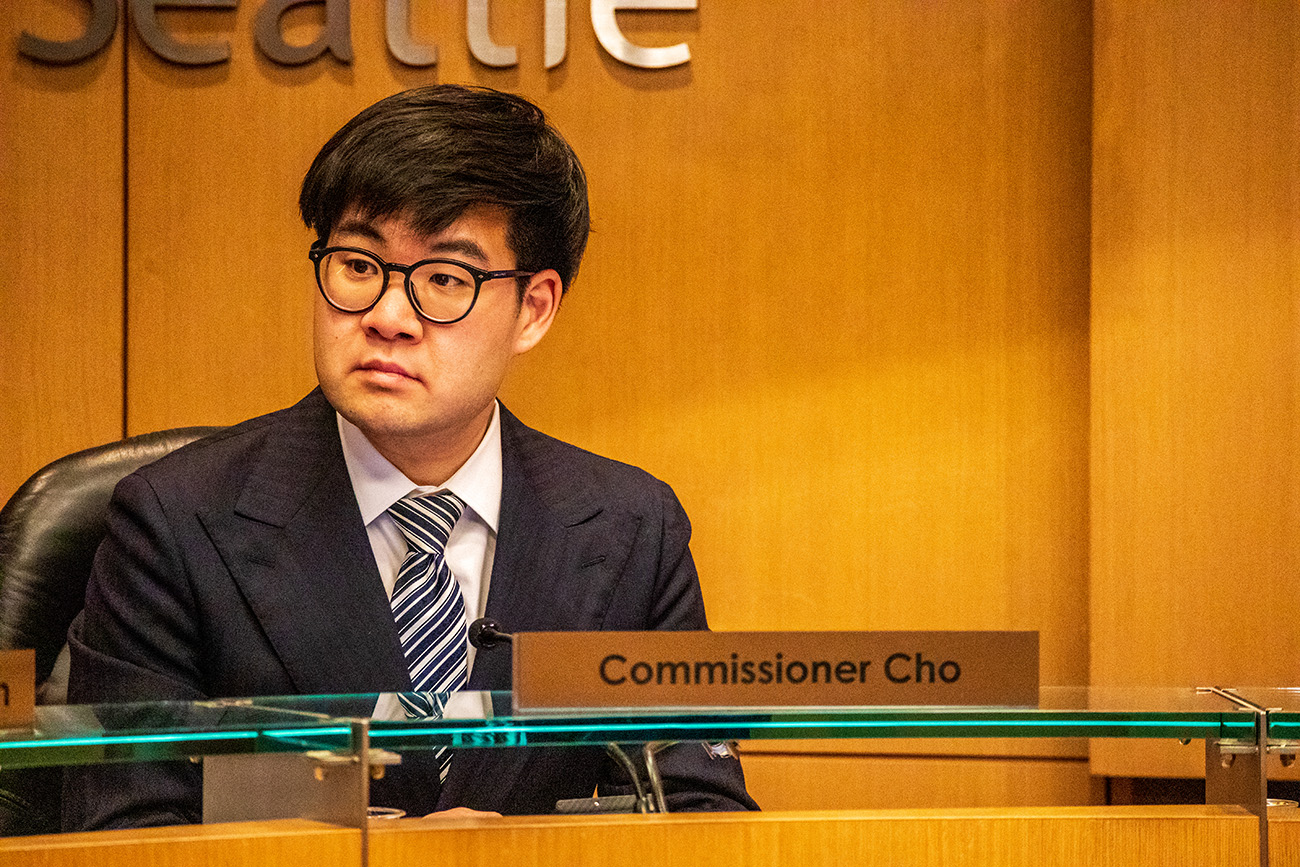 Navigating a Career Journey
While pursuing his degree at SIS, Cho also began to take advantage of all that Washington, DC, has to offer. During his second semester, Cho joined the US Department of State’s Pathways Internship Program and worked there throughout his junior and senior year at AU, launching his career path while he was still a student.
His experience at the State Department opened the door to civil service upon graduating in 2013; however, Cho instead chose to pursue his master’s degree at the London School of Economics. Upon graduation, he spent a few months working in Congress before landing a position in the Obama administration at the US General Services Administration.
Cho remained in this position until Obama’s term ended in 2016. Faced with a difficult landscape when seeking a new job, Cho made the difficult decision to move back to Seattle.
“I had always felt like I was going to stay in DC. My career, my professional connections, my network—everything was in DC,” Cho said. “I was very hesitant to go back to Seattle.”
Thinking that his career in government may be over, Cho decided to turn to business as a new avenue for public service. Back in Seattle, Cho started Seven Seas Exports, which exported American poultry products like farm fresh eggs to Asia during the height of their bird flu outbreak in 2017.
In 2019, Cho’s path would change direction once again. When a commissioner at the Port of Seattle announced their retirement, others within his network began asking if he would consider campaigning for the elected position. Cho, at first, was unsure.
“Even though I worked in the federal government and for a member of Congress, I was a policy person—I was not a political or campaign person, so I had no insight into what it’s like to run or what you have to do to run,” Cho said. “Little did I know that my experience exporting and doing business plus the experience I had in DC was the perfect resume to then become port commissioner.”
Ultimately, Cho’s campaign was successful, and at age 29, he became port commissioner of the Port of Seattle—the very same port through which his parents had immigrated from South Korea to the US.
“My parents immigrated to this country from South Korea, and they immigrated here through the Port of Seattle, and today, just one generation removed, their kid, their son, is now the commissioner of the Port of Seattle,” Cho said. “When I think about my role as a port commissioner and about the work that we do, it's about creating jobs and opportunities, including for small minority business owners. Every job that I create, every business that I can help, it really goes back to that core value and principle of recreating this American Dream for others.”
Global to Local
Since first being elected as port commissioner in 2019, Cho’s day-to-day work has been focused on setting policies for how the port operates, overseeing the port’s annual budget, and steering port strategy through partnerships with new businesses.
He’s also had the opportunity to work on policies and practices that align with his values. Just last year, Cho helped to establish a Green Shipping Corridor between the Port of Seattle and South Korea committed to decarbonizing all vessels and shipping containers that travel through it.
Cho says he sees this as part of a growing trend in subnational diplomacy, in which local and state governments have an opportunity to craft legislation that can make a big difference in the world—especially at a time of significant policy change at the federal level.
“The reason I'm promoting this idea of more subnational diplomacy is because there are certain policy areas that the current presidential administration does not care for,” Cho explained. “Let's take climate change for an example—this administration does not prioritize climate change. But there are still states and local jurisdictions that care deeply about climate change and want to meet greenhouse gas emission goals, right? And so, in the absence of federal leadership and the absence of national leadership, local governments and state governments are still engaged in what's happening everywhere else in the world through stepping up their engagement with China, Korea, Europe, Japan, India, etc.”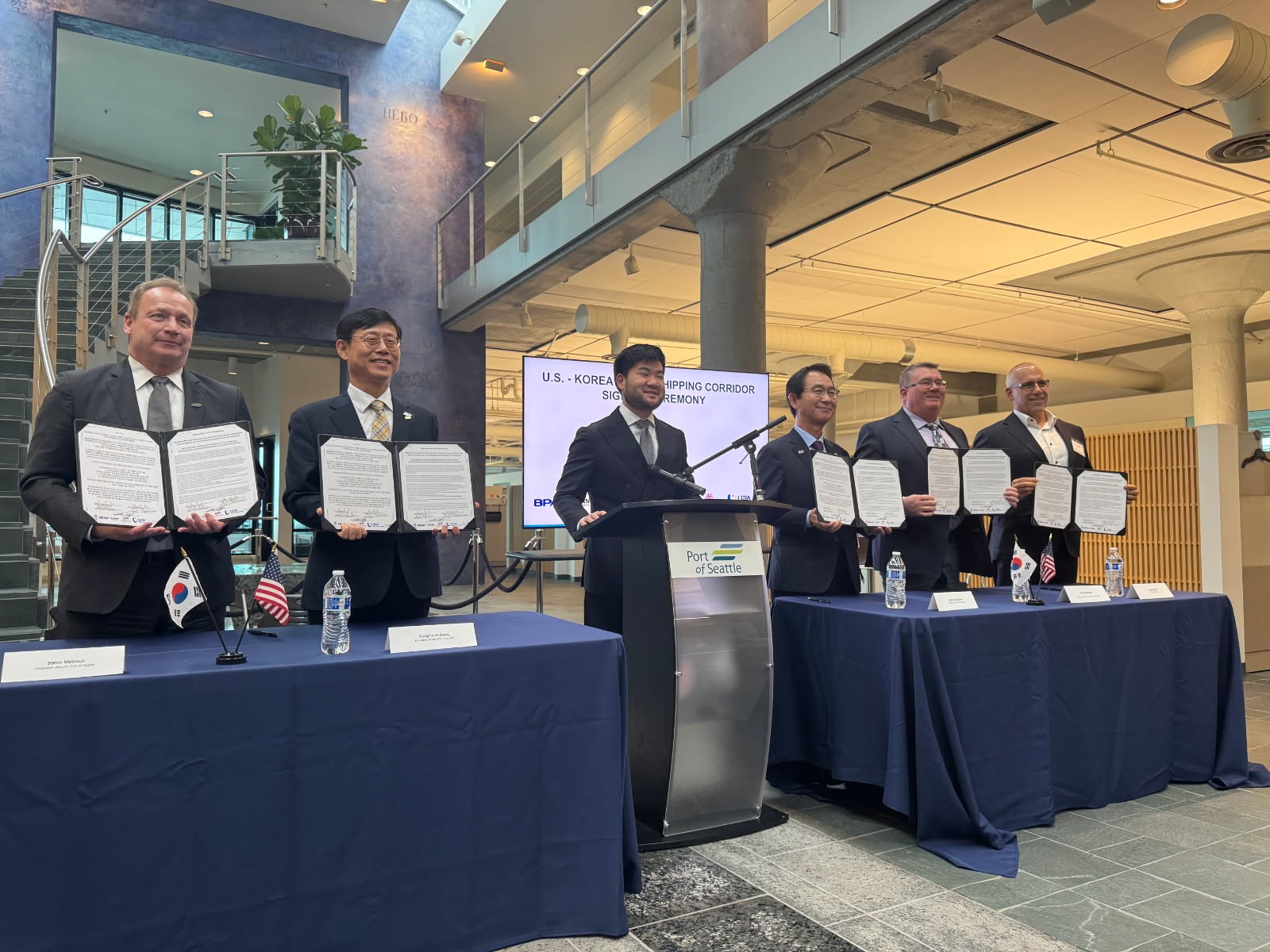
Reflecting on the impact of his SIS education, Cho emphasized that SIS prepares graduates to apply their global perspective to policy work at the local level.
“The traditional definition of international diplomacy as we are taught is country to country—the US government talks to the Chinese government on the federal or national level, right? But really, all politics is local,” Cho said. “Some of the best policy ideas come from local governments, and some of the most innovative work is being done on a local level when it comes to climate policy and environmental sustainability that then gets evangelized, not just on a national level, but to the world. So, I think there’s tremendous value to SIS providing a global perspective that can be taken to the local level.”