
American University
Policy Analysis
What Role Does Congress Play in the U.S.’s War with Iran?
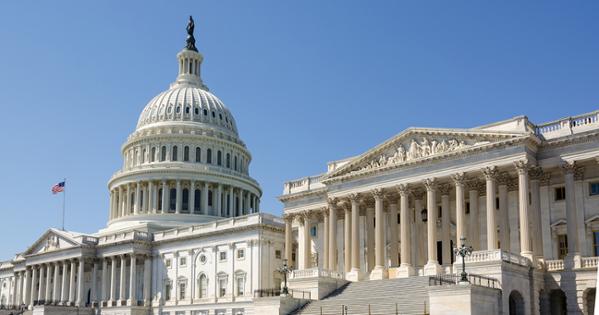
When the United States launched military strikes against Iran on February 28th in conjunction with Israel, it did so without the authorization of Congress. While reactions from lawmakers have been mixed, the attack has once again raised the question of what power Congress really has over U.S. decisions to go to war. To dive deeper into this issue, we asked SIS professor Jordan Tama, an expert on Congress and U.S. foreign policymaking, a few questions about the role of Congress in U.S. military actions, how this has played out historically over multiple presidential administrations, and what Congress can still do to check the president’s war powers.
- What constitutional and statutory authority does Congress have over decisions to go to war?
- The framers of the U.S. Constitution wanted to ensure that the president could not deploy U.S. forces into combat without congressional approval. They therefore assigned Congress the power to declare war while making the president the commander-in-chief. By the mid-20th century, this constitutional war powers framework began to come under strain, as presidents initiated military interventions that had not been authorized by Congress. In response, Congress enacted the War Powers Resolution in 1973, overriding a veto by President Richard Nixon in the process. This law, which remains on the books today, prohibits presidents from deploying U.S. forces into combat without congressional approval for more than 90 days and sets out requirements for the president to report to Congress on military actions.
- How have other administrations conducted military actions without explicit congressional authorization?
- Many administrations have ordered the use of military force abroad without authorization from Congress. These episodes include interventions by the Truman administration on the Korean Peninsula, the Nixon administration in Cambodia, the Reagan administration in Grenada, the Clinton administration in Bosnia and Kosovo, the Obama administration in Libya, and the Trump administration in Venezuela and Iran. In each case, some members of Congress have argued that the president lacked the authority to carry out the military action, but the president claimed that their constitutional role as commander-in-chief empowered them to order the deployment. The courts have opted not to intervene in these interbranch disputes, enabling presidents to establish a precedent that allows unauthorized interventions.
- Legally speaking, is the U.S. 'at war’ with Iran if Congress has not authorized it? How does a lack of congressional authorization change how we should think politically about the US being at war with Iran?
- In a strict constitutional sense, the United States cannot be at war with a country if Congress has not declared war against it. But in a practical sense, the United States is clearly at war with Iran. Politically, the lack of congressional authorization points to the weak public support for the war and heightens the political risks that President Donald Trump is facing from the military campaign. Public opinion polls show that about three-fifths of Americans oppose the war against Iran. In that context, it would not be possible for Trump to achieve congressional approval of a use of force authorization. The result is that Trump is out on a limb politically, as it is clear for all to see that this is a war of choice that he has launched based on his initiative. If the war goes poorly, voters will know who is to blame.
- What has the response been from lawmakers in Congress, and has it been divided along party lines?
- Public reactions from members of Congress have been divided almost entirely along party lines. The vast majority of Republican lawmakers have backed the military action, arguing that it was necessary to strike a regime bent on harming the United States and U.S. partners in the Middle East. Nearly all Democrats have opposed the action, maintaining that Iran did not pose an imminent threat and that the administration should have continued to pursue diplomacy with the country. In a telling Senate vote last week on whether to advance a resolution that would prohibit any further U.S. military action against Iran, all but one Republican voted against the resolution, while all but one Democrat voted for it. So long as the Republican Party remains in control on Capitol Hill and congressional positions on the war remain divided along party lines, opponents of the war will not be able to bring it to an end through legislative means.
- What options do lawmakers have now that attacks have already been launched against Iran? What can they do, if anything, to prevent this in the future?
- Lawmakers still have many options for shaping the course of the war. Although initial legislative efforts to stop the war have failed, such efforts could gain momentum if the war becomes even more unpopular among voters. For instance, some House Democrats have proposed a more moderate war powers resolution that would require the president to terminate the military action against Iran within 30 days. If the war becomes prolonged and extremely costly, this type of proposal could begin to attract support from Republicans representing swing districts, where most voters oppose the war and are unhappy with Trump. Members of Congress will also have an opportunity to influence the war through the congressional power of the purse. The Trump administration has already signaled that it may need to ask Congress for supplemental appropriations to fund the continued war effort. Lawmakers concerned about the war could oppose such supplemental funding or place conditions on it designed to limit U.S. military action. Beyond such legislation, lawmakers can shape public understanding of the war by asking hard questions of administration officials and raising important concerns about the war’s conduct, costs, and endgame. This type of rigorous oversight can provide needed accountability and signal to future presidents that rash decisions to take the country into war can carry large political costs, thereby making them less likely to make similar mistakes.