
What's at Stake in the Iran Conflict
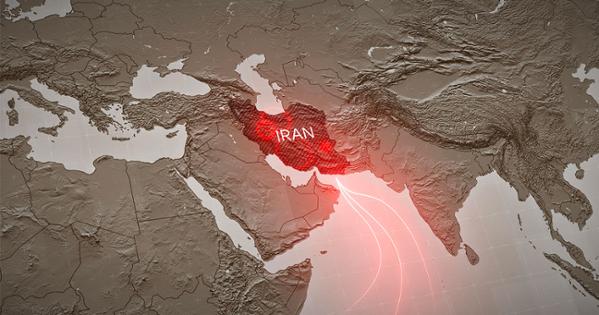
The rapidly evolving conflict between Iran, the United States, and Israel continues to raise urgent questions across nearly every cross-section of international affairs, carrying far-reaching implications in areas such as military strategy and intelligence, economic stability, and the risk of a wider regional war.
To help unpack these dynamics, we asked several faculty experts at the School of International Service (SIS) at American University to provide insight on key questions related to the conflict and its broader global implications. Their diverse disciplinary backgrounds and analyses reflect our school’s commitment to understanding the world through multiple lenses.
Two questions help frame how the conflict could evolve:
- When will the war end? We might no longer be in a situation where President Trump could unilaterally declare a victory and end the war. Iran is prepared to engage in a lengthy asymmetrical war because it assumes that a surrender is a death sentence for the regime. It also calculates that America’s vulnerabilities are greater than its own. Therefore, it employs a horizontal escalation that applies maximum pressure on the Gulf states and on global markets. You can choose when to go on a war of choice but not necessarily when to exit it.
- How might the related war between Israel and Hezbollah play out? Hezbollah, despite being greatly weakened by the previous war with Israel and by the revolution in Syria, has started attacks on northern Israel using missiles and drones. Israel's Air Force retaliated in South Lebanon and in Beirut and is threatening a ground invasion. But as opposed to past rounds of this conflict, now the Lebanese government explicitly condemns Hezbollah’s actions and is ready for direct negotiation with Israel. A smart Israeli government would have taken advantage of this opportunity to greatly weaken Iran’s proxy to its north through diplomatic means. The current Israeli government is unlikely to opt for smart diplomacy over brute force.
The war began with the assassination of the Ayatollah Ali Khamenei. U.S. intelligence reportedly provided Israel with the secret intelligence used to kill him. What does this suggest about intelligence and the American way of war?
First, President Trump values intelligence for tactical purposes—but not for strategy. Intelligence supported counterterrorism raids and cyber operations in Trump’s first term. More recently, the CIA reportedly played a key role in the capture of Venezuelan President Nicolás Maduro. Intelligence, however, appears to play a smaller role in strategic decisions. Trump seems surprised by Iran’s political and military response to the bombing campaign, which might reflect inattention to strategic estimates before the war.
Second, Trump clearly embraces intelligence that enables high-technology military strikes. These strikes are appealing because they promise quick and decisive results at low cost—and with little risk of a protracted ground war. We saw this last summer in the bombing of Iran’s nuclear facilities. But such strikes can lead to mission creep, including the use
of ground troops. It is unclear that the president will view intelligence favorably if the Iran war becomes a protracted conflict.
Finally, Trump sees global politics as coercive bargaining among strongmen. Leaders who resist pressure are subject to arrest or assassination. Making this threat credible requires convincing them that they cannot hide from U.S. intelligence. So, when the president openly brags about secret intelligence, he may seek to reinforce these fears.
You are witnessing the future of naval warfare in the opening weeks of the war in Iran. While the air campaign gets most of the media coverage, the naval campaign illustrates the devastating effectiveness of modern, multi-domain "pulsed operations" designed to "fire effectively first." Rather than engaging in traditional ship-to-ship attrition, this strategy focuses on blinding an adversary by dismantling their targeting complex (C-C5ISR-T) through a synchronized mix of kinetic strikes, cyber, space, and electronic warfare. This is executed through a deliberate four-phase operational sequence: (1) meticulously preparing logistics and target intelligence pre-crisis; (2) launching integrated salvos to suppress air defenses and neutralize immediate retaliatory threats at sea; (3) rapidly destroying vital infrastructure like ports and dry docks to trap remaining vessels pier-side; and (4) maintaining persistent intelligence to dynamically hunt down surviving assets. By systematically targeting the infrastructure required to generate combat power rather than just individual ships, this approach can entirely dismantle a nation's asymmetric maritime capabilities in a matter of days.
This rapid and decisive campaign model offers profound strategic lessons for future naval conflicts, particularly regarding a potential war in the Indo-Pacific. For vulnerable nations like Taiwan, the operation serves as a cautionary tale against concentrating naval forces in port, highlighting the urgent need for relentlessly dispersed, resilient networks of asymmetric weapons—such as integrated unmanned drones and mobile coastal defense missiles—to survive an initial salvo and maintain deterrence. For major powers like China and the U.S., the new benchmark of modern warfare is the ability to simultaneously sink a fleet, blind its sensors, and cripple its mainland logistics. Adapting to this reality requires developing highly resilient, decentralized battle networks, investing heavily in collaborative combat aircraft and deep munition stockpiles, and mastering joint, all-domain integration to sustain high-tempo operations against near-peer adversaries.
- Benjamin Jensen (for further in-depth analysis on this topic, please see this recent article)
So far, AI has mattered most on the U.S.–Israeli side of the war as an accelerant for intelligence processing, targeting, and operational planning, rather than as a fully autonomous warfighting tool. Reporting indicates that the U.S. military used AI-enabled systems tied to Project Maven (an initiative to accelerate the adoption of artificial intelligence, specifically machine learning and computer vision, into military intelligence and combat operations) and Palantir’s Maven Smart System to process large volumes of surveillance and classified data, helping planners identify and prioritize targets much faster than in earlier conflicts. Other reporting similarly describes how AI is speeding up analysis, matching targets to weapons, and allowing relatively small teams to do work that once required far larger intelligence staffs. At the same time, these reports also stress that human operators still retain final decision authority, which is important both operationally and ethically.
Cyber operations and cyber infrastructure have also played a meaningful but less visible role. Reuters reported that cyber-enabled operations accompanied the opening strikes, including hacks of Iranian news sites and a widely used religious calendar app, suggesting an effort to disrupt information environments and shape perceptions alongside kinetic attacks. At the same time, Western officials and private-sector analysts have warned that the conflict is likely to produce a wave of lower-level Iranian or Iran-aligned cyber activity, including distributed denial-of-service (DDoS) attacks, phishing, and disruptive operations against U.S. and European targets. In other words, cyber conflict has so far functioned less as a stand-alone substitute for military force and more as a parallel layer of disruption, signaling, and pressure that widens the battlefield beyond missile strikes and air campaigns.
One thing I am watching closely is whether cyber operations remain mainly intelligence-enabling and disruptive in the background, or whether they become more visibly integrated into the war to target critical infrastructure systems. That distinction matters because it shapes both the pace of escalation and how governments think about cyber resilience in future crises.
The Kurdistan Region of Iraq (KRI) has been caught in the crossfire of the broader Iran-US-Israel confrontation, and the pattern is consistent: every time tensions escalate between these powers, the Kurds absorb the punishment. Iran and its allied militias in Iraq view the KRI as a vulnerable U.S. partner, one they can strike with relative impunity. The calculation is straightforward. Tehran and its proxies bet that the Kurdistan Region is not strategically vital enough for Washington to actively defend, making it a low-cost target with minimal risk of retaliation.
The consequences have been severe on two fronts: political and economic. On the political side, Baghdad has used the instability as cover to steadily erode the KRI's autonomous powers, chipping away at the constitutional arrangements that have underpinned Kurdish self-governance. On the economic side, the damage has been devastating. The KRI's economy is heavily dependent on hydrocarbons, and that dependency has become a critical vulnerability. Oil and gas infrastructure has been repeatedly targeted by drones and missiles, at times forcing production to near zero.
Since this current cycle of conflict began, the Kurdistan Region has endured more than 250 missile and drone attacks launched directly by Iran and its Shia militia proxies operating inside Iraq. The Kurdistan Regional Government that once provided its population with 24 hours of electricity now averages roughly six hours a day, a direct result of sustained attacks disrupting gas and oil production that feeds power generation.
What is unfolding is not collateral damage. It is a deliberate strategy of economic strangulation and political marginalization, enabled by a regional conflict in which the Kurds have limited agency but bear a disproportionate share of the cost.
Europe’s reaction to the ongoing U.S.-Israeli war with Iran can best be characterized as tepid and indecisive. As has often been the case with other major foreign policy initiatives launched by the Trump administration, European allies were not really consulted and were largely surprised by a conflict they had not anticipated. And the scramble to respond has revealed a somewhat disjointed approach, with some countries very critical of the U.S. operation (i.e., Spain), others taking a more balanced position (e.g., U.K. or Germany) and others altogether more supportive of the Trump administration (Poland).
This is not to say that Europe has remained entirely on the sidelines since the beginning of Operation Fury. The March 2 drone hit on the British military base of Akrotiri in Cyprus was a quick reminder that the conflict was putting European interests and security at risk as well. Since then, several European powers have sent warships, fighter jets and air-defense systems to the Middle East in an effort to protect their bases as well as allies.
Doing so has both shown Europe’s willingness to defend its interests as well as some of the acute dilemmas and challenges that it faces. Thus, this was not a war of its choosing, but Europe cannot entirely ignore the situation in the Middle East either. The consequences of a prolonged conflict could be acute for Europe, whether through new large-scale refugee flows, increased risk of terrorism attacks initiated by Iran, or economic pressure through the increase in the price of oil. Moreover, a continued conflict in the Middle East could have negative consequences for the support for Ukraine, especially if the U.S. becomes bogged down in the region. Finally, the Europeans are also trying to manage their thorny relationship with the Trump administration, seeking a difficult balancing act between not being dragged in the conflict and not alienating their mercurial ally either, as shown with the U.S. pressure to help in opening the Strait of Hormuz.
The reflex is to watch oil prices, but the trade story is more layered than that. The Red Sea disruptions from Houthi attacks in late 2023 and into 2024 offer a preview: spot container rates on major Asia–Europe routes more than doubled and in some weeks roughly tripled, rising from around $1,500–2,000 per container to over $5,000 as vessels rerouted around the Cape of Good Hope. Transit times lengthened by roughly two weeks, adding cost and delay to supply chains that had barely recovered from COVID-era bottlenecks.
The Strait of Hormuz is a different chokepoint, one that is less critical for container flows but central to global energy transit, with roughly 20 percent of the world’s traded oil passing through. Iran’s effective halting of tanker traffic through the Strait of Hormuz has already pushed global crude prices above $100 per barrel despite historic releases from strategic reserves, and governments are adjusting trade policy, including temporary easing of sanctions on Russian oil, to blunt the impact. The deeper economic risk is that the demonstrated capacity to weaponize energy chokepoints and the potential reactivation of proxy networks like the Houthis in places like the Red Sea introduces a persistent volatility into global markets, prompting firms and governments to shift inventory practices, investment plans, and supply-chain relationships in ways that will outlast any ceasefire. Those costs don't disappear when the news cycle moves on; they get priced into goods, embedded in long-term contracts, and locked into infrastructure decisions that last decades.
The energy dimension matters beyond what Americans pay at the pump. Energy costs are embedded throughout manufacturing, agriculture, logistics, and services, raising marginal costs across sectors and reinforcing inflationary pressure. The U.S. has meaningfully insulated its production processes through domestic shale production and efficiency gains, though consumer transportation remains exposed. The more consequential longer-run effect may be geopolitical: sustained energy price volatility complicates Europe’s green transition at a moment when its industrial competitiveness is already under strain, while the current U.S. administration is doubling down on fossil fuel expansion. Elevated and volatile energy prices do not simply disrupt today’s supply chains; they influence where energy-intensive industries locate, how governments deploy industrial subsidies, and whether economies tilt toward integration or toward more fragmented, bloc-based production strategies.
The war that followed the U.S. strike on Iran raises a deeper question about nuclear weapons and security—one that has shaped decades of debate about how states try to protect themselves in a dangerous world. The basic logic of nuclear deterrence is straightforward: when the potential costs of war become unimaginably high, leaders think twice before escalating conflicts. Nuclear weapons create that possibility by making the consequences of war potentially catastrophic.
But deterrence is not evenly distributed. It depends on who has nuclear weapons and who does not. In situations where one state possesses overwhelming military power and the other lacks a credible nuclear deterrent, the barriers to using force can look very different. That imbalance is what makes conflicts like the war with Iran so strategically consequential. If the lesson other governments draw from this war is that nuclear weapons are the only reliable guarantee against external attack or regime change, then a conflict fought in part to prevent nuclear proliferation could ultimately strengthen the perceived value of nuclear weapons. The result would be a paradox at the heart of nuclear politics: efforts to stop the spread of nuclear weapons may sometimes reinforce the very incentives that drive states to seek them.
On the one hand, the war proves once again that the U.S. remains the world’s preeminent military power, especially when it comes to inflicting massive damage on a distant adversary. At the same time, the war has demonstrated that America’s overall global military superiority does not guarantee success in attaining political objectives in complex regional conflicts against large nations with well-entrenched governments—authoritarian or not—backed by strong religious or ideological beliefs. The war totally lacks legitimacy under international norms and law. It cannot be legally justified as “preemptive war” since there was no credible threat of an imminent attack from Iran against the U.S. or its Gulf allies. Nor can it be accepted as a “preventive war,” since Iran already indicated verifiable curbs on its uranium enrichment program necessary to become a nuclear weapons state.
Even if Trump declares victory to end the war, it will be a pyrrhic victory for the U.S. (meaning a success that inflicts such devastating costs on the victor—often in lives, resources, or reputation—that it is tantamount to defeat). The war is more likely to produce regime change in Washington than in Tehran. Unlike the U.S.-led victory in Iraq in 1991, which produced a “unipolar moment,” this war in the short term ushers in what I have called in Foreign Policy’s January 2026 cover story as “the world-minus-one moment,” or the near total isolation of the U.S. on the world stage. This is already demonstrated in the lukewarm international response to Trump’s call for joint naval operations to clear the Strait of Hormuz. The war further shows that aligning with the U.S. is a fatal attraction for countries that had depended on the U.S. for military protection and economic benefit. Even the certified allies or partners of the U.S., like Canada and nations of Western Europe, have been bullied, tariffed and made to feel acutely insecure. The war benefits America’s adversaries—Russia and China—and profoundly alienates Global South nations that were in a neutral or hedging mode against U.S.–China or U.S.–Russia rivalry. In the longer term, unless, the U.S. reverses the course set by Trump, the war will speed up the end of the U.S.-dominated world order and help the emergence of a “multiplex world” in which U.S. dominance gives way to a complex framework in which not only other great powers but also middle powers and regional powers and Global South nations will play a more important role. Despite its vast military power, America will be distrusted and have to settle for a less prominent role in the global political, economic, and diplomatic scene than has been the case since World War II.
- Amitav Acharya, author of the recent book, The Once and Future World Order (2025)
Most wars end with one side defeating the other and the victor dictating the terms of peace. Alternatively, a negotiated settlement usually occurs when belligerents experience war weariness or determine a so-called ‘mixed outcome’ (neither complete victory nor defeat) is preferred over continued bloodletting. The latter is often achieved through the aid of a third party. The current war pitting Israel and the U.S. against Iran is not likely to end with complete victory by either side, even in the unlikely event of U.S. ground forces entering Iran. Equally remote is the prospect of regime change through air power alone. Meanwhile, the war is taking the lives of soldiers and noncombatants, costing billions of dollars a day and increasing public skepticism about the competence of national leadership. Iran’s neighbors are under regular attack, which in addition to contributing to human insecurity in the region is causing oil prices to soar and raising fears of a major global economic downturn. Something must give. It usually starts with difficult conversations. As Winston Churchill famously said, "Meeting jaw to jaw is better than war." But jaw jawing to what end?
Both sides are engaged in what conflict resolution experts characterize as positional bargaining. Each side starts from first principles (e.g., protecting national sovereignty, eliminating existential threat), which render impossible concession-making as part of a bargaining process. What regime will sacrifice sovereignty or abide a threat to its existence? Conversations of this type become a dialogue of the deaf, with each side talking past the other. It is no exaggeration to state that process is king here. When the belligerents do engage in dialogue again, as surely they will, among the tenets guiding the process must be to avoid framing differences in terms of principle, to assume a flexible stance, and to work toward integrative solutions. Easier said than done, which counsels patience, courage, and creativity. Of course, states will only stay the course if they feel the other side is negotiating in good faith, so building trust, which takes patience; taking risks, which requires courage; and generating new options, which relies on creativity, are the sine qua non of long-term success. Cynics may dismiss these as naïve and aspirational, but they have a proven track record, and in a situation of intractability, offer a realistic alternative to death and destruction without end.