
One Student’s International Career Journey to SIS
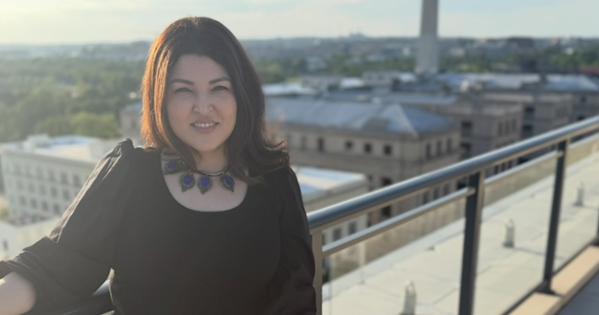
Before ever stepping foot on campus at American University, Layma Murtaza, SIS/MS ’25, had already forged an international career. Now at SIS, Murtaza is gaining leadership skills to launch her into her next chapter.
Murtaza, a student pursuing her master’s in development management (DM), has held several wide-ranging jobs and positions, ranging from lobbyist and campaign manager to grants coordinator and development specialist in posts all around the globe. Currently, Murtaza is the chief partnerships officer and a board member at Aseel, a global tech platform that provides humanitarian aid for people in need across Afghanistan and uplifts artisans from Turkey and Afghanistan through its online marketplace.
We sat down with Murtaza to hear about her background, her career path, and her journey to SIS.
Building a Career
Murtaza grew up in a large Afghan-American community in Fremont, California, which is home to one of the largest Afghan diaspora communities in the US. Her family left Afghanistan and came to the US as political asylees in 1979.
After graduating with her degree in political science from University of California Davis, Murtaza briefly worked in political fundraising in Sacramento before deciding to pursue her master’s in migration and refugee studies from the American University in Cairo.
“I studied there because it was a really strong hub of migration throughout Africa and the MENA region,” Murtaza said. “Deciding to go overseas was the best experience of my life—to understand a new culture, learn a new language, and immerse myself in these new thoughts and theories of migration.”
While in Cairo, an opportunity opened for Murtaza to spend two months in Afghanistan as part of a program through the American University of Afghanistan. Always wanting to visit Afghanistan, Murtaza seized the opportunity and ultimately left with a new perspective on international development.
“It was one of the best experiences ever, because it was so eye opening,” Murtaza said. “It was so eye opening to know that in my head, growing up super American in this bubble, I was like, ‘I'm going to get a master's degree and go help someone in another country, and I have all these skills.’ And then you go there, and these people are brilliant on their own.”
Murtaza would eventually return to Afghanistan, this time for a period of nearly five years. During this stint, she worked on civil society projects for the Aga Khan Foundation, a large multilateral organization.
“I got to work on supporting local governance and strengthening their policies to engage citizens and city and district and provincial planning,” Murtaza said. “I got to respond to emergencies but also work on long term education and education initiatives. It was a really meaningful experience for me.”
Arriving at AU
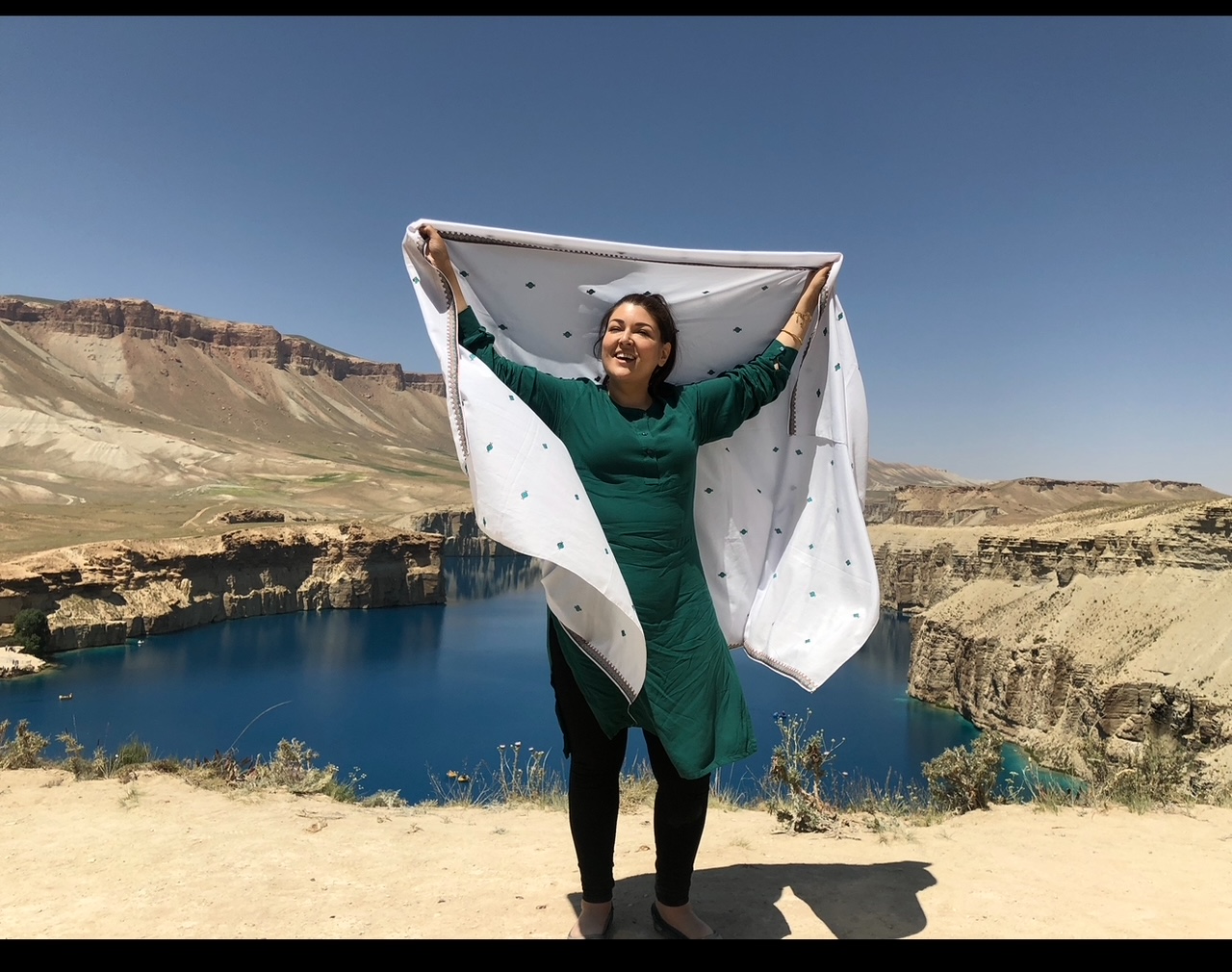
Murtaza ultimately left Afghanistan in 2019 and took on roles that would see her living in DC, Jordan, and Turkey. When the fall of Afghanistan occurred in 2021, Murtaza began applying for PhD programs.
“When the fall of the republic happened, there were a few of us that thought, ‘We want to go back to school to study this. We want to create something around this,’” Murtaza said.
Murtaza applied to the PhD program at SIS but chose to pursue the development management master’s degree program after a conversation with SIS graduate admissions about her future goals. The program is designed for professionals with at least four years of work experience in leadership and management roles and prepares students with skills and tools in project management, economics, and international development.
Through her time in the DM program, Murtaza says she has benefitted from the connections she has made with fellow students and the skills she has learned in her classes.
“My experience at AU has been really positive. We had a really small cohort, but we made such strong friendships and a supportive friendship group, so we're able to help each other whether it's looking for jobs, strengthening resumes, and talking about ideas,” Murtaza said. “[The program] has helped me understand my management style, and the speaking engagements I’ve been able to practice while in school have allowed me to now go and talk in front of 100 people to present ideas and talk about Aseel.”
Murtaza added: “Even though I already had this career trajectory, I didn’t have the leadership or the internal compass that I needed, and I think AU really helped with that.”
Working While in Graduate School
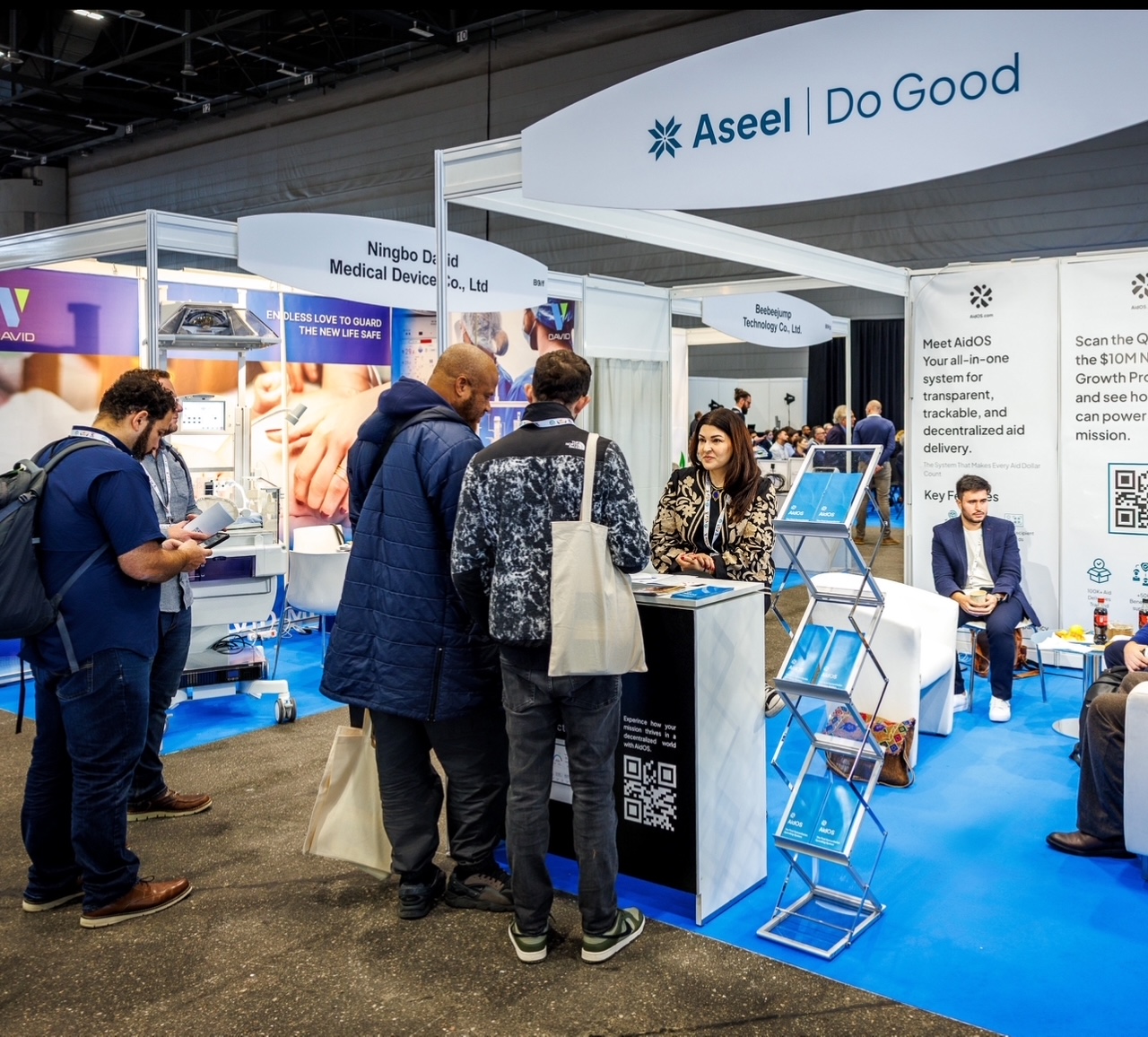
Murtaza has worked full-time the entire time she has pursued her master’s degree at SIS. In her current full-time role, Murtaza oversees the business development team at Aseel and manages contracts and partnerships with organizations like the International Rescue Committee and UNHCR, among others.
Aseel is a global tech start-up that is focused on humanitarian solutions through its “Buy Good” and “Do Good” platforms. Founded by a former Afghan refugee, Aseel connects local artisans in Afghanistan to the digital economy through its online marketplace and creates a space for anyone in the world to donate to emergency relief campaigns.
“Aseel’s mission resonates deeply with me because I am Afghan-American and have spent much of my career working in crisis-affected countries. I know what it means when aid is delayed, mismanaged, or disconnected from the people it is meant to serve,” she said. “Aseel has changed the way communities experiencing crisis can access help. I’ve seen families in Afghanistan, Yemen, and Syria receive direct aid without long waits or complicated processes. I’ve also seen diaspora members reconnect with and support their communities in ways that feel transparent and empowering. The platform gives people dignity by letting them be part of the solution, not just recipients of aid.”
While working full-time in graduate school is not always easy, Murtaza says her key is organization and a color-coded calendar that separates her full-time job, schoolwork, and personal time.
For students who also want to pursue an international career path, Murtaza says her biggest piece of advice is to remember that “sometimes you have to make your own path” and don’t be afraid to network.
“When I came to DC to do this program, I started utilizing everything that I had at AU and my networks. I went to happy hours with people from different programs at AU and utilized the AU alumni network. I really maximized the communities I was involved with,” Murtaza said. “I think something that can be helpful for [incoming] students is to not have the mindset of coming in and saying, ‘I’m just going to learn what I love’—instead, know what you want to do with your degree and create the pathway for yourself even if it doesn’t exist.”