
SIS Alumna Named to TIME100 Philanthropy List for Reimagining Disaster Response
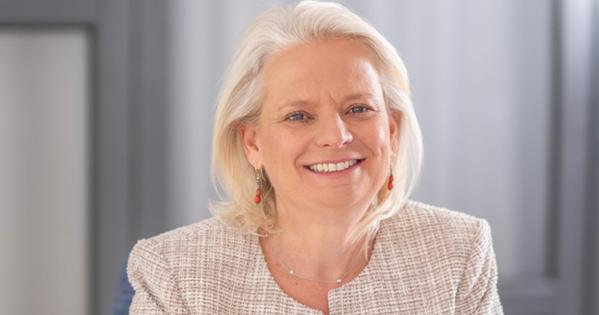
In May 2026, TIME magazine named Patricia McIlreavy, SIS/MA ’92, to its second annual TIME100 Philanthropy list, recognizing “the 100 most influential people shaping the future of giving at a pivotal moment.” McIlreavy is the president and CEO of the Center for Disaster Philanthropy (CDP), an organization that mobilizes philanthropy toward equitable recovery in the wake of disaster, with particular focus on the period after the headlines fade, when giving typically dries up.
The recognition from TIME acknowledges something McIlreavy has spent more than three decades working toward: a model for philanthropy built on the staying power of partnership rather than tragedy and prescription.
A Time of Connection at SIS
Before the disasters and the boardrooms, there was graduate school. McIlreavy arrived at American University (AU) in 1990, earning her master's in International Service in 1992. Choosing to focus on topics of international law and conflict resolution, she quickly developed a love for the coursework, particularly the seminars, but was most struck by the closeness and collaboration she found with her professors. AU’s School of International Service (SIS), she recalled, offered opportunities to get to know her professors through a genuine exchange of ideas.
“Educationally, SIS for me was a phenomenal experience,” she said. “There were a number of professors that I really engaged with well and felt like true partners in what I was trying to explore and do with my education.”
During her time here, McIlreavy also found a tight-knit group of friends—one she is still in close contact with today over 30 years later. The group stays connected through regular get-togethers and a WhatsApp group. Those friends would sustain her both personally and professionally throughout her career, supporting one another especially once they began working abroad.
“We went overseas at a time before this constant contact of our world today, and so to have those regular connections and knowledge and knowing that we were there for each other when one of us would come home […] I just really appreciate how that connected for me.”
Building a Career
Although McIlreavy initially thought she would go into something more closely related to international law and conflict resolution, she kept herself open to other opportunities and quickly became involved in various arenas of humanitarian assistance.
Not long after graduation, she landed a job at USAID in the Office of U.S. Foreign Disaster Assistance (OFDA), which turned out to be an extraordinary environment to learn and grow in her early career. She was deployed twice to work on the Rwandan genocide disaster response team—a formative experience that proved clarifying.
"I was making a lot of decisions on things I really knew very little about," she said of that period.
This pushed her to seek a more operational role, which ultimately led her to the International Rescue Committee, where she would spend over a decade in positions of increasing responsibility, beginning as program coordinator in Rwanda, then serving as country director in Sudan, Tanzania, and Burundi before becoming regional director for the Horn and East Africa. As she continued to build her career—as a consultant for leading organizations like the Red Cross and UNHCR; then as senior director-turned-vice president of humanitarian policy at InterAction, an alliance of U.S.-based international NGOs—McIlreavy continued to come up against the same structural problem.
“There's an arrogance of the [humanitarian and philanthropic] system of, ‘We know best, so just give to us,’” McIlreavy explained. This perception is a longstanding problem throughout the industry where the recipients of aid are often viewed as passive recipients versus active responders whose knowledge and experience are sidelined when constructing and implementing solutions to their own problems.
Despite McIlreavy’s best efforts in various roles, she found that the system was highly resistant to change, weighed down by its own systems and bureaucracy.
“When I was guiding on the policy side, we talked a lot about the reforms that need to happen, but there was really little appetite for it,” she said. “We kept getting stuck in, ‘Well, we can't do it now,’ or, ‘We can do it, but we need to invest in all these additional people to do it.’ Which meant we were spending more money on ourselves to make a change that we knew needed to happen. It used to frustrate me to no end.”
Modeling a Better System
When McIlreavy joined CDP in March of 2020 as president and CEO, she finally found a space where she could work effectively to counter this thinking.
“What we've been able to do at CDP is lift up that those who know best are the affected people,” McIlreavy said.
CDP’s mission is “to mobilize philanthropy to strengthen the ability of communities to withstand disasters and recover equitably." But while many think of disasters as sudden, unavoidable acts of nature—a hurricane, an earthquake, a flood no one saw coming—McIlreavy pushes us to consider the definition somewhat differently. Disasters by her definition are what happens when a hazard—an earthquake, a disease outbreak, armed conflict—meets a community’s existing vulnerabilities.
Addressing a disaster in the short and long term therefore requires understanding and addressing those underlying vulnerabilities—not assuming you know what they need. This is why at the core of CDP's philosophy is a shift in where power lies. Rather than centering the people and organizations with the money and resources, CDP tries to support local communities through partnership rather than prescriptive solutions.
“In the humanitarian sector, we've lost a major opportunity to see philanthropy differently,” McIlreavy said. “I've tried to use my role at CDP to model that—and that’s really seeing philanthropy not as a checkbook, but as a partner.”
Part of what needs to change, in her view, is the storytelling. The humanitarian world has long fundraised on images of devastation—what she calls the "charity mindset," which reduces complex, professional work to something closer to volunteerism and perpetuates the image of locals as helpless victims in need of saving.
“As a sector, we've tried to simplify the message but in a way that is emotive,” she explained. “Not in a way that is building partnerships, and growing understanding, and lifting up how much communities do for themselves with so little—and how you can be a partner in that incredible initiative, growth, and passion at that local level. They're not waiting for someone to come in and save them.”
What Philanthropy Can—and Can't—Do
Funding for international humanitarian aid has been drying up across many of the world’s wealthiest nations. While the biggest headlines have been the Trump administration’s dismantling of USAID, other major aid funders like the UK, Germany, and Canada have also significantly reduced their contributions. This trend, accompanied by the world’s growing number of billionaires (and now trillionaire), has made the question of philanthropy’s role on the international stage all the more urgent. Unfortunately, philanthropy cannot fill that gap, McIlreavy said—and it shouldn't be expected to.
“Governments have a social contract with their people, right? That's the one thing about international law that constantly was framed out is there's certain responsibilities governments have towards their people. Period. So, we need to not abdicate that. And how do we reinforce that?”
What philanthropy can do, she argues, is model a better approach by investing in community-led solutions and demonstrating what equitable recovery looks like.
"There's an ecosystem—it's public, private, philanthropy, the media,” McIlreavy said. “We all have a role to play."
She sees a lot to admire in the next generation of humanitarians coming through schools like SIS. "There's a lot of passion, there's a lot of desire," she said. "There's a lot of connectivity to the world in a way that maybe hadn't been there for my generation growing up."
Her advice for SIS students is the same advice she took herself, if inadvertently: stay open. "You don't know what path will take you where," she said. "So many people get fixated on one path with specific dates, and I was never one to be like that. I just wanted to be open to opportunities."
For McIlreavy, those opportunities have added up to more than three decades in the field—in Rwanda and Sudan, in boardrooms and bilateral forums, and now at CDP, where she is working to make equitable recovery the default, not the exception. The TIME100 recognition, in that light, is less about arrival than about momentum.