Policy Analysis

The GKIP Policy Analysis delivers in-depth, expert-driven insights on critical policies and developments impacting Kurdistan and the broader Middle East. Through rigorous analysis of the political, economic, and social challenges facing Kurdish communities, we aim to elevate these issues within policy and academic circles, as well as the public in the United States, Kurdistan, and beyond. Our mission is to foster informed dialogue, promote peaceful solutions, and contribute to policies that deepen understanding and advance the Kurdish struggle for rights and recognition. 

We welcome well-researched, original analyses that focus on a single issue and/or policy and offer practical, solution-oriented recommendations. Submissions should be between 1000-1200 words, written specifically for GKIP. We do not accept articles from anonymous authors. All contributors must include a brief bio and current affiliations. To ensure accuracy and transparency, factual claims must be supported with hyperlinks to credible sources.  

Please send submissions as a word document to KurdishSIS@american.edu

We strive to respond to all submissions within five business days. 

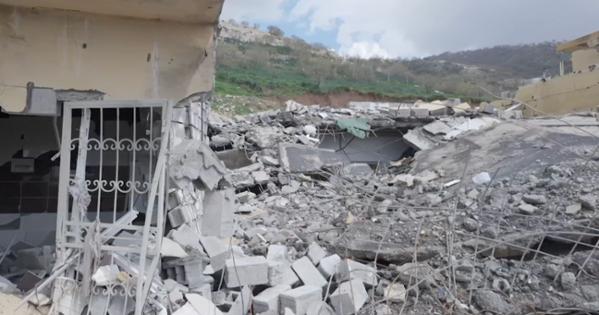
Photo of a house in Kurdistan destroyed from airstrikes.

Policy Analysis ·

As Iran attacks, the US should provide air defense for Iraqi Kurdistan

The deadliest single attack on Kurdish security forces since the onset of the war in Iran arrived on March 24, when six Iranian ballistic missiles struck Peshmerga bases in the Soran highlands north of Erbil.
Full Story
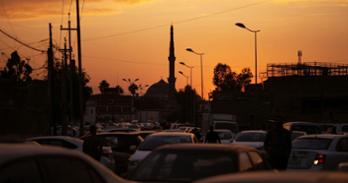
Cars and the sunset in Erbil, Kurdistan Region of Iraq

Policy Analysis ·

The Squeeze on Erbil

The war in Iran both underscores the urgency and will delay action on a U.S.-brokered Peshmerga-Baghdad redeployment in the disputed territories.
Full Story

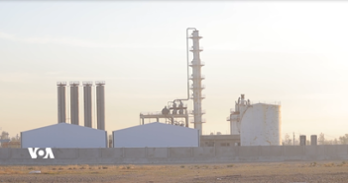
Photo of a Kurdish oil refinery.

Policy Analysis ·

Iraq’s oil paralysis: A self-inflicted wound and a gift to Tehran

With the Strait of Hormuz closed and oil production from Iraq’s south in free fall, Baghdad’s failure to maximize the Iraq-Turkey Pipeline (ITP) is no longer a policy dispute. It is a national emergency.
Full Story

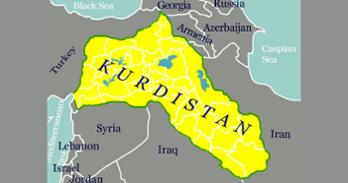
Map of the Middle East with the area of Kurdistan in yellow.

Policy Analysis ·

The Kurds Cannot Afford to Bet It All on This War

Without the sustained American guarantees that no one has offered, Kurdish leaders should resist the pull of a conflict that could undo four decades of self-rule.
Full Story

Photos of the flags of the United States and Kurdistan

Policy Analysis ·

Won't get fooled again: Kurds have lent arms to US before, at their peril

America has relied on this independent minority in Syria and Iraq and has never offered concrete agreements or treaties in return. That matters.
Full Story

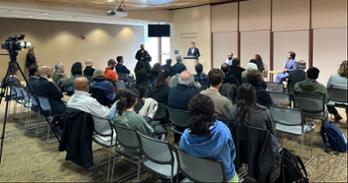
Professor Yerevan Saeed providing opening remarks to the audience.

Policy Analysis ·

Recap: The Future of Kurds in Syria

The political future of Syria’s Kurds is being negotiated in real time, across battle lines, in diplomatic back channels, and at international security forums, but the terms of that future remain deeply uncertain.
Full Story

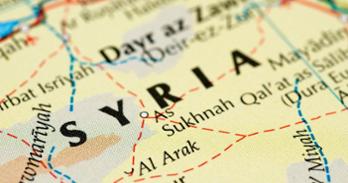
Photo of a map of Syria

Policy Analysis ·

By ending its partnership with Syria's Kurds, the West risks reviving the ISIS crisis

In north-eastern Syria, the people who helped dismantle ISIS’s self-declared “caliphate” are being asked, again, to pay for someone else’s plan.
Full Story

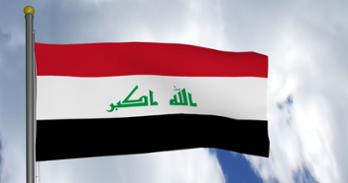
The flag of Iraq flying in the sky.

Policy Analysis ·

Iraq’s pathway to stability relies on transfers of power

In Iraq, stability and progress rely on leadership changes rather than leaders holding onto power.
Full Story

Image of a dove above the globe.

Policy Analysis ·

What happens after militants hang up their guns?

Earlier this year, the Kurdistan Workers’ Party (PKK) announced a unilateral ceasefire in response to calls from its jailed leader, Abdullah Ocalan.
Full Story

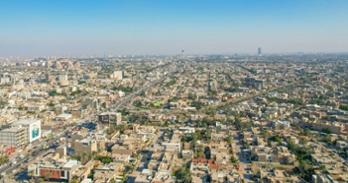
Aerial view of Baghdad, Iraq.

Policy Analysis ·

Dispatch from Baghdad: Don’t confuse the calm around Iraq’s election with stability

Iraq faces several slow-burning stressors—from water scarcity and climate change to drug trafficking and over-centralization.
Full Story