War Crimes Research Office

Summer Law Program in The Hague

Registration will open on November 1st


PROGRAM DATES: May 25th - June 19th, 2025 TBC

The Summer Law Program in The Hague is the product of a unique collaboration between the War Crimes Research Office of American University’s Washington College of Law, which has served for more than 25 years as a critical resource for tribunals and other organizations promoting accountability for atrocity crimes at the international, regional and domestic level, and the T.M.C. Asser Institute, one of the most prominent research institutes of international law in Europe.

 In 1899, the world’s first Peace Conference took place in The Hague; today this city on the North Sea is home to over 150 international legal organizations. Through the Program, participants will have the opportunity to learn about key issues in international law among the practitioners, courts, and tribunals that are making history today.

2025: The 19th Annual Hague Summer Program in The Hague

Last Year's Program

About the Schools

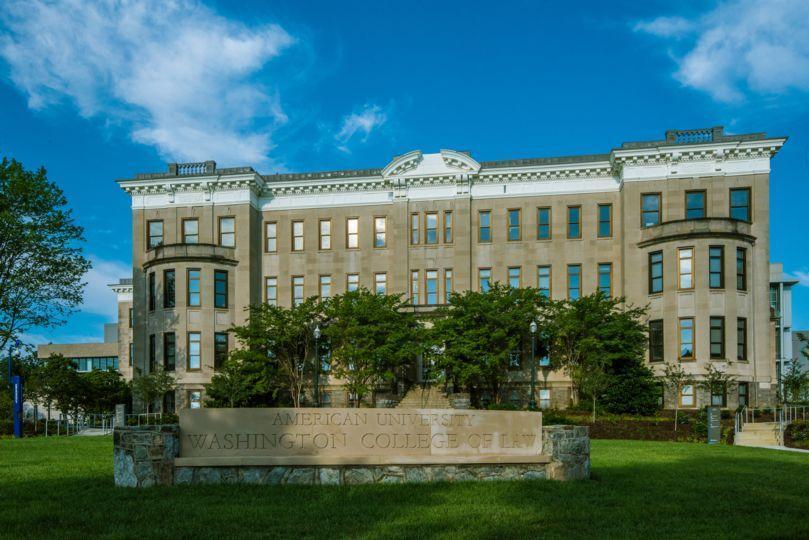
American University Washington College of Law

American University Washington College of Law

American University Washington College of Law (WCL) was founded in 1896 by Ellen Spencer Mussey and Emma M. Gillett, who established a coeducational school to ensure that women, as well as men, were given the opportunity to study law. WCL has become one of the leading law schools in the U.S. in the area of international law. It is a member of the Association of American Law Schools and is approved by the American Bar Association.

Learn more about:  American University Washington College of Law


The T.M.C Asser Institutue

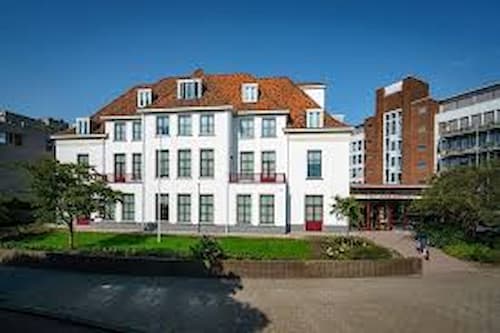
Asser
T.M.C. Asser Institute

T.M.C. Asser Institute is a prominent research institute in international law. Through its affiliations with the University of Amsterdam and other Dutch centers of learning, the Asser Institute functions as an inter-university center of knowledge and research. The Institute’s research areas include private and public international law, European law, international commercial arbitration, and other related fields, such as international humanitarian law. An essential component of the Institute’s objectives is the development of young talent, including offering promising young lawyers the opportunity to carry out their Ph.D. research at the Institute. 

Learn more about:  The T.M.C.

Faculty


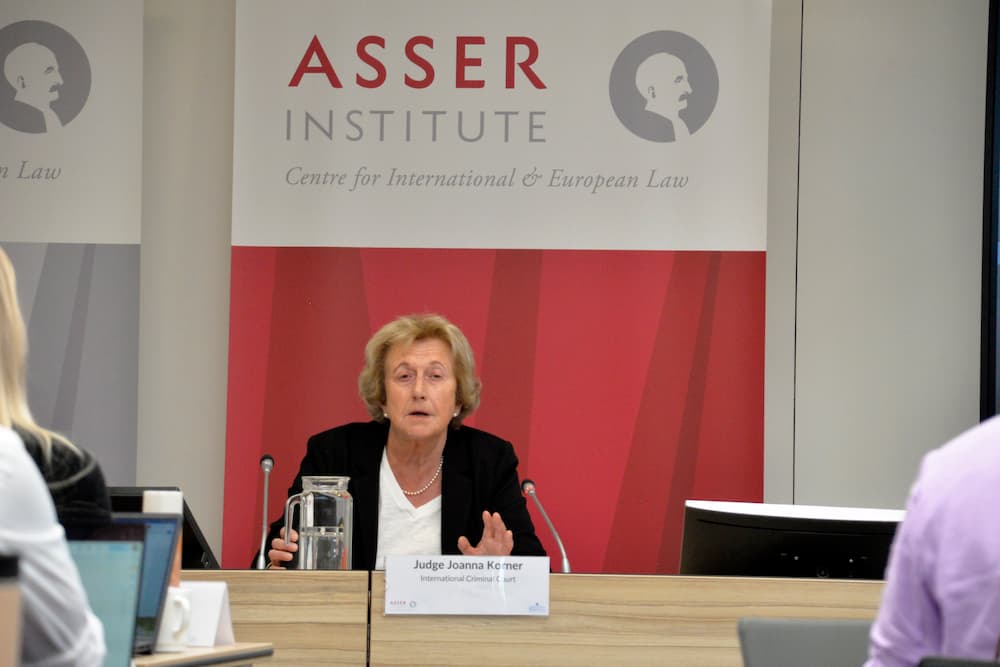
Judge Joanna Korner, International Criminal Court

Professor Susana SáCouto will serve as the Hague Program's WCL Faculty in 2026. In addition to WCL Faculty members, instructors for the program include judges, prosecutors and other staff from the International Court of Justice, the International Criminal Court (ICC), the International Criminal Tribunal for the former Yugoslavia (ICTY), and the T.M.C. Asser Institute. Past guest lecturers include:


Rod Rastan, Chief of the Judicial Cooperation Support Section in the Registry at the International Criminal Court


  • HE Judge Kimberly Prost, Judge at the ICTY
  • Mathias Marcussen, Senior Trial Attorney at the ICTY
  • HE Judge Hans-Peter Kaul, Vice President of the ICC
  • Helen Walker, International Cooperation Adviser, Office of the Prosecutor, ICC
  • Stéphane Bourgon, former President of the Association of Defence Counsels Practicing before the International Tribunal for the former Yugoslavia
  • HE Judge Teresa Doherty, Judge at the Special Court for Sierra Leone
  • Gilbert Bitti, Head of the Victim Unit of the ICC
  • HE Judge Fausto Pocar, Judge and former President of the ICTY
  • HE Judge Rene Blattmann, Judge at the ICC
  • HE Judge Bennouna, Judge at the ICJ
  • Norman Farrell, Deputy Prosecutor of the ICTY

Courses and Credits

The academic component of the Program consists of two 3-credit courses.

LAW 906-001: International Criminal Law: In Search of Accountability will provide an introduction to international criminal law and explore the various ways in which national, internationalized, and international courts and tribunals have attempted to enforce criminal responsibility for serious violations of human rights and humanitarian law. The course will also examine the role of states, their obligations under international law, and the obstacles they face in bringing to justice those responsible for international crimes.

LAW 907-001: International Legal Approaches to Terrorism in the 21st Century will examine counter-terrorism measures from an international and comparative law perspective and consider the interrelation between these measures and the obligations of states under international human rights and humanitarian law. The course will explore the status of different international players under international law and address questions such as: What is the definition of terrorism? Is the use of force in response to acts of terrorism permitted under international law? Is international law adequately equipped to deal with the “war on terror”?

Each session is taught by experts and/or practitioners in the field, including judges, prosecutors, and other personnel from the International Court of Justice, the International Criminal Court, the International Criminal Tribunal for the former Yugoslavia, the Special Tribunal for Lebanon, the T.M.C. Asser Institute, and other international organizations. Students are expected to complete assigned readings, participate regularly in all scheduled classes and events, and successfully pass a final written exam for each course. Class attendance is required. The course grade will be based on attendance, participation, and final exam grade.

All classes will be taught in English. Knowledge of the Dutch language is not necessary for participation in the Program.

Exams for both courses are conducted online following a week of reading period after the program end date. Students may take their exams anywhere they would like within the prescribed time period.

Credits

Program participants are expected to earn six credits for the two courses. Applicants who intend to transfer credits should inquire about their law school’s policy on that issue. Applicants should be aware that participation in the Program is unlikely to accelerate graduation for a full-time student.

Activities

Site Visits

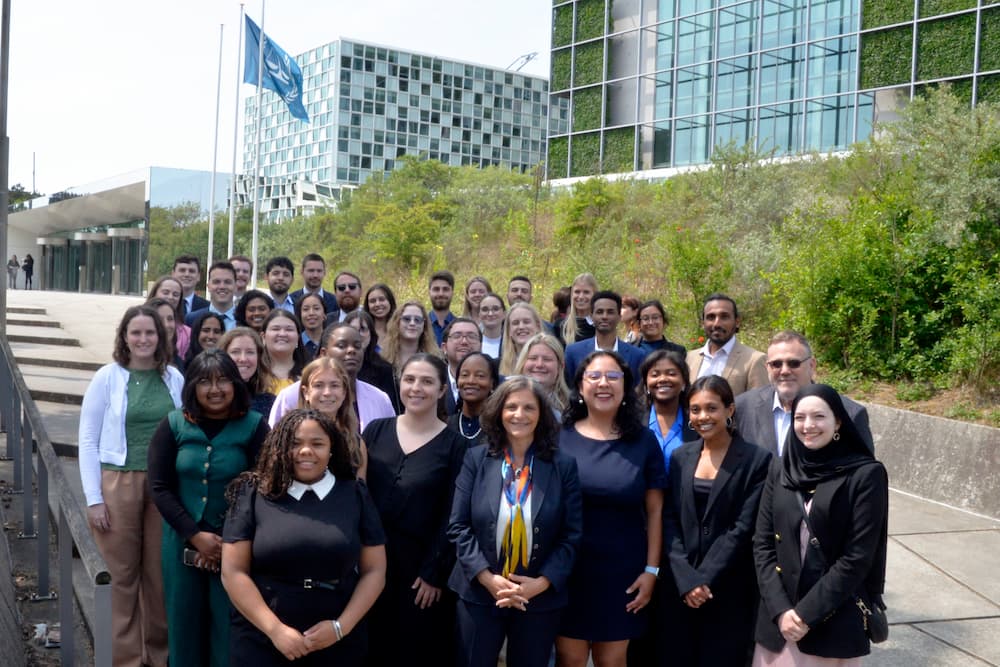
2025' Alumni at the International Criminal Court
2025' Hague Alumni at the International Criminal Court

The Hague is the third-largest city in the Netherlands and is the country’s seat of government, housing the First Chamber, the Second Chamber, the Estates-General, the Supreme Court and many other law-making bodies. In 1899, the world’s first Peace Conference took place in The Hague.

As a result of its rich legacy in international politics, The Hague is also home to over 150 international organizations. Integral to the academic program are visits to major courts and legal institutions located in The Hague, where students will have the opportunity to meet and spend time with practitioners, and to observe hearings or proceedings when in progress. Past institutions visited in include:


  • The Special Tribunal for Lebanon
  • The International Residual Mechanism for Criminal Tribunals
  • The International Court of Justice
  • The Dutch Court of Appeal
  • The International Commission on Missing Persons
  • Eurojust
  •  The Kosovo Specialist Chambers


Internships

In prior years, several participants pursued internships directly related to international criminal law. For instance, one student interned with the Voice of the Victims project at the ICTY and another worked with the Balkan Investigative Reporting Network, monitoring proceedings at the Domestic War Crimes Chamber in Bosnia and Herzegovina. Students have also interned with ICTY defense teams, the Special Tribunal for Lebanon, and with the Documentation Center of Cambodia on issues related to public access to proceedings of the Extraordinary Chambers in the Courts of Cambodia.

Extracurricular Activities

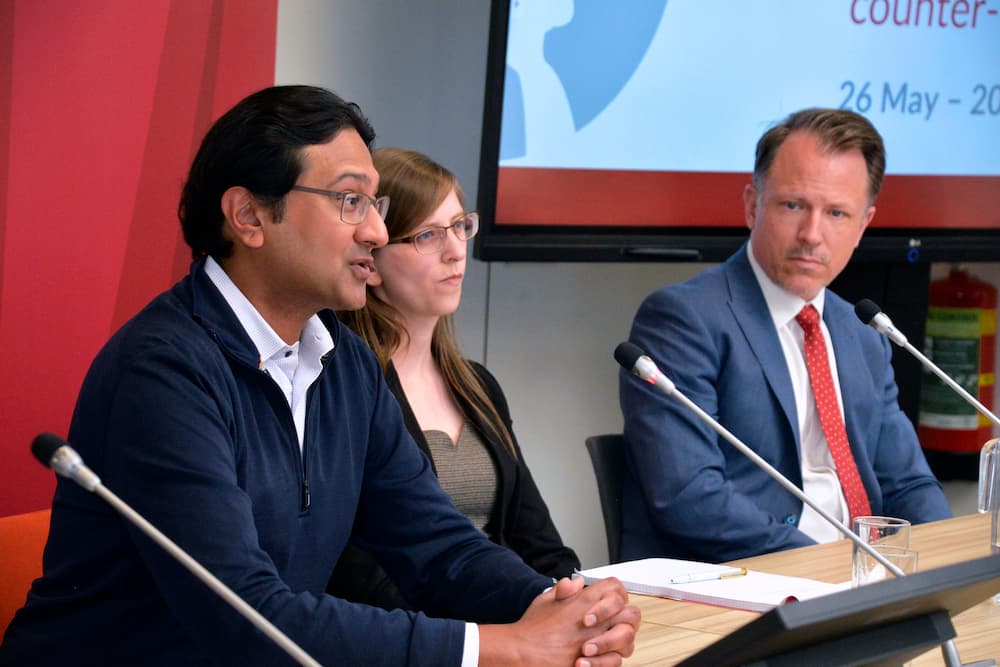
Eric Iverson (WCL Alum JD’06), Anand Shah (WCL Alum JD’09), and Emma Brandon (WCL Alum JD’17)

The program includes opportunities for participants to meet informally with other students, researchers and practitioners in the international justice field. The program includes a networking panel, during which students have the opportunity to meet with alumni and other practitioners to learn about their experience in the field, as well as intercultural sessions with colleagues at the Asser Insitituut to learn about living and working in The Hague.


Eligibility

  • Full-time and part-time J.D. candidates who have completed their first year of study by May 2026
  • Candidates for graduate law degrees (LL.M., S.J.D.)
  • JD graduates
  • Graduate students in other disciplines may be eligible. The Program Director will determine their eligibility on a case-by-case basis.

Student applicants must be enrolled in good standing at an accredited university or law school, as demonstrated by a letter of good standing to be submitted with the application (A letter of good standing is not necessary for WCL students).


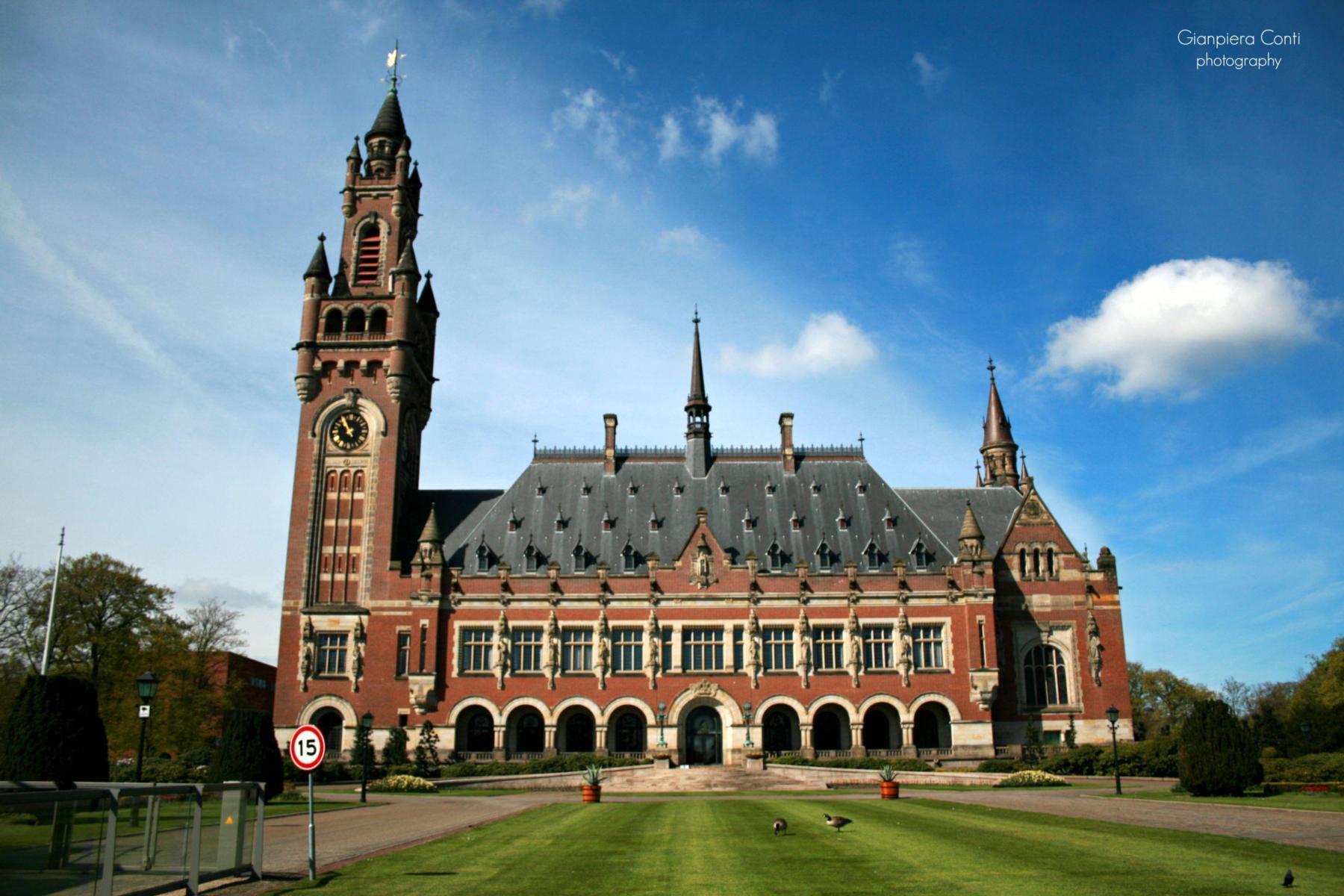
The Peace Palace
The Peace Palace

Expenses

The tuition/costs for the Program is equivalent to the cost of six (6) law school credits. This option is only available to AUWCL students and students visiting from other ABA-Approved Law Schools. Final Summer 2026 Cost of Attendance information will be made available in Spring 2026 on the AUWCL Financial Aid website

  • Non-Refundable Application Fee: $100 (Due at time of application)
  • Non-Refundable Seat Deposit: $500 (Secures spot in program; applied to your tuition)
  • 2026 Hague Summer Program Tuition: $7,158 per three-credit course ($2,386 per credit). Total cost of the program: 14,316.


The tuition includes academic credit from American University Washington College of Law, lodging, admission to required site visits, receptions, and supplemental emergency travel insurance.

All non-WCL students who will be sending a consortium agreement to WCL: Please make sure to write the name of the specific program and a contact email address on the agreement before submitting the documents.


2026 Hague Summer Certificate Program
 

Non-credit-seeking participants will receive a certificate of completion after successfully completing the program. If you are a law student or legal practitioner interested in a non-credit option, please email hagueprogram@wcl.american.edu for registration information.

The fee for certificate credit or course audit will be announced soon.

External Links about The Hague and the Netherlands