
Ilana Manolson: The Air We Share
A Project Space exhibition
Ilana Manolson, Artist
Sarah Tanguy, Curator
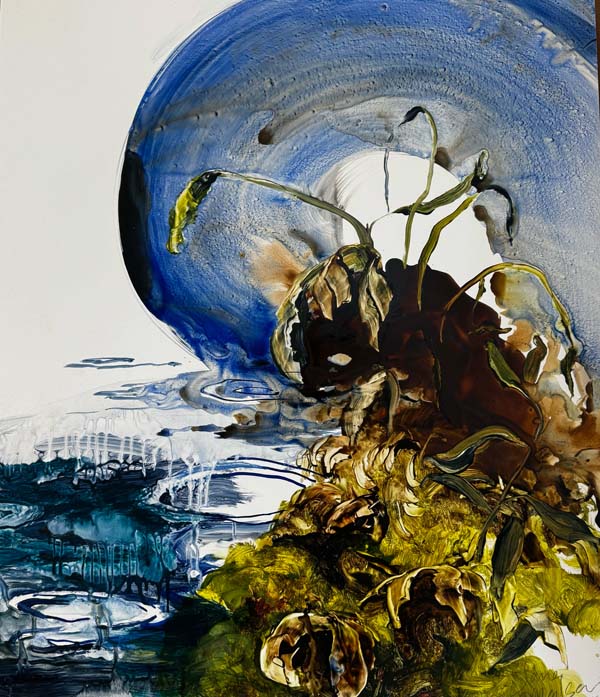
The Air We Share invites viewers to look closely at the plants that thrive at the edges of human attention. Painter, printmaker, and naturalist Ilana Manolson celebrates and elevates species often dismissed as weeds, revealing their vitality, beauty, and essential roles within the ecosystems we share.
Manolson paints through deep observation. Swaths of color flow across luminous landscapes while delicate strokes trace the intricate veins of leaves. Her “energetic fields”—bursts of light and form—make visible the unseen forces connecting all living things. Informed by her training as a botanist, her work finds grace and purpose in what many overlook.
This exhibition challenges the hierarchies humans impose on nature. Weeds, often maligned as invaders, stabilize soil, retain water, and offer shelter, medicine, and renewal. By placing them at the center of her compositions, Manolson reclaims their dignity and reveals their quiet power.
As climate urgency intensifies, The Air We Share calls for renewed awareness of our interdependence with the natural world. Manolson’s paintings remind us that life not only persists but flourishes in the margins, and that every living thing contributes to the shared breath that sustains us all.
Vital and Veiled: Valerie Brathwaite and José Gabriel Fernández
Valerie Brathwaite, Artist
José Gabriel Fernández, Artist
Jesús Fuenmayor, Curator
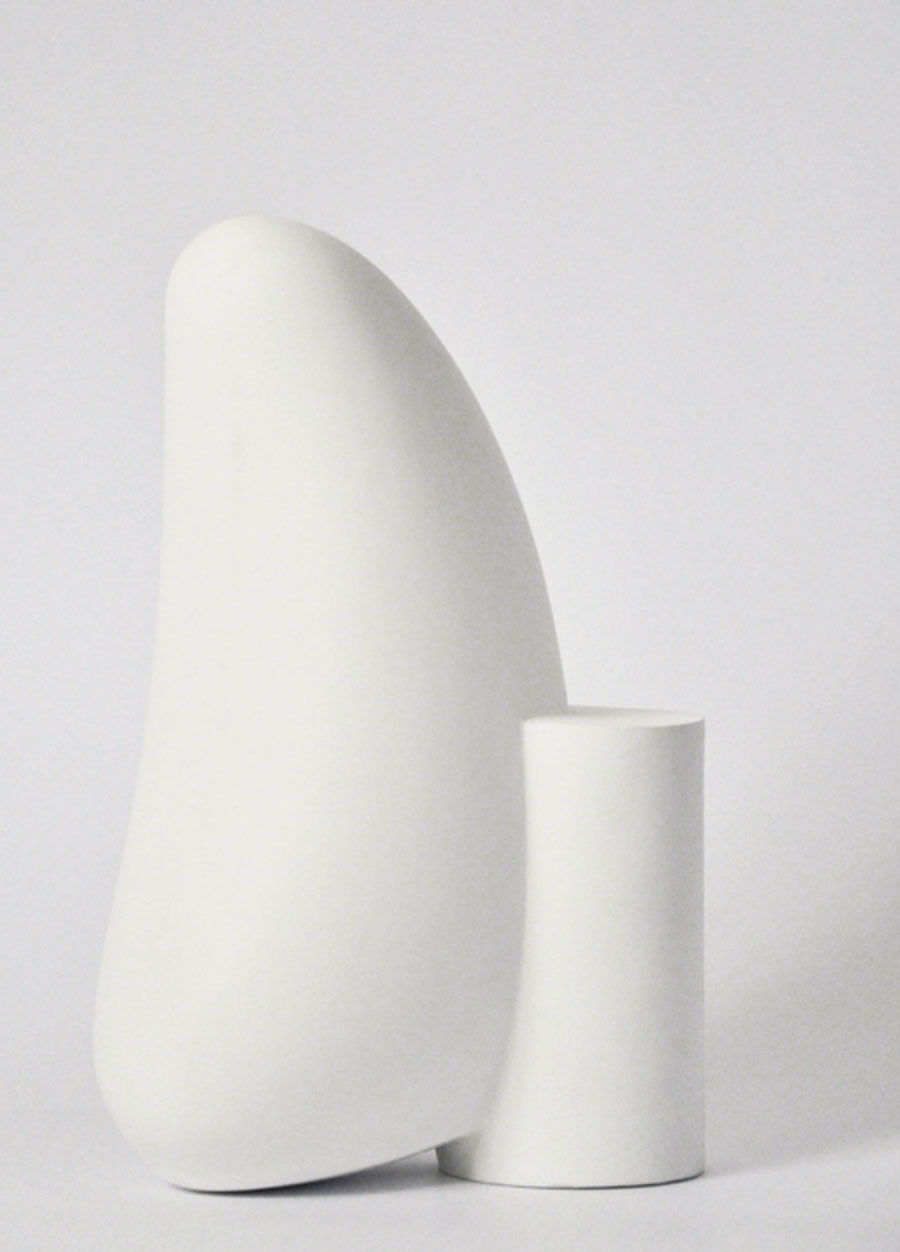
Curated by Jesús Fuenmayor, this exhibition explores how two pioneering sculptors, Valerie Brathwaite and José Gabriel Fernández, reveal how abstraction can speak to identity, sensuality, and the complicated histories that shape the Americas. Trinidad-born Brathwaite channels the landscapes of her childhood and the ecological tensions of urban life into luminous organic forms. Her stones, flowers, and “soft bodies” pulse with the sensual vitality of nature, shaped from clay, plaster, cement, fabric, and color that suggest both the Caribbean’s exuberance and its fragility.
Fernández, born in Caracas, turns to the stylized gestures and physicality of bullfighting to explore masculinity and the veiled layers of homoeroticism embedded within it. His ultra-modern sculptural abstractions—derived from the curves, tension, and theatricality of the capote (bullfighter’s cape)—reveal identity as something performed, coded, and concealed. Together, the artists demonstrate how form bore personal and cultural histories long before such concerns were named or theorized as identity politics.
Brathwaite and Fernández invite viewers to slow down and consider how abstraction absorbs the forces that shape life. Their practices show that form is never neutral; it is charged with lived experience and shaped by the worlds the artists carry with them.
The Magical World of Joan Danziger
Joan Danziger, Artist
Jack Rasmussen, Curator
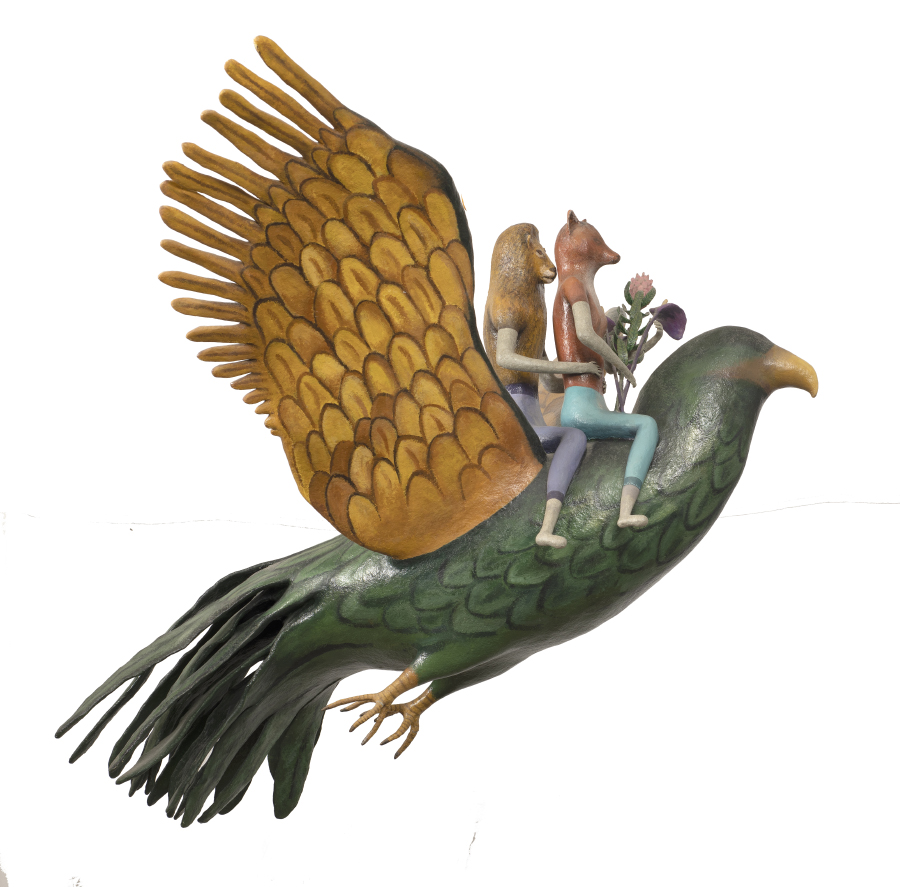
Enter a world of transformation—where imagination takes physical form; where wire, glass, and CeluClay become creatures of wonder; and where an abstract painter evolves into a surreal sculptor guided by her fascination with fantasy and dream imagery.
Danziger arrived in Washington DC from New York in 1968. Across the decades, she continues to forge her own independent path. “I have always been drawn to surrealism, symbolism, and magical imagery. My mixed-media sculptures emerge from a deep fascination with metamorphosis, myth, and the thresholds between humans and animals.”
In this, her largest exhibition to date, the works affirm her lifelong commitment to making the imaginative visible through the transformative power of material. In Danziger’s hands, that transformation feels nothing short of magical.
Ravens: Spirits of the Sky
Joan Danziger, Artist
Jack Rasmussen, Curator
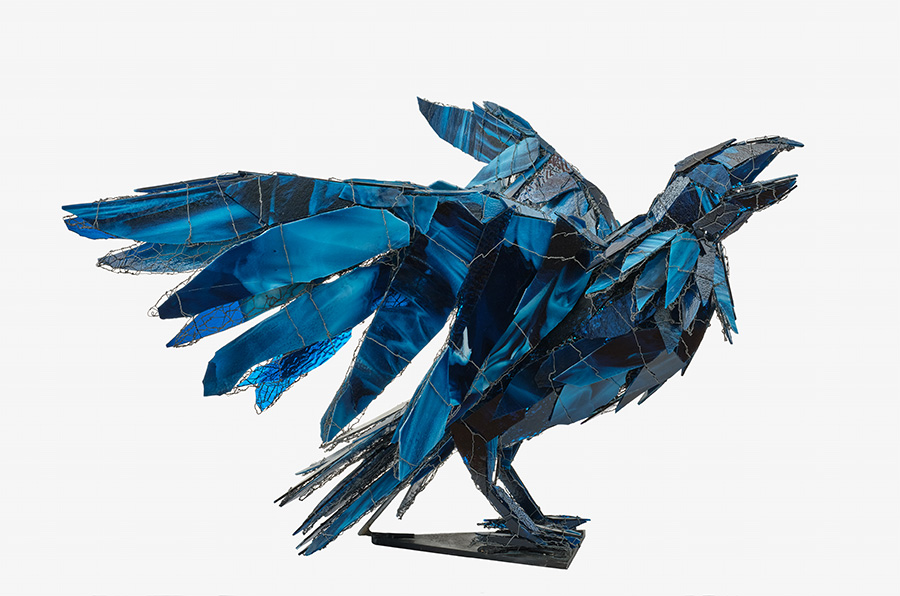
In Ravens: Spirits of the Sky, Joan Danziger’s sculpture occupies the museum with commanding intensity. Their exaggerated forms, iridescent surfaces, and suspended gestures place them somewhere between realism and abstraction, between sculpture and symbol. These are not the clever birds of natural history, but augurs, tricksters, familiars.
Their mythic resonance is heightened by scale and positioning, which invite viewers to encounter them as enigmatic beings charged with meaning. Danziger offers no fixed narrative. Instead, the Ravens communicate through presence—looming, watching, waiting—compelling us to project our own associations onto their vibrant shapes.
To paraphrase Claes Oldenburg, Danziger’s ravens do more than sit on their perch in the museum. They transform it. They inhabit the threshold between the known and the imagined.
Joan Danziger’s work invites us to reimagine the animal world not as a subject to be observed, but as a mirror of our own inner landscapes. Her sculptures do not simply represent; they loom. They haunt, hunt, and hover, suspended between worlds.
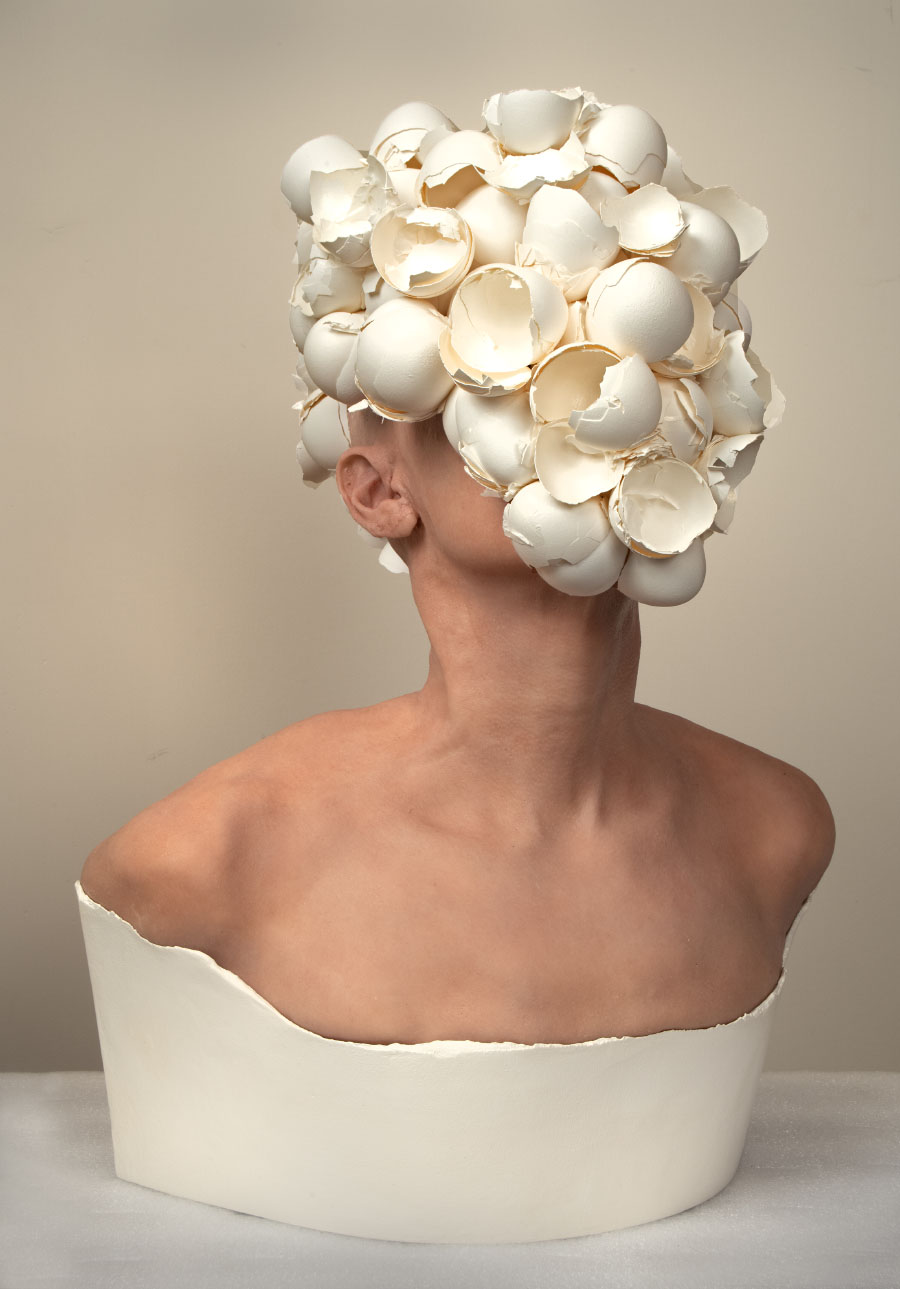
Humanist Touch: Works from the Weber Collection
Presented by the Alper Initiative for Washington Art
Joan and Bruce Weber, Collectors
Laura Roulet, Curator
Assembled over four decades, these works from the Weber collection reflect Joan and Bruce Weber’s long engagement with contemporary DMV artists and galleries. When they describe their collection, a strong sense of community emerges, one enriched by personal ties to the artists and by the many conversations, visits, and encounters that shaped their choices.
Humanist Touch invites viewers into this world of intuitive, heartfelt collecting. Guided by a principle they call Humanist—the belief that art should reveal the hand of the maker and “demand something from us”—the Webers gravitate toward expressive mark-making, layered surfaces, and works that offer an authentic encounter with human creativity.
For visitors, the exhibition provides a rare glimpse into how a meaningful collection grows over time. It reveals which artworks linger in memory, reward close looking, and continue to spark curiosity years after acquisition. The Webers’ approach shows how collecting can begin not with expertise or wealth, but with genuine interest and the courage to follow what moves you.
Featuring painting, sculpture, photography, video, computer art, and performance documentation, the exhibition spans styles from Cubist abstraction to hyperrealism, with in-depth representations of John Winslow, Jason Gubbiotti, and Inga Frick.
Ultimately, Humanist Touch invites viewers to consider their own engagement with art: What images stay with you? What sparks your curiosity? And what might you choose to live with should you begin a collection of your own?