
A Short Walk from Campus, a LEGO Cathedral, and a Game Waiting to Be Built
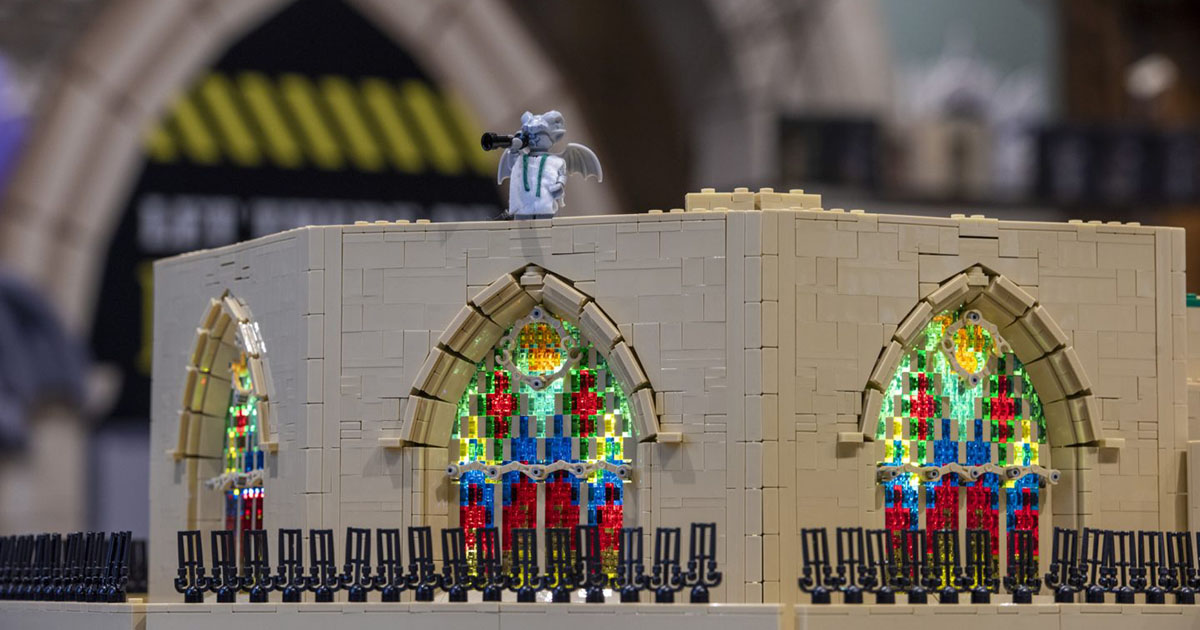 Photo courtesy of Washington National Cathedral
Washington National Cathedral is not the first place you'd expect to find a video game starring George Washington, Neil Armstrong, and talking gargoyles.
But thanks to a chance encounter with the world's largest LEGO cathedral—and the outsized imagination of American University computer science student Joseph DeNavas—the National Cathedral Game is now a reality.
Less than a mile from AU's campus, the cathedral caught DeNavas's eye one afternoon in 2024 when he set out to admire its Gothic architecture. As the sixth-largest cathedral in the world, it is one of Washington's most celebrated landmarks, it has hosted presidential funerals, national prayer services, and memorials for American leaders.
Inside, beneath the soaring Gothic arches and stained-glass windows, DeNavas spotted something unexpected. Volunteers were building the world's largest LEGO cathedral, a replica of the building surrounding them. When completed, the project will contain 500,000 bricks and stand eight feet tall and 13 feet long—roughly the size of a minivan.
For DeNavas, who grew up building LEGO pirate ships and playing video games, the sight sparked an idea: What if visitors could explore this extraordinary landmark in a video game?
And what if he could build it himself?
National Cathedral Game clip 1
Clip from National Cathedral Game
The Making of a Game
Even the gargoyles get in on the action, sharing fun facts about Gothic arches, limestone pillars, and cathedral construction.
DeNavas reached out to Faith Wang, the cathedral's visitor and engagement specialist, and pitched his idea. Soon, he was bringing the landmark to life on screen. He collaborated with fellow AU computer science students, faculty mentors, and colleagues from the AU Police Department, where he works as a dispatcher—one of the most rewarding parts of the project, he says.
“When Joseph first pitched the project to me, I thought he was just brainstorming,” says computer science professor Mark Nelson, DeNavas’s capstone advisor. “But he already had a 3D model running on his laptop—and the cathedral's team on board. He created this opportunity for himself and delivered on it.”
Then came the hard part: testing the game with real users. DeNavas initially envisioned a 45-minute adventure, but after watching visitors pilot early versions, he realized that cathedral tour groups needed something quicker and easier to jump into. So he reimagined the game as an open-world experience that visitors could explore at their own pace.
In the redesigned National Cathedral Game, players enter the cathedral as Fred, a virtual visitor with plenty to explore. They wander beneath soaring Gothic arches, collect LEGO bricks, and play mini games. Along the way, they can meet Neil Armstrong and Buzz Aldrin, who explain how a moon rock ended up in one of the cathedral's stained-glass windows. Or they might bump into George Washington himself, who recalls asking Pierre L'Enfant to plan the nation's capital—and L'Enfant's vision of “a great church for national purposes.” Even the gargoyles get in on the action, sharing fun facts about Gothic arches, limestone pillars, and cathedral construction.
From Campus to Cathedral
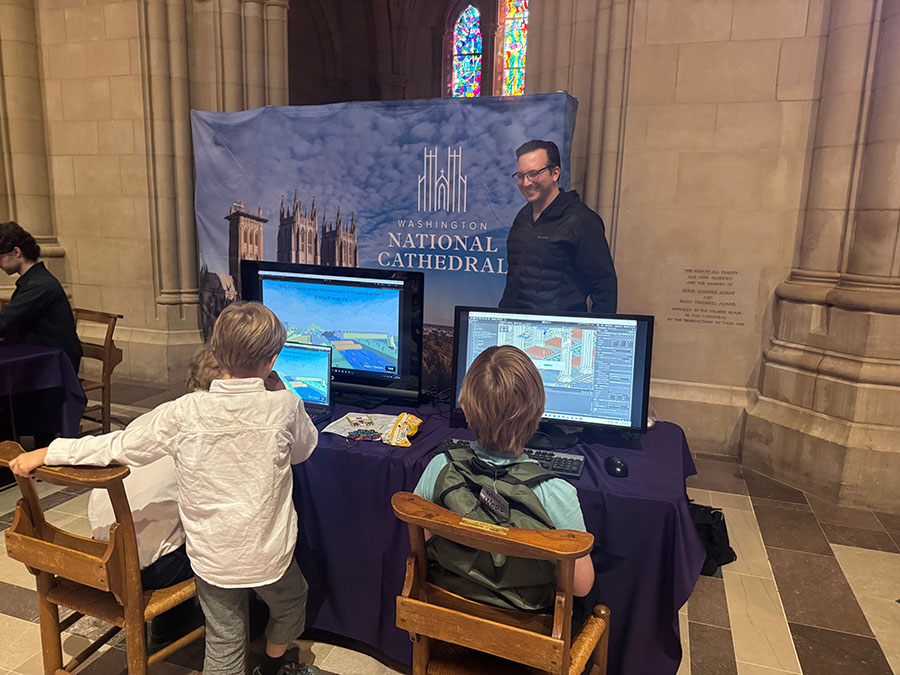 DeNavas launches game at National Cathedral’s National Acolyte Festival
I never imagined that a walk to the cathedral would turn into such a rewarding project. It's opened doors I never saw coming.
On October 10, after two years of imagining, coding, and testing, DeNavas finally got to unveil the National Cathedral Game at Washington National Cathedral's National Acolyte Festival, an annual gathering that brings visitors from across the country to the landmark.
Children lined up to play, absorbed in a virtual version of the cathedral surrounding them. DeNavas was there to watch visitors explore the world he had created.
“Seeing the look of excitement on all the kids' faces when they were playing the game was really touching for me,” he says.
Looking back, DeNavas marvels at how a spontaneous walk from AU's campus turned into a two-year collaboration with one of Washington's most celebrated landmarks.
“I never imagined that a walk to the cathedral would turn into such a rewarding project,” DeNavas says. “It's opened doors I never saw coming.”
LEGO Cathedrals and Video Games: To Read More
To read more about the history of the making of the National Cathedral Game, read the story here or at American magazine. To see the LEGO cathedral’s progress, visit the National Cathedral website.