
The Wonder of Artemis II: How Math Is Shaping the Awe-Inspiring Moon Mission
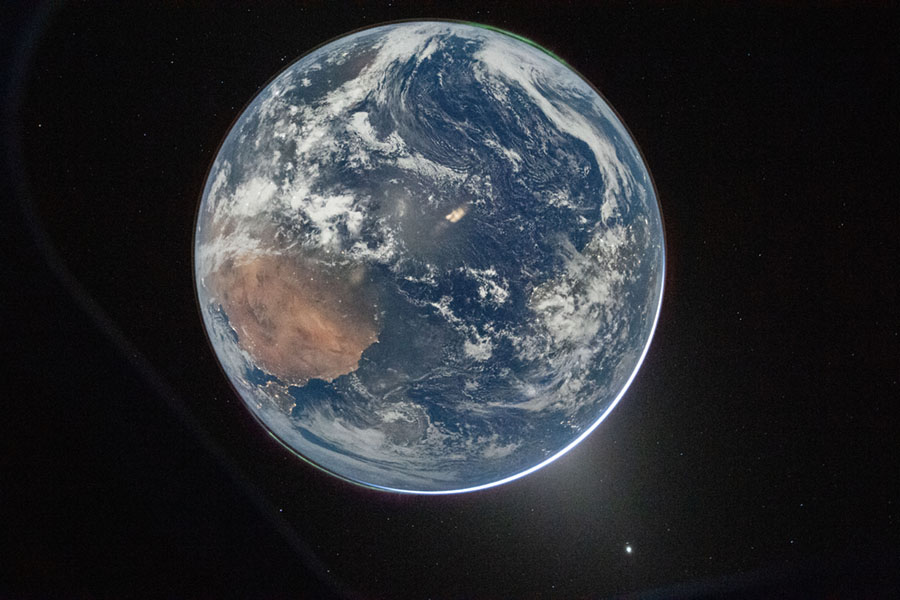 Hello World. Photo courtesy of NASA/Reid Wiseman.
As the awe-inspiring Artemis II mission carries astronauts around the Moon and back, it’s putting decades of mathematical research to the test, from the path the spacecraft follows to the signals it sends back to Earth.
At American University, that work is playing out in real time. Mathematics Professor Michael Robinson is working with a student team selected by NASA as one of just eight university teams to support the mission through a citizen science initiative. During the 10-day flight, the team has been working to track radio signals from Artemis II, contributing to an effort to understand how information travels across deep space.
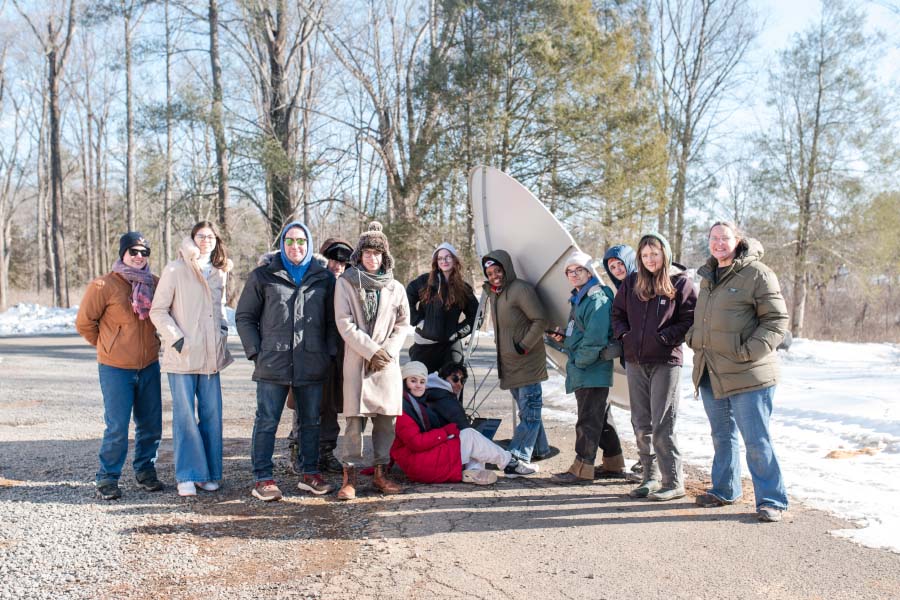 AU student team, working to track radio signals from Artemis II. Photo by Nikolai Roster.
The project connects AU’s Departments of Physics and Mathematics and Statistics with NASA’s DC Space Grant Consortium, linking students to a historic moment in space exploration.
As the mission unfolds, Robinson helps break down the math behind Artemis II and what it means for students getting a rare chance to be part of it.
PH: As Artemis II heads back to Earth, what stands out to you as the most remarkable part of this mission?
MR: I am super excited that we’re once again sending people beyond low Earth orbit. Using robots to explore far-off corners of our solar system has been very informative over the past few decades, and I absolutely think it needs to continue.
However, some missions benefit greatly from having people on site in deep space. There is risk involved, but it allows for the element of serendipity that is crucial for scientific discovery. Having a human in a new place, exploring a new world, allows for a much faster response time and more adaptivity than we can have with robots, even autonomous robots. Adaptivity and openness to serendipity are also essential to how we teach our students to solve hard problems facing our world.
PH: How are mathematicians collaborating with other disciplines—engineers, computer scientists, and mission planners—to make sure the math and stats pieces work seamlessly with the whole project?
MR: In both the early NASA missions and now, mathematicians are playing a key role in space navigation and communication. Artemis II is streaming live, full color, full motion video back to Earth. Moreover, the fleet of spacecraft that NASA is communicating with is much larger than before; the Deep Space Network is very busy! This feat is due to vast improvements in how we structure the codes that we use to send data. I have worked with the team of mathematicians (and my students have interned with them) whose job it is to figure out how to keep the network capacity growing.
PH: Artemis II follows a more complex path than earlier lunar missions. How does math shape that orbit, and why is it more efficient?
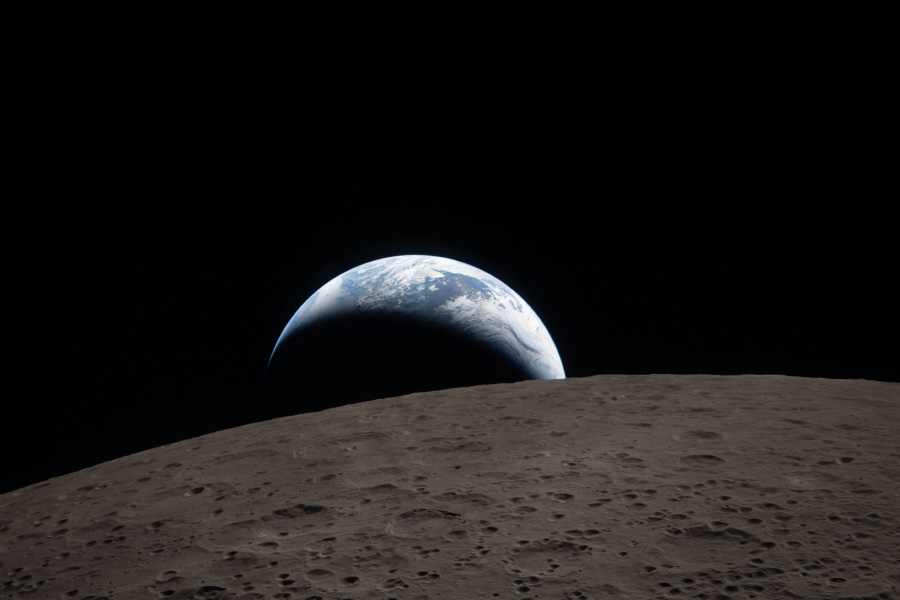
MR: Perhaps one striking thing about Artemis II from a math perspective is that its orbit is distinctly "modern" when compared to the Apollo missions. All the Apollo missions began with a nearly perfectly circular orbit around the Earth and then used a S-shaped handoff to another circular orbit around the moon. Since then, we’ve learned that circular orbits, though easy to navigate, are not fuel-efficient.
Mathematicians have discovered much more efficient paths through the solar system by using more unusually shaped curves. Using this insight, Artemis II started with one quick "wind up" orbit, followed by a really eccentric (stretched) elliptical orbit that took the astronauts quite far from the earth, and then zipped past the Earth at very low altitude (last Thursday night at about 7 p.m.) to slingshot off to the moon. This kind of orbit requires a detailed computer search to find and tune, but it has allowed us to send robots (and now people) all over the solar system more efficiently.
PH: Space missions involve a lot of unknowns. How do mathematicians and statisticians think about uncertainty and risk when planning something as complex as a crewed lunar mission?
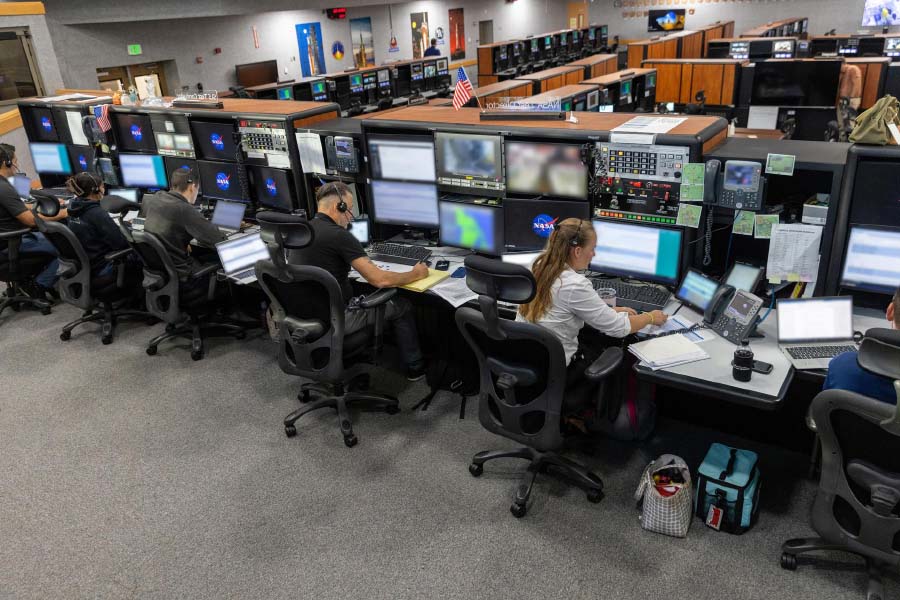
MR: Lots of simulations! There is an old, and well-worn technique called Monte Carlo simulation. To get a sense of uncertainty, you adjust all of the parameters in your model randomly and see what happens. Those parameters that are "important" get discovered, and you can put your effort into controlling them.
Right: Members of the Artemis II launch team, including personnel with NASA’s Exploration Ground Systems participate in an emergency escape simulation.
Q: What do missions like Artemis represent for the next generation of scientists and mathematicians?
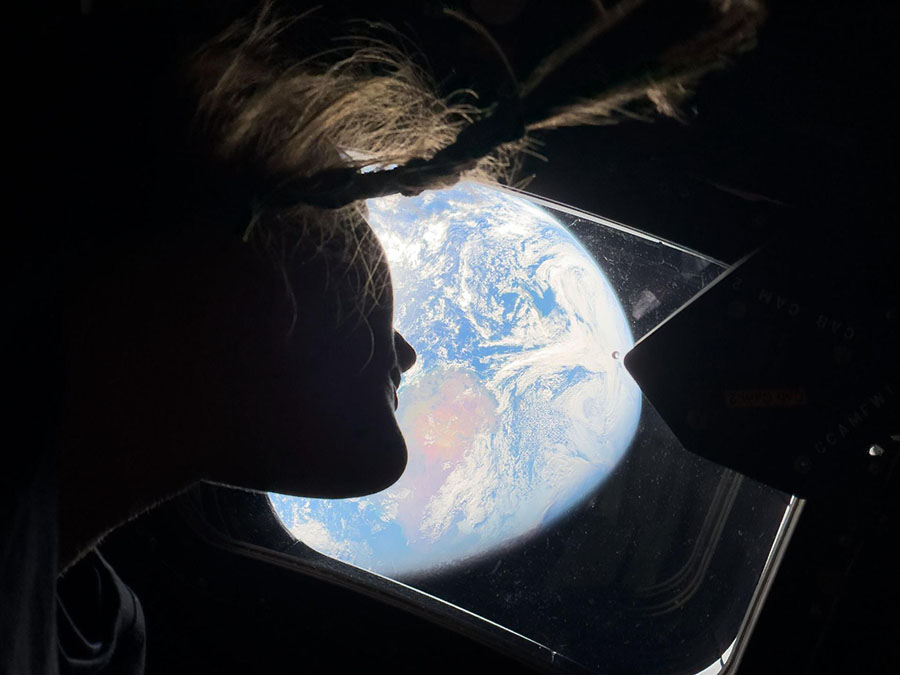
MR: They show students what is possible. We're inspiring the next generation of scientists and engineers and teaching them that they can do great things if they put their minds to it, and that they have many tools at their disposal to achieve their dreams.
Right: NASA astronaut Christina Koch peers out of one of the Orion spacecraft's cabin windows, looking back at Earth, as the crew travels towards the Moon. Photo courtesy of NASA.