
Contact Us
TESOL News
The latest TESOL Program Newsletter features updates on new TESOL students, recent TESOL Graduates, and the WATESOL Fall 2025 Conference — see more highlights below.
Student & Alumni Spotlights
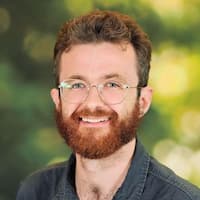
Student Spotlight: Lewis Erickson
MA TESOL student and multilingual interventionist currently working with DC elementary and middle school students.
More about Lewis

Alumni Spotlight: Ian Bonnano
English language development instructor currently working with elementary students in Prince George's County Public Schools
More about Ian
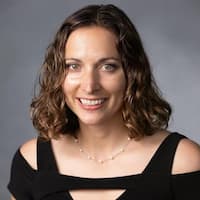
Alumni Spotlight: Jessie Ebersole
2018 MA TESOL grad currently Director of Programs at the Washington English Center in DC.
More about Jessie
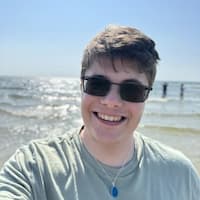
Student Spotlight: Ronald Taylor
Undergraduate TESOL Certificate student majoring in Spanish and minoring in linguistics.
More about Ronald
Life on the Job: Yuni Silvana Manik
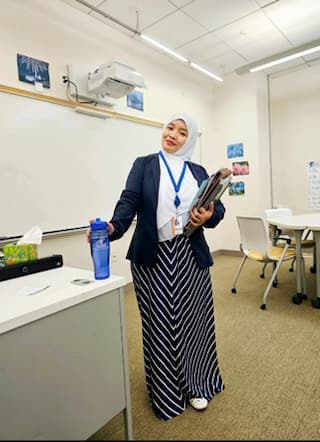
Yuni Silvana Manik is an MA TESOL student and has been teaching English since 2014. She currently works at Solutions at Hometown Connections (SHC) and Arlington Public Schools (REEP) teaching immigrants and refugees who are trying to improve their English speaking, reading, writing, and digital literacy skills. Read more to learn about her recent experiences in the field!
I currently work as an ESL Teacher at Solutions at Hometown Connections (SHC) and Arlington Public Schools (REEP). At SHC, I teach English to immigrants and refugees and primarily work with Afghan families. We focus on supporting vulnerable individuals–particularly mothers with young children–so they can develop new skills and successfully integrate into their communities. At REEP, I teach Adult ESL classes for newcomers from the DMV area, offering intensive, student-centered instruction. Both programs aim to help newcomers and refugees improve their lives through education, language learning, and life skills development.
I teach English at SHC and REEP using real-life materials, while following each program’s curriculum. At SHC, I focus on beginner reading and writing. At REEP, I teach English and digital literacy and lead a Saturday class for Spanish-speaking students, designing lessons around student-selected units and conducting midterm conferences.
More Life on the Job
For both programs, I prepare assessments, complete progress reports, attend staff meetings, and help plan field trips and cultural activities. My goal is to provide student-centered, culturally responsive instruction that supports language learning, community engagement, and helps newcomers and refugees adapt to life in the United States with confidence.
One of the challenges in my work is that some students face additional barriers, such as trauma, limited prior schooling, or limited literacy skills. To address these challenges, I carefully balance my lesson plans to keep students engaged, and ensure learners from different cultural backgrounds feel welcomed and respected. I also adjust my speaking pace when teaching at the basic literacy level so all students can follow and learn effectively.
What I value most about my work is the meaningful impact that language teaching has on others. Teaching is not just a profession for me, it is my calling. Each class brings a new story and a unique experience. Even when I use the same lesson plan, the outcome is always different because every student has their own background and motivation. The most rewarding moments come when I see students gain confidence and hope through learning. I will never forget one student who asked me to review a letter she had written to her granddaughter before returning home. Her granddaughter can speak English very well, and she wanted to be sure her message was clear and easy to understand. That simple moment touched me deeply, and it reminded me that teaching English is not just about language, but about helping people connect, express love, and find hope in their new lives.
Practicum Peek with Patrick MacMahon
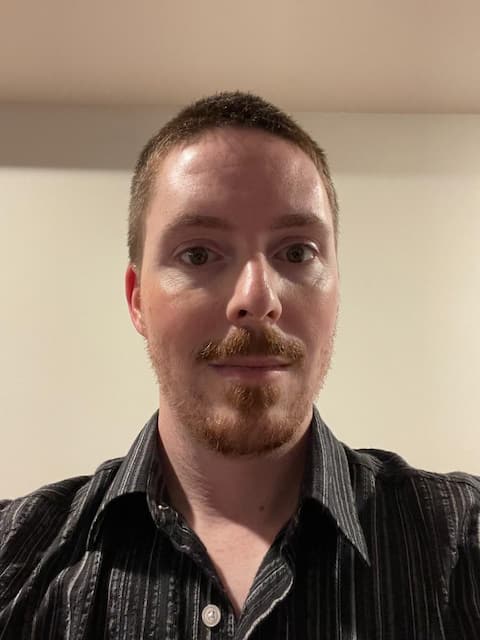
Patrick MacMahon is an MA TESOL student and AU alumnus. He is currently completing his teaching practicum requirement at Browne Education Campus in Washington, DC, where he works with middle school ESL students. Read more to find about his thoughts on the experience.
I am an American University alumnus, having graduated from the school of Public Affairs with a BA in Law & Society in 2012. My motivation for pursuing the MA TESOL degree was sparked after I was stationed in Japan while serving in the United States Navy. I saw AU’s TESOL program as a pathway to potentially teach English in Japan or to teach elsewhere overseas.
As part of my practical teaching component, I have been placed at the Browne Education Campus, which is a combined elementary and middle school in the Washington, DC Public School system. I have been shadowing and observing ESL teacher, Rebecca Wilner, who is also an alumna of AU’s MA TESOL program (2009). This semester, I have been working with predominantly 6th and 8th grade middle school students in small-group settings, as they continue to develop their English proficiency.
More Practicum Peek
All the ESL students speak Spanish as their L1 and come from mainly Spanish-speaking home environments. The students I have been observing are preparing to take the ACCESS exam in the spring, a DC-required assessment which students must pass to graduate from the school’s ESL program.
One interesting and surprising thing to me is how widespread technology use is at this school. The school provides each student with a personal laptop and has a login system which tracks student tasks and assignments. One of the observed benefits of this is that students can use their computers to translate their answers from Spanish to English during class assignments. My host instructor is also a fluent Spanish speaker and is able to incorporate translanguaging as she explains tasks and answers questions in both English and Spanish.
One of the challenges I have faced is managing multiple students at once. Most of my teaching experience prior to this placement has been in one-on-one tutoring sessions with adult English learners. Working with middle school students is a different setting for me, as I find myself working to not only explain tasks, but also encourage and motivate students when they start to get bored or restless. However, as my host instructor often says, motivating and helping keep the kids focused is just as important as the information we teach. I am appreciative and excited about this opportunity, and I believe that this experience at Browne Education Campus is going to help me become a more effective and capable teacher.
Undergraduate Student Spotlight: Victoria Lemon
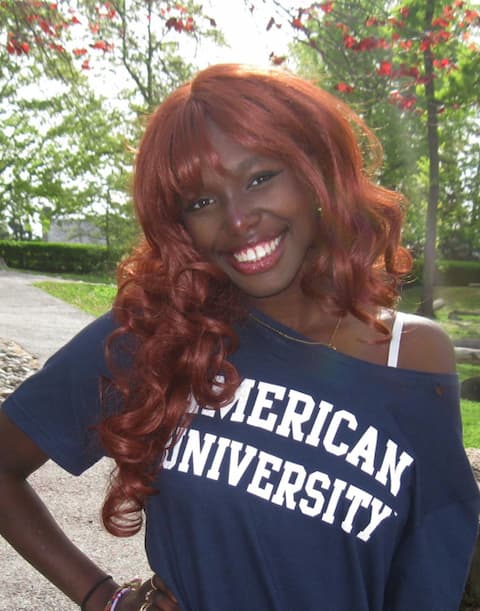
Victoria Lemon is an undergraduate TESOL Certificate student majoring in communication studies and minoring in women and gender studies. Read more to find out about her goals, interests, and thoughts on teaching!
When did you first become interested in TESOL?
I’ve actually been interested in TESOL since I was pretty young. I’ve always had this dream of living abroad, and teaching English seemed like the most realistic (and fun) way to make that happen. Plus, I’ve always loved working with kids and language classes were some of my favorites growing up.
Did you have any teaching experience before you enrolled in AU's TESOL program?
I hadn’t taught English before joining the program, but I’ve spent time shadowing elementary school teachers and working in schools, which gave me a good sense of what it’s like to work in a classroom.
More about Victoria
Are you currently teaching English? If yes, where do you teach and what is your learner population?
Not yet, but I’m planning to start working with adult learners soon, and I’m excited for that new challenge!
What are some qualities that make a good language teacher?
I think understanding and patience are key. Every learner moves at their own pace and a teacher who can meet them where they are and support them without frustration makes all the difference.
What makes a successful language learner?
I think that a language learner’s success depends a lot on their relationship with their teacher. A positive student-teacher dynamic is one where the teacher has created an open space where the learner can make mistakes and the teacher treats these mistakes as opportunities for growth. The learner is persistent, motivated, and engaged, while the teacher remains encouraging and flexible, adapting to the learners needs.
What do you plan to do after you complete the TESOL program?
After graduation, I’d love to move abroad and teach elementary students for a while. It feels like a perfect mix of adventure and meaningful work.
What interests do you pursue outside of the classroom?
Career-wise, I’m really interested in social media management and content creation. Outside of that, I love making art and reading.
Faculty Spotlight: Professor Margaret Johnson
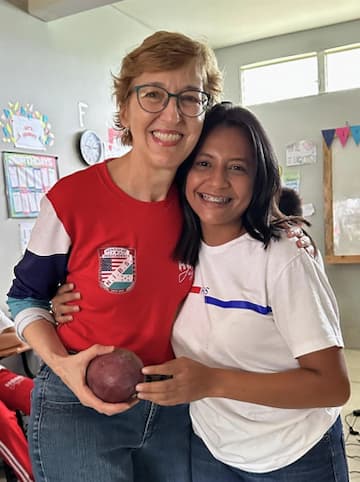
Professor Margaret Johnson is an adjunct professor at AU and an MA TESOL alumna! Read more to find out about Professor Johnson’s engagement with AU and the other projects she’s been working on.
How long have you been a member of the AU community and what roles have you filled at AU during your time here?
I first joined AU’s TESOL community as an MA student in the summer of 2016. However, since then, I have taught Academic Writing for International Graduate Students (TESL 010) and English Language Teaching 1 (TESL 401/601).
I did my practicum for my MA TESOL with Dr. Tabitha Kidwell in TESL 010. At that time, there were three sections of the course and I assisted with two of them. Then, after graduating, I taught the course myself. Over the last few years, the TESL 010 sections that I’ve taught have included a significant number of data science students, with a few students in programs such as accounting, public policy, health studies, and computer science. An important focus of the class was academic writing, but I also focused on oral presentation, which students felt was relevant to their graduate studies and to building successful future careers. Teaching this course was very fulfilling, as our class became a space for students to process their experiences as international graduate students joining the AU community and navigating new cultural and academic norms.
More about Margaret
When I taught TESL 401/601, the class consisted entirely of undergraduates, including two who ultimately minored in TESOL and two who went on to receive Fulbright Scholarships to teach English abroad. These students had diverse majors and interests and were just beginning their exploration of TESOL. Being able to introduce them to the field was so rewarding, and now, it's exciting to celebrate what they have accomplished!
Could you tell us more about the courses you’ve developed?
I've really enjoyed developing teacher training workshops in areas such as boosting student engagement, vocabulary acquisition, deploying Cuisenaire Rods in the ELL classroom, and materials design. I have been able to work with teachers serving an adult ESL population here in DC and also with teachers at a bilingual K-12 school in Honduras, where I have gone for the past four summers to do intensive EFL teacher training.
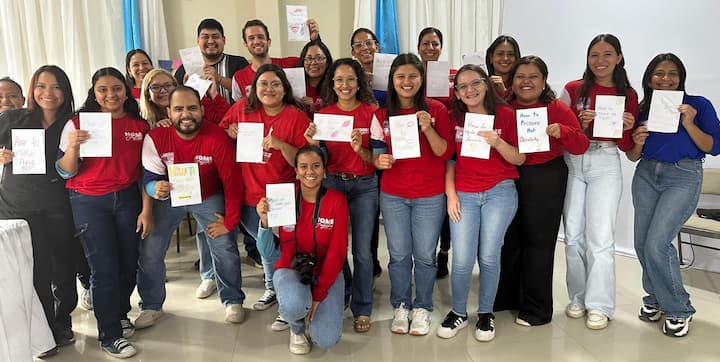 Teacher trainees at Honduras Independence Bilingual School.
In addition to teaching, you also engage in research and scholarship. What have you been researching recently?
I have several areas of research. The first is the role of culture in language teaching and learning. One of my recent projects was a systematic review of research on language teachers’ intercultural knowledge, competencies, and beliefs, which will be published by Springer in the Handbook of Language Teacher Education. I’m also currently working with a colleague in Indonesia to research how developing digital stories in a collaborative online international learning program could help students develop intercultural competence. My second area of research is language teacher educators’ professional development. A recent project builds on some consulting work I’ve done with the U.S. Department of State to offer training programs to TESOL professionals participating in the English Language Fellow Program to teach internationally for a year.
What are you looking forward to in the upcoming year? I'm excited about expanding my action research project on Literature Circles using flash fiction. I have implemented Literature Circles for the past several years with adult English language learners online and hope to expand to in-person groups and to the K-12 school I work with in Honduras, both for students and for teachers. I also helped edit a handbook for individuals with type-1 diabetes, and I hope to collaborate with the author to create a nutrition/diabetes prevention curriculum to use in schools in Honduras.
What are your interests or hobbies outside your work?
I have a bilingual rescue "sato" dog from Puerto Rico and my family and I love hiking with him in Battery Kemble and on the Little Falls Trail.