
MA Student Spotlight: Lewis Erickson
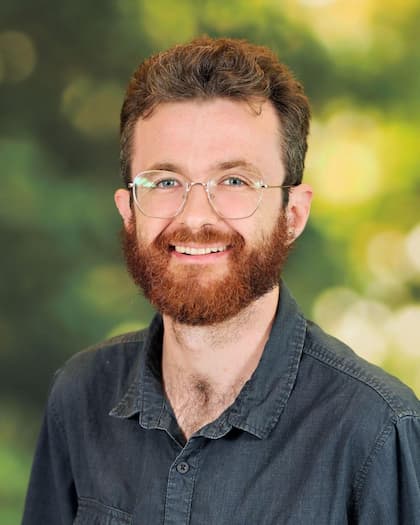
Lewis Erickson is an MA TESOL student and multilingual interventionist currently working with elementary and middle school students in Washington, DC. Read more to find out about his time at AU and his perspectives on teaching!
When did you first become interested in TESOL?
I majored in global studies in college because I was interested in humanities subjects and liked learning about global issues, but I wasn’t really sure what I wanted to do with my life. I tried a lot of different things! During my junior year, I tutored English for extra credit in a college class. I was surprised by how unprepared I felt, but I still really enjoyed it, so I started looking into the TESOL field.
Did you have any teaching experience before you enrolled in AU's TESOL program?
After college I got a CELTA certification and taught abroad in Korea during the pandemic. I really enjoyed working with kids and helping them find their voice in English. Long story short, I’ve been teaching ever since. I’m an English language teacher at a local DC elementary and middle school now.
Are you currently teaching English? If yes, where do you teach and what is your learner population?
I work at the Inspired Teaching Demonstration School in DC. We have around 500 students from PreK-3 to 8th Grade and 75 of our students speak another language at home. Personally, I have around 35 students on my caseload. I teach students from first to eighth grade, so I have to code switch a lot. I like how I can help an eighth grader write their social studies essay during my first period and then teach phonics to a first grade class during my second period. It keeps me focused!
What are some qualities that make a good language teacher?
In my opinion, a good teacher needs to be perceptive. You can learn a lot by listening to your students and watching them in class. The more that you can pick up on your students’ strengths and weaknesses, the more that you can create lessons that focus on the needs of each student. It’s also a scary time for our students, so being aware of their emotional and psychological needs is equally important. Many of our students really need someone they can talk to.
A good language teacher should also be able to do research. English language teaching has a lot of levels; you could be teaching beginner English to elementary school children or you could be teaching academic English to graduate students, so preparing means researching your student body and their needs. The more that you can research beforehand, the easier it is to create lessons that your students find engaging.
Finally, I think a good language teacher should be able to explain grammar well. I remember when I was volunteering in college, students would ask me all kinds of grammar questions that I didn’t know the answers to. Since then, I’ve been a little obsessive about making sure that I know the grammar and I’m prepared for whatever questions students might have.
In your opinion, what makes a successful language learner?
A successful language learner is willing to take risks. Learning a new language can be intimidating and many students are really afraid to make mistakes (I know I was when I was in high school!). One thing that Professor Knowles brings up a lot in our TESOL classes is how important it is for our students to practice speaking and writing, even if they are not perfect.
What do you plan to do after you complete the TESOL program?
Right now, I’m just excited to relax. I’m a full-time teacher and a full-time student so there are a lot of days where I leave my house at 7:00 in the morning and get home at 9:30 at night.
In the future, my dream is to run a K–8 newcomer program and use that position to help support other ELL programs across DC. There are a lot of schools that do not have procedures in place to support their newcomers, which means that many ELL students never catch up to their classmates and get referred to special education services incorrectly.
What interests do you pursue outside of the classroom?
Recently I’ve been listening to a lot of bluegrass singers like Billy Strings. I’ve also been meaning to practice the banjo and mandolin, but I’m very busy with work and school. I hope I have more time when I finish this program!