Stay up-to-date
Be the first to hear our new episodes by subscribing on your favorite podcast platform.
Like what you hear? Be sure to leave us a review!

School of International Service on a map
4400 Massachusetts Avenue NW Washington, DC 20016 United StatesIn this new episode of Big World, SIS professor emeritus Philip Brenner joins us to discuss the politics behind the capture of Venezuelan President Nicolás Maduro and how it connects to the growing crisis in Cuba.
Brenner kicks off our episode by contextualizing the close alliance between Venezuela and Cuba (1:54) and the history of U.S. relations with both nations (4:31). Brenner also explains what was happening in the months leading up to the United States’ capture of Maduro and why the Trump administration was pressuring Venezuela to cut off oil to Cuba (9:23).
Does the capture of Maduro fall within the bounds of international law? (11:02) How has the ongoing oil embargo fueled a humanitarian crisis in Cuba? (12:43) Brenner answers these questions and considers the Trump administration’s current approach to U.S.-Cuba relations (16:47) and where Cuba’s political future stands (19:54).
0:07 Madi Minges: From the School of International Service at American University in Washington, this is Big World, where we talk about something in the world that truly matters.
0:16 Philip Brenner: The reason Cuba is in so much difficulty now is because the United States is not only preventing the Venezuelan oil from going to Cuba, it's trying to prevent any oil from going to Cuba from other countries as well. The consequence for the people in Cuba has been quite devastating. Everything is falling apart because of this oil embargo.
0:36 Madi Minges: That was professor emeritus Philip Brenner. He joins us today to help make sense of the recent flurry of headlines surrounding Venezuela, Cuba, and the United States.
0:49 Madi Minges: The United States has a long history of both overt and covert intervention in Latin America. Most recently in January 2026, US Special Forces captured Venezuelan president Nicolas Maduro and his wife, Cilia Flores. This event and its aftermath has not only had an impact on Venezuela, but on one of the country's closest allies, Cuba. In today's episode, we're discussing the state of US-Cuba relations, the significant humanitarian impact on Cuba since Maduro's capture, and what oil has to do with all of this. I'm Madi Minges and I'm joined today by Philip Brenner. Philip is an SIS professor emeritus whose expertise includes US-Cuba relations, US-Latin America relations, and the Cuban Missile Crisis. Here is our conversation. Philip Brenner, thank you so much for joining Big World and welcome to the show.
1:52 Philip Brenner: My pleasure. Thank you.
1:54 Madi Minges: Philip, we want to take some time today to talk about some of these headlines that we've been seeing about Venezuela, about Cuba, about the US, and specifically talk today about some of the aftermath of the capture of Venezuelan president Nicolas Maduro. For people who are just trying to make sense of all of this, make sense of the headlines, can you maybe help to situate us and provide the context of why Cuba and Venezuela are so closely linked in the first place?
2:30 Philip Brenner: In 1998, there was an election in Venezuela when Hugo Chavez was elected president. And his ambition was to improve the lives of the bulk of Venezuelans. To give you a sense of this, at the time, Venezuela was the richest country per capita in Latin America. The per capita income of Venezuelans was $5,000 a year. But of that population, half of the people lived on less than $700 a year. And so you can see the enormous inequality that existed in that country. This was what Hugo Chavez aimed to change, to distribute wealth. And he wanted to do this with the oil wealth of the country. There was a state owned PDVSA that existed. Now, much more control went to the government, less to the profits of the company. And he began to distribute that oil to other countries in the hemisphere and to use some of the oil wealth to improve the lives of ordinary Venezuelans.
3:44 Philip Brenner: One of the ways he did this was linking up with Cuba. Cuba had an extraordinary healthcare system, and it had sent doctors all over the world to help people. Cuban doctors now then began to go to Venezuela. 40,000 Cuban medical personnel went to Cuba to help provide basic healthcare, but also to give Venezuelans eyesight. A million Venezuelans who had been blind gained their eyesight because of Cuban doctors. So this was an enormous benefit for Venezuelans. In turn, Cuba got subsidized and almost free oil. And that became the basis of the relationship between the two countries.
4:31 Madi Minges: Turning now to the United States, US-Cuba relations have had a long history of tension and tumult, and the US relationship with Venezuela has been similarly fraught. Can you get us up to speed on and provide us maybe some context about what US interaction has historically looked like with both Venezuela and Cuba?
5:01 Philip Brenner: So we can go back a long time to 1898. At that point, the Cuban rebels fighting against Spanish colonialism were about to win their independence when the United States intervened and claimed it was giving independence to Cuba, famous Teddy Roosevelt riding up San Juan Hill. We then imposed on Cuba a military rule for four years. And as a condition for our leaving the island, we insisted that they put into their constitution something called the Platt Amendment. The Platt Amendment specified that the United States could intervene in Cuba anytime it wanted for whatever reason. And over the next 30 years, the United States did intervene to impose governments that were favorable to US economic interests. By 1933, US corporations controlled the Cuban economy, the Cuban banks, Cuban railroads, Cuban sugar. Basically, all of Cuba was owned by the United States.
6:07 Philip Brenner: And at that point, there was a revolution in Cuba. New government came in that we then manipulated to have, favorable to our...continuing to our interests, but it was less repressive. In 1940, they had Democratic elections. Over the next 12 years, there were elections. But those were corrupt governments, and again, favored the United States. 1952, Batista, who had been elected in 1940, staged a military coup. And for the next seven years, there was a brutal dictatorship there, but it also opened up Cuba to the mafia and continuing US interests. The revolution in 1959, led by Fidel Castro, was intended to break that relationship, that relationship of dependency on the United States, the corruption that existed, the imposition of US extracting wealth from Cuba. And that became an immediate source of tension to the United States. We essentially lost what we called our pearl of the Antilles.
7:19 Philip Brenner: By 1960, we had organized a plan to overthrow the Cuban government. We began to have assassination attempts against Fidel Castro. The CIA has recorded six attempts. The Cuban government claims many more. In 1961, there was the Bay of Pigs invasion that we sponsored with Cuban exiles. We then had the largest CIA operation we ever undertook until that moment and until Afghanistan, actually, called Operation Mongoose, intending to overthrow the Cuban government. And so a range of things we've done over the years to try to overthrow this government that we didn't think served our interest. It's not that they had ever done anything bad to the United States. They simply didn't want to be dominated by the United States. One way we tried to do this was with an embargo, by essentially closing off the Cuban economy.
8:24 Philip Brenner: In 1996, that embargo got tightened even more with something called the Helms-Burton law, which attempts to prevent other countries from investing in Cuba. And it's that law that still governs US-Cuban relations today. And so the goal over the last 67 years has been strangulating Cuba as a way of encouraging Cubans to rebel against their own government.
8:55 Madi Minges: Thank you so much for providing all of that context for this conversation. I think it really helps to situate us as we think about this current time that we're in. I'm curious if you could just briefly get us up to speed under this second Trump administration. What were some of the things that were going on leading up to the US's capture of Maduro?
9:23 Philip Brenner: When President Trump came into office in January 2025, he began to go after Venezuela with the idea that if you could cut off Venezuelan oil, that would damage Cuba. Cuba was the big prize. And partly this was because of Secretary of State, Marco Rubio, who his parents came from Cuba. Secretary Rubio was born in the United States. His parents came to the United States in 1956 before the Cuban Revolution of 1959. And he has long championed the overthrow of the current Cuban government. So the thought was if you could get rid of Venezuelan oil going to Cuba, you could hurt Cuba enough that there would be an ability to overthrow the regime there. That was the initial idea. And Venezuela resisted and continued to sell oil to Cuba.
10:23 Philip Brenner: There was continuing pressure. President Trump then sent an emissary to negotiate with Venezuela with the hope that by removing the President Maduro from office, there would be someone more pliable. Maduro refused to leave office. And at that point, we kidnapped him and brought him to the United States and now work with Delcy Rodriguez, who had been the vice president and is the interim president. So the goal had been attacking Cuba. That's the context of the current policy towards Cuba.
11:02 Madi Minges: Maduro has been indicted on charges of narco-terrorism, narcotics, weapons offenses in the Southern District of New York. And I think a lingering question for me as I've been reading about this situation and keeping track of the headlines, and I'm sure others have felt this way too, is how can the US do this? How can they bring a country's leader to the US to stand trial? And how does this fit within the bounds of international law?
11:37 Philip Brenner: It doesn't fit within the bounds of international law. The United States did bring Manuel Noriega, the president of Panama, in 1989. They captured him. He was then tried in Panama and found guilty. And we had said that he also had committed crimes against the United States. And we then asked the Panamanian government that replaced Noriega to extradite him to the United States, and they did. So under international law, that was a little shaky, but it fit within the bounds of international law. What the United States has done here in no way corresponds to any accepted international...kidnapping a foreign citizen to bring him to the United States, and especially a head of state, which there are previous presidential proclamations that would prevent that from happening. It creates anarchy if you allow governments to do this to one another. And so this is a terrible precedent the United States has set.
12:43 Madi Minges: Philip, to kind of bring this all back to Cuba, in the...I'm not even sure if it's accurate to say in the backdrop, it almost seems like in the forefront of all of these events, is Venezuela's oil. And you had talked about how Venezuela has had this relationship with Cuba where they were providing tens of thousands of barrels of oil a day. However, in the aftermath of Maduro's capture, Trump has declared control of Venezuela's oil and said that none of that oil will go to Cuba. Given all of this, can you talk about what the fallout has looked like for Cuba economically and socially?
13:28 Philip Brenner: Well, we have to understand that it's not only the Venezuelan oil that President Trump is now denying to Cuba. There is that, of course, and that was the largest amount. But in addition, President Trump then imposed on all other countries of the world, a prohibition on selling any oil or giving any oil to Cuba. And he promised that if a country did do that, there would be sanctions against those countries. Now, that frightened enough countries, Mexico, in particular, that had provided shipments of oil. It frightened Algeria, another country that has provided oil to Cuba. It's not clear what's happening with the case of Russia because Russia had sent some oil to Cuba, but it had sent it on a ship that was not flagged under Russia. In international law, ships are supposed to operate under the flag of a country from which they're registered. And the United States captured a tanker on the high seas that was from Russia, but it was not flagged from Russia. It wasn't registered with Russia. And so that was considered quasi-acceptable.
14:40 Philip Brenner: Now, Russia has sent two more tankers. These are tankers that in fact are registered with Russia, and the question is whether the United States will stop those tankers from going to Cuba. If they do, this is an act of war against another superpower, against another country that has nuclear weapons. And so it's escalating the danger enormously if we do this. But to come back to your point, the reason Cuba's in so much difficulty now is because the United States is not only preventing the Venezuelan oil from going to Cuba, it's trying to prevent any oil from going to Cuba from other countries as well. The consequence for the people in Cuba has been quite devastating. In Cuba right now, there is great suffering. Without electricity, there's no ability to have water pumps operate on the basis of electricity in Cuba. They don't have fuel to pick up garbage for garbage trucks to pick up garbage. So there are piles of garbage lining the streets.
15:45 Philip Brenner: When I was there in December, for example, there was a terrible outbreak of two viruses, chikungunya, which debilitates people as if it's advanced arthritis and Zika, which can kill people. Those were widespread because of the mosquitoes hovering around the garbage. Without fuel, they can't get food coming in from the countryside. Without fuel, the hospitals aren't functioning. And so they've put off something like 100,000 surgeries in the last month for people who need surgery. The only surgeries are the most vital that are being provided, but any elective surgery is not being taken care of. So a range of things. Hospital workers can't get to work. So the hospitals are short-staffed. Everything is falling apart because of this oil embargo.
16:47 Madi Minges: I guess my main question with that is, what is the Trump administration's endgame here? Who takes care of Cuba in this humanitarian crisis? How does this end? I guess that's a few follow-ups, but those are kind of the questions coming to mind for me is, what is the end game here?
17:13 Philip Brenner: So one possibility, it's very hard to know always what President Trump is thinking, but one possibility is that they think they can squeeze the country so hard that there will be an internal rebellion. This is sort of the policy that the administration has had towards Iran that has proved to be a failure, and it's proving to be a failure in the case of Cuba as well. When people in Cuba have suffered terribly in the past, what they've done is they've left the island. There was a mass migration in the 1990s during something called the Special Period after the Soviet Union collapsed and Soviet subsidies disappeared. In the last four years, about a million and a half Cubans have left the country. That's in a population of about 11.2 million people. About a million and a half people have left. That's an enormous drain. And it's not just any people, it's people in the ages of 20 to 40 who have the most skill, the most knowledge, the people who are the future of Cuba. And they're the ones who are leaving.
18:22 Philip Brenner: And so the hope that the administration has that this will lead to an uprising is a vain hope because what's much more likely is people will leave. There'll be mass migration, and the most likely place they would come would be the United States. But there seems to be some potential for negotiation. Marco Rubio said about two and a half weeks ago when he was in St. Kitts that they're not looking for regime change. What they're looking for is economic change, and they hope that down the road, there would be a regime change that would lead to more democracy. So what would that economic change look like? Well, that's everyone's guess. Already the Cuban government has brought about several different changes. It, for example, is allowing Cuban Americans for the first time to invest in Cuba, to own property, to have joint ventures with state enterprises. This is an enormous change that Cuba had resisted all of these years.
19:26 Philip Brenner: It's relaxing some of its foreign investment laws. It made the dollar a legal currency on the island. And so there have been economic changes. According to the President and Secretary Rubio, these are not enough. And so it's not clear what fully he's demanding, but that does leave room for negotiation. And apparently there are negotiations taking place.
19:54 Madi Minges: Philip, that leads me to my last question here, where recently President Trump told reporters that he says he, quote, "will have the honor of taking Cuba." And these comments come after Cuba's Prime Minister, as you mentioned, said he would open the country's government to foreign investment. With so much that is uncertain with the ongoing humanitarian crisis, with the potential for Cubans fleeing elsewhere, what right now do you think this means for Cuba's political future? What does it look like at this point?
20:34 Philip Brenner: Well, I think President Trump is often given to bravado, kind of bluffing, and that statement was that kind of bravado. There's no way that he can take Cuba. Cuba is a sovereign country. It wouldn't go lightly. It has an active military that's very well trained. And Cuba actually has a very strong militia. Back in 1980s, they created a vision of an army of all the people. They put a million people under arms at that time because of the Reagan administration threatening Cuba. They talk about renewing that effort to have an army of all the people. And I think it would be a terrible disaster for the United States to try to invade Cuba. And I don't think we have the capacity to do that right now, given our war with Iran. But beyond that, it would be a terrible tragedy for Cuban people, for the American people. So I don't think President Trump is going to do that.
21:42 Philip Brenner: So what taking Cuba means, maybe he would be satisfied if the current president of Cuba stepped down, which could be a possibility. There's a party congress that's due to happen. It was scheduled for April, and now it may happen in the next few months. It was postponed. And he is the first secretary of the party, the president of Cuba, Miguel Diaz Canel. And if he stepped down at the next party Congress and gave the first secretary position to someone else, it would also be a way of his stepping down as president of the country, and that might satisfy President Trump.
22:23 Madi Minges: Philip Brenner, thank you so much for joining this episode of Big World. It's been a pleasure to speak with you.
22:30 Philip Brenner: Thank you very much.
22:32 Madi Minges: Big World is a production of the School of International Service at American University. Our podcast is available on our website, Apple Podcasts, Spotify, or wherever else you listen. This episode was produced by me with assistance from Morgan Desfosses. If you like this episode, please leave us a rating or review. Our theme music is It was Just Cold by Andrew Codeman. Until next time.
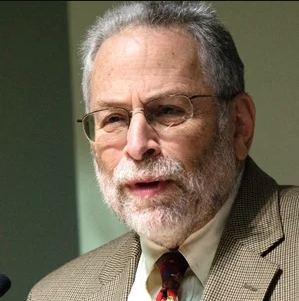
Philip Brenner,
SIS professor emeritus
Be the first to hear our new episodes by subscribing on your favorite podcast platform.
Like what you hear? Be sure to leave us a review!