
You are here: American University Baker School of Education Research at the Baker School of Education

Researcher examining data
See More

SOE Research

Research at AU's Baker School of Education
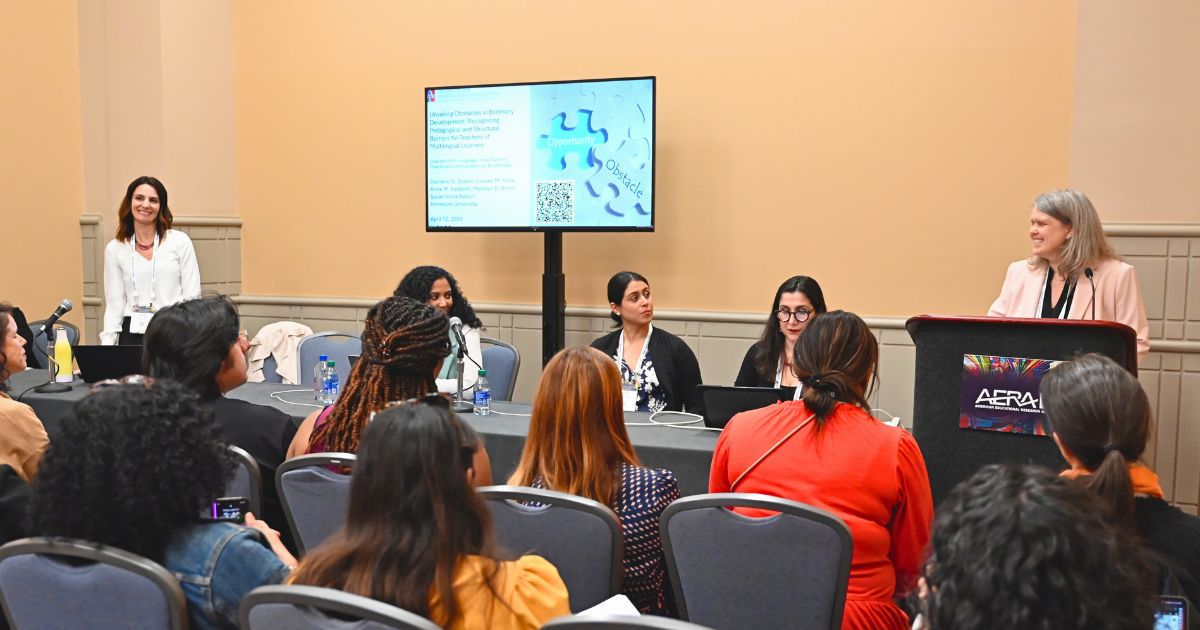
Drs. Danielle Sodani and Lauren Shea at AERA 2024.

Introduction

At the Baker School of Education at American University, we value excellence, equity, antiracism and social justice, diversity and inclusion, collaboration, and innovation. These values are integrated into the types of research our faculty members do and the sponsors with whom we choose to collaborate. The research that Baker faculty develop leads to skillful teachers, stronger schools, and a better education system to support students. 

The research team at Baker collaborates with faculty in finding opportunities, applying for awards, and managing the grant once funding is secured.

Guidance for Navigating Federal Research Policy Changes

OSARA is actively reviewing these updates alongside federal agencies and sponsors to understand their implications for your work. This guidance aims to address these developments and provide actionable steps to ensure continued compliance and operational continuity.

Research Highlights
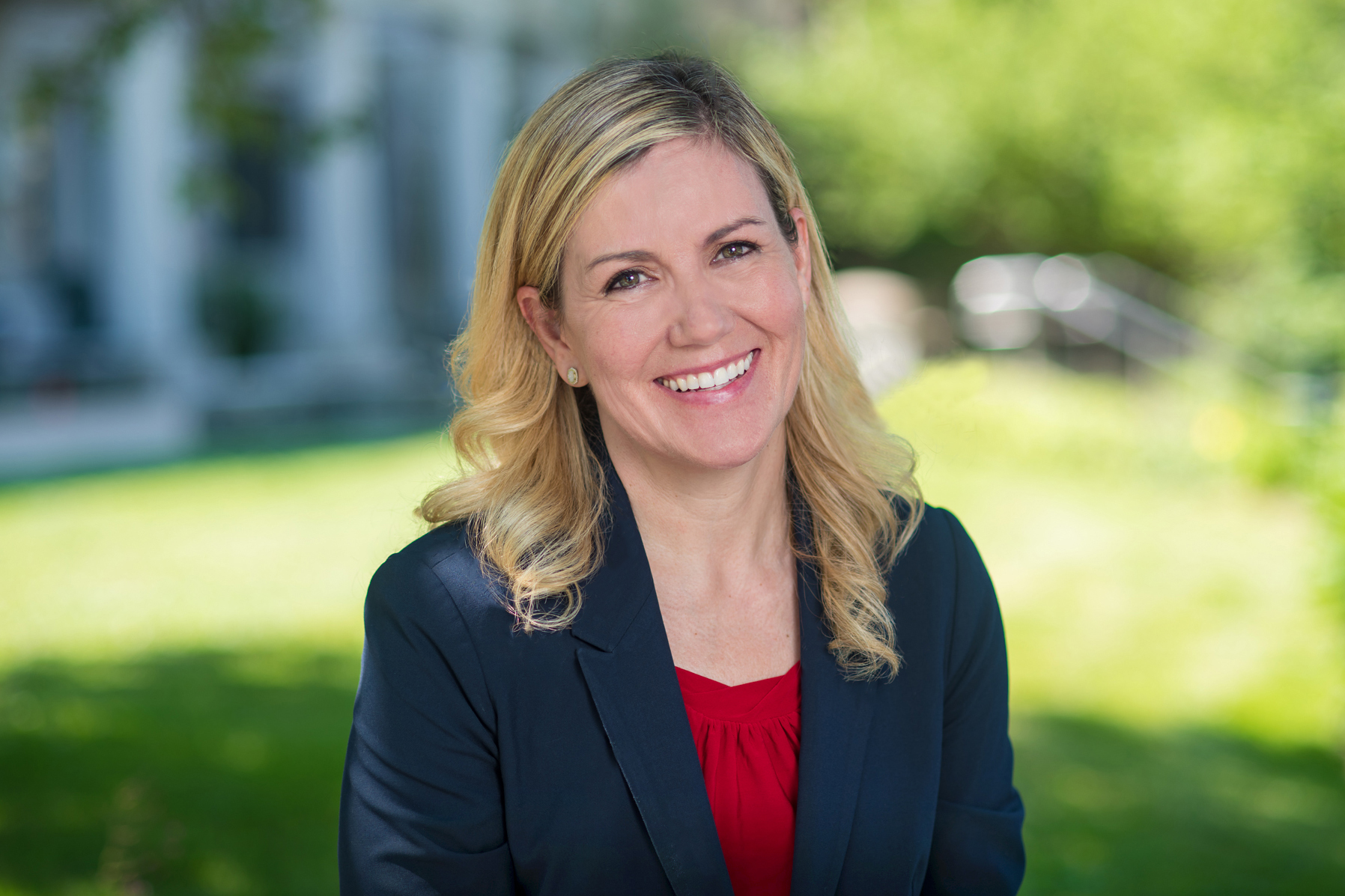
Photo of Dr. Sarah Irvine Belson

Helping Children and Educators Success

From early detection to innovative teaching, Dr. Belson is helping educators unlock the potential of every learner.
Learn More

Baker Faculty Presenting at AERA 2025

Baker Research Highlights at 2025 AERA Annual Meeting

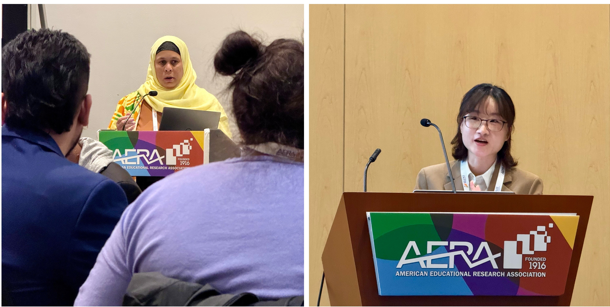
Baker had a significant representation at the AERA 2025 Annual Meeting.
Read More

Baker School Grants

Multiple Education Grants Received by Baker

The American University Baker School of Education is proud to announce six recent grants awarded to the school community.


Learn More

Research at AU

AU Research

Beginning October 10, 2025, all senior/key personnel listed in an NSF proposal or award are required to complete the Responsible Conduct of Research (RCR) training. To support faculty and research personnel in meeting this new NSF requirement, we are excited to announce that AU has integrated the RCR training into our existing training platform (Canvas). This change eliminates the need to complete the training through the NSF-hosted link and enables AU to confirm completion directly for required certifications. It also provides a more streamlined experience for all users while ensuring that completion records are centrally maintained so that records can be easily verified for proposal and award certifications.

ACTION ITEMS

If you have already completed the RCR training and have your certificate:

  • You do not need to retake the course.
  • Please email a copy of your four (4) completion certificates to osara@american.edu.
  • Please use the subject: RCR Training Completion [PI Name]

If you have not yet completed the training:

  1. Click this link to access the internal platform: https://american.instructure.com/enroll/WMXMW8
  2. Log in to Canvas - you should see the heading “Enroll in NSF Required Security Training”
  3. Click Enroll in Course
  4. Follow the prompts to begin the course
  5. Complete all four modules
  6. Screenshot each completion certificate and upload them to the corresponding training (no email required).


Faculty members can now request individualized research and proposal development support by joining our Hanover Support Queue.

Please note that this is a queue-based service. Once an opening becomes available, the Office of Research will contact you with next steps.

To participate, please click here.

Available Support Services:

Proposal Review & Revision Support

• Prescriptive feedback and edits to ensure alignment with the funding opportunity and compliance with funder requirements.

• Track changes suggesting revisions to strengthen clarity, coherence, and competitiveness of your proposal (revision only).

• Language-focused revisions addressing grammar, punctuation, and readability (revision only).

Grants Prospecting Research

• Identification of grant opportunities tailored to specific projects or broader research interests.

• Includes non-federal funders such as foundations, corporations, and fellowships/prizes.

• Available to support individual PIs, faculty teams, and research centers/institutes.

Strategic Consultation Support

• Guidance to ensure alignment with funding mechanisms and to assess proposal competitiveness.

• Support may include review of concept papers or specific aims, evaluation of fit with funders, and consultation calls for proposal planning.

  • Open Access and Faculty Incentives 

AU Library is now offering a service for AU researchers to make more of their published research open access by uploading accepted manuscripts on their behalf to the AU's institutional repository. Open access can greatly enhance a researcher's public impact by making research available, useable, and citable by practitioners, policymakers, community members, and more. Please contact Rachel Borchardt, Scholarly Communications Librarian and TRAC member, to get started with the process, borchard@american.edu. Check out a recent blog post on promotion and tenure guidelines Rachel Borchardt co-authored that emphasizes recognition of public and interdisciplinary scholarship in higher education. 


Data Rescue

If you have already downloaded government data as part of a rescue effort, please contact us at savethedata@american.edu.

Important: Please do not manipulate or work directly from the rescued data—instead, use a copy for active research purposes to maintain data integrity. 

We are in the process of working with OIT to secure temporary storage to ensure data preservation. There are many actors and institutions who are engaged in similar emergency efforts. We will assess which datasets are unique and work towards migrating them to a publicly accessible archive. We are also exploring potential partnerships to strengthen these efforts. 

 
If You Are Currently Engaged in Data Rescue Efforts  
Given the rapidly evolving nature of this situation, if you rely on government data for your research, we encourage you to download it now in case it becomes unavailable.  
Important: Please ensure you save metadata along with the data, as missing metadata may render your work unusable. 
 

If you wish to contribute to broader data rescue efforts through the Internet Archive, please refer to these resources:  

 
If You are Searching for Missing Government Data 
If you are looking for datasets that have already vanished from government websites, please visit our list of trusted repositories. This site is regularly being updated. If you know of additional resources not listed, please email them to savethedata@american.edu.
 
If You are Using Government Data in Your Courses 
If you are using government data in your classes, please notify us as soon as possible at savethedata@american.edu with details on the datasets you rely on. This will help us prioritize efforts to secure and preserve this information for instructional use.  
We appreciate your collaboration in these critical efforts. Please reach out with any questions or concerns. 
Contact: savethedata@american.edu 

NSF Webinar

Division of Research on Learning in Formal & Informal Settings FY2026 Funding Opportunities Webinar Resources

Federal Funding for High-Impact Tutoring: A Rapid Response Webinar on New EIR Grants

In this webinar recording, hosted by the Partnership for Student Success, Accelerate, and the National Student Support Accelerator, hear a high-level overview of the EIR grant opportunities released by the US Department of Education on September 12, 2025. Learn timely information on these grants, their tutoring-related priorities, and their implications for the tutoring field from Accelerate. Learn more about what the RFPs require in terms of research and quality from the National Student Support Accelerator, and hear about a past EIR grant experience from national high-impact tutoring provider, Reading Partners.
This webinar will explore the ways in which private grant makers differ from federal funders; and discuss how faculty can successfully pursue funding from these sectors. How can faculty identify private funding for their research or program needs? What does the application process look like for foundations and corporate funders, and how is it different from public grant makers? How do you engage private funder staff, particularly with funders that don’t accept uninvited proposals, and how can your institution’s foundation support you in that process? What is stewardship, and why is it particularly important with foundations and corporate funders?

Cultivating Relationships with Foundations

Unlike most federal grantmakers, foundations can be mysterious and opaque – from the guidelines they publish to the decision making process. For these reasons, cultivating relationships, and nurturing those relationships with foundation funders is paramount.In this session, we’ll cover strategies and engagement practices to successfully develop partnerships with foundation funders.

The Changing Federal Landscape and Positioning Yourself for Competitiveness

Hanover provided an overview of key changes to the federal funding landscape, including how agency guidelines, funding priorities, and grant programs have recently evolved at funding agencies. Hanover also discussed strategies for effective grant seeking and remaining competitive in today’s challenging funding environment.
Concept Development
Competitive grant proposals require compelling ideas and strong project design. Hanover delved into the mechanics of developing a strong hypothesis, and good objectives and aims to support or refute your hypothesis. Hanover discussed the anatomy of a concept paper and other ways to frame your research project concepts to potential funders.

Panmure House Prize Program

The Panmure House Prize is open to academics from all disciplines, at any career stage, and from anywhere in the world. The Prize recognises scholars whose work has the potential to create meaningful, lasting impact — reflecting Adam Smith’s belief in evidence-based inquiry. 

Due to Baker: April 14, 2026 / Application Deadline: April 28, 2026

William T. Grant Foundation - Scholars Program

The William T. Grant Scholars Program supports career development for promising early-career researchers. The program funds five-year research and mentoring plans that significantly expand researchers’ expertise in new disciplines, methods, and content areas.

Due to Baker: June 16, 2026 / Application Deadline: June 30, 2026

AO
Administrative Official

IDC
Indirect Costs

IDFRA
Internally Designated Faculty Research Account

IRB
Institutional Review Board

LOI
Letter of Intent

MTDC
Modified Total Direct Cost

MOA
Memorandum of Agreement

NICRA
Negotiated Indirect Cost Rate Agreement

NSF
National Science Foundation

OSARA
Office of Sponsored Awards and Research Administration

PI
Principal Investigator

RFP
Request for Proposals

SOW
Scope of Work
Statement of Work

TDC
Total Direct Cost

I received a Stop-Work Order. What should I do?
Email OSARA and the Baker Research Team (Carolyn Parker, Sepi Davoudzadeh). Follow the guidance set by OSARA.
I have not received a Stop-Work Order yet and want to know what to do. 
Continue working as normal. Follow the guidance set by OSARA. If you do receive a Stop-Work order, follow the directions above.

I have identified a funding opportunity. What do I do now?
Email the Pre-Awards Coordinator to schedule a meeting to talk about the process and the details of the funding opportunity. Be sure to reach out as soon as you can in order to provide enough time to prepare the budget and other documentation and to allow for the proper review and approval process. Baker requires communication to the Pre-Awards Coordinator at least ten (10) days prior to the sponsor’s deadline.

Does my proposal need internal approval?
All requests for grant funding that include a budget as a requirement to be managed by AU will require Baker and AU approval prior to submission.

What are the standard proposal documents?
Most sponsors require a proposal narrative, budget, and budget justification, but every proposal is different and additional documentation may be required. The Pre-Awards Coordinator will work with you to develop the budget and budget justification and will prepare any additional documents needed.

Does my proposal require IRB approval?
Please see the IRB Determination Tool.

Advisory Updates

Newsletter Archive

Contact Us

Sepideh Davoudzadeh
Grants & Contracts Manager
View Profile
davoudza@american.edu
 
Dr. Carolyn Parker
Associate Dean for Research, Programs, and Partnerships