
Contact Us
Don Myers Technology & Innovation Building, Room 106B on a map
Mathematics & Statistics 4400 Massachusetts Avenue NW Washington, DC 20016-8050 United StatesPlenary Talks: Speakers & Abstracts
Please use these jump links or browse the page below for capsule bios and abstracts.

Alexander G. Tartakovsky President, AGT StatConsult, Los Angeles, CA
Dr. Alexander Tartakovsky is the Founder and President of AGT Consulting (AGT StatConsult) and a world-renowned expert in sequential analysis, change-point detection, and statistical signal processing. He received his PhD from the University of Southern California and previously held senior research and faculty positions in academia, government, and industry, including appointments at the University of Southern California and the National Institutes of Health. Dr. Tartakovsky has made foundational contributions to quickest change detection theory, adaptive detection algorithms, and their applications in cybersecurity, network monitoring, biosurveillance, and quality control. He is the author of several influential books, including Sequential Change-Point Detection and Hypothesis Testing, and has published extensively in leading journals such as The Annals of Statistics, IEEE Transactions on Information Theory, and Sequential Analysis. He is a Fellow of the Institute of Mathematical Statistics (IMS) and a recipient of the Abraham Wald Prize in Sequential Analysis. He has served in editorial leadership roles for major journals, including Sequential Analysis and IEEE Transactions on Signal Processing.
Plenary Talk:Nearly Optimal Sequential Multihypothesis Tests for General Stochastic Models with Dependent and Nonidentically Distributed Observations
Abstract: We introduce several multihypothesis sequential probability ratio tests, constructed using mixture-based and adaptive one-sided sequential probability ratio tests, and establish their asymptotic optimality for both simple and parametric composite hypotheses. In particular, these procedures minimize not only the expected sample sizes but also higher moments of the sample size as the error probabilities tend to zero. They retain near-optimal performance not only in classical i.i.d. observation models but also in general non-i.i.d. settings, provided that the log-likelihood ratios between hypotheses converge completely to positive constants. These results extend Lai’s seminal 1981 work on two-hypothesis testing in non-i.i.d. models and Lorden’s 1976 results on multihypothesis testing in i.i.d. settings. Applications include space informatics (e.g., detection of space objects in images) and epidemiology (e.g., early detection of epidemics across multiple data streams).

Dong-Yun KimMathematical Statistician, NIH National Heart, Lung, and Blood Institute, Bethesda, MD
Dr. Dong-Yun Kim is a mathematical statistician at the Office of Biostatistics Research within the National Heart, Lung, and Blood Institute (NHLBI), National Institutes of Health, in Bethesda, Maryland. She received her PhD in Statistics from the University of Michigan, Ann Arbor, in 2003. Prior to joining the NIH in 2013, she held a faculty position at Virginia Tech. Her research focuses on fully sequential methods for clinical trials, changepoint inference, and statistical genetics, with current work in large NHLBI-sponsored clinical trials and intramural projects involving MRI imaging, pulmonary disease, and cancer research. She has extensive collaborative research experience across diverse fields including mobile health, bioengineering, and environmental science. Dr. Kim served as President of the Caucus for Women in Statistics and Data Science (2023) and is a member of the Board of Directors of the Korean International Statistical Society (KISS). Since 2024, she has also served as an adjunct professor in the Department of Statistics at George Mason University. In 2022, she received the Achievement Award from the Korean Women Scientists and Engineers Association for her leadership and service to the scientific community. See more at Dong-Yun KimWikipedia page.
Plenary Talk:From Theory to Decision:
A Journey with Sequential Methods in Clinical Trials
Abstract: Fully sequential methods offer a principled framework for real-time decision-making as data accrue. My journey with sequential methodology began in nonlinear renewal theory and evolved significantly after joining the National Institutes of Health. Working closely with clinical trial teams shifted my focus from asymptotic theory to practical questions: When and why should we stop? How can we allow early decisions without impacting Type I and Type II errors? What are the ethical implications?
Although sequential designs once faced barriers due to random sample sizes and concerns about early stopping, modern adaptive design and continuous monitoring have renewed their relevance. Sequential methodology embodies a philosophy of learning as we go — an approach essential for real-time adaptation, dynamic monitoring, and ethical decision-making in the era of big data and AI.
In this talk, I will discuss some of the recent developments in fully sequential methods with focus on continuous event-rate monitoring and design of two-arm trials with multi-sites whose primary endpoint is time-to-event data. I will also briefly mention practical use of sequential confidence intervals for other endpoints.

Jay BartroffProfessor and Associate Chair,
University of Texas, Austin, TX
Dr. Jay Bartroff is Professor in the Statistics and Data Sciences Department at the University of Texas at Austin, where he is also Associate Department Chair. Prior to that he was Professor of Mathematics and Vice-Chair for Statistics at the University of Southern California for 15 years. Before that he was an NSF postdoc in the Stanford Statistics Department, following his PhD at Caltech and his undergraduate degree at UC Berkeley. His research interests include sequential analysis, multiple testing, Stein’s method, and biomedical applications including clinical trial design. Jay’s research has been supported by the NSF, NIH, FDA, and NSA. His publications include a textbook on sequential methods published by Springer. In 2023 he won the 17th Abraham Wald Prize in Sequential Analysis. Jay is an Associate Editor for the Journal of the American Statistical Association, Biometrics, and Statistica Sinica. In Summer 2026 Jay will begin as Editor in Chief of The American Statistician. See more at https://jaybartroff.com.
Plenary Talk:Shortest Fixed-Width Confidence Intervals for a Bounded Parameter: The Push Algorithm
Abstract: A novel method for fixed-width confidence intervals — called the Push Algorithm — for the binomial success probability appeared in Asparaouhov's PhD thesis, and cited an unknown manuscript by Lorden. In this talk I'll discuss the little-known method, and our extension of it to any bounded parameter in a monotone likelihood ratio family. The method produces the shortest possible fixed-width confidence interval for a given confidence level, and if the Push interval does not exist for a given width and level then no such interval exists. We demonstrate it on the binomial, hypergeometric, and normal distributions with our available R package, where it outperforms the standard intervals, including the venerable z-interval in the normal case. If there is time, I will discuss sequential implications. This is joint work with Asmit Chakraborty.
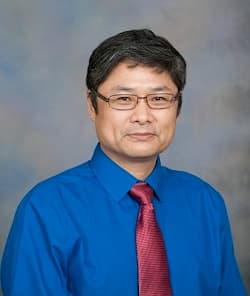
Peihua QiuDean’s Professor and Chair, University of Florida, Gainesville, FL
Dr. Peihua Qiu is a Dean’s Professor and the Founding Chair of the Department of Biostatistics at the University of Florida. He received his PhD in Statistics from the University of Wisconsin–Madison in 1996. Following his doctoral training, he served as a senior research consulting statistician at The Ohio State University and subsequently held faculty appointments at the University of Minnesota, where he progressed from Assistant Professor to Full Professor. In 2013, he was recruited to the University of Florida to establish and lead its new Department of Biostatistics. Dr. Qiu is internationally recognized for his fundamental contributions to jump regression analysis, image processing, statistical process control, survival analysis, dynamic disease screening, and spatio-temporal disease surveillance. He is the author of three books and has published over 185 peer-reviewed research articles. He is a Fellow of the American Association for the Advancement of Science (AAAS), the American Statistical Association (ASA), the American Society for Quality (ASQ), and the Institute of Mathematical Statistics (IMS), and an elected member of the International Statistical Institute (ISI). He served as Editor-in-Chief of Technometrics from 2014 to 2016 and as Associate Editor for leading journals including the Journal of the American Statistical Association, Biometrics, and Technometrics. In 2024, he received the prestigious Shewhart Medal from the American Society for Quality in recognition of his outstanding contributions to statistical science. See more at Peihua Qiu website.
Plenary Talk:Recent Advances in Statistical Process Control for Dynamic Disease Screening and Spatio-Temporal Disease Surveillance
Abstract: Statistical process control (SPC) charts are powerful tools for sequential monitoring of data streams. In this talk, we present recent SPC concepts and methods developed for two important healthcare applications. The first application involves disease screening for individuals based on sequential monitoring of disease-related risk factors. In this setting, the distribution of risk factors can evolve over time even for disease-free individuals, leading to dynamic, serially correlated observations that are often irregularly spaced. Such features violate the assumptions underlying conventional SPC charts, motivating the development of new methods. The second application focuses on spatio-temporal disease surveillance, where disease incidence rates are collected sequentially across multiple locations. Detecting disease outbreaks in this setting is challenging due to evolving distributions over space and time, spatio-temporal dependence, and other complex data structures. Over the past decade, our research group has developed a series of SPC concepts and methods tailored to address challenges in these healthcare applications. This talk will provide an overview of these recent developments and highlight their practical implications for modern disease screening and surveillance.