
You are here: American University Washington Semester Program Engaging Coursework

Coursework Your VIP Pass to DC
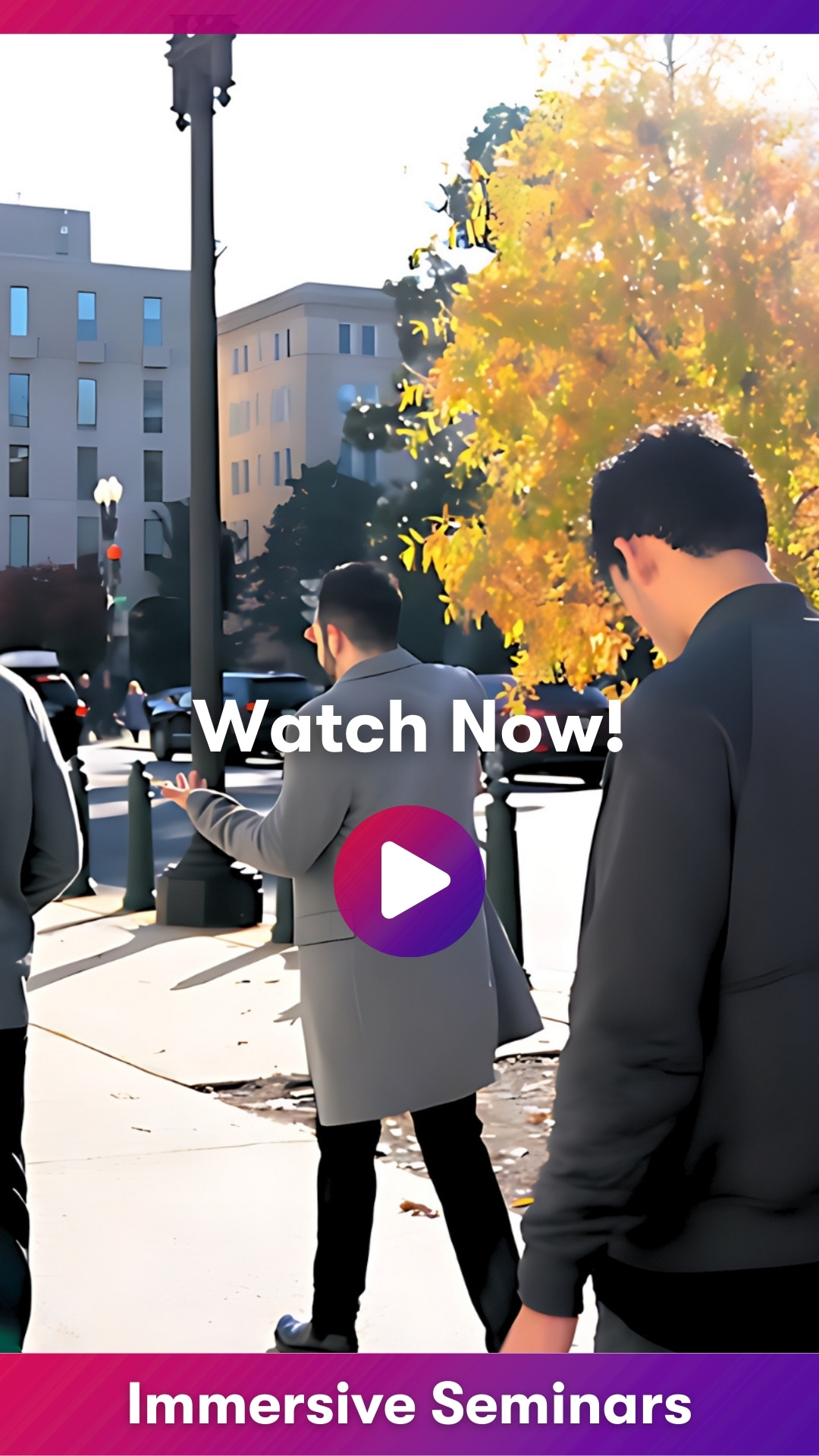
Immersive Seminars | Play button to play video | Students walking to one of 15+ site visits and guest speakers on a fall day

Immersive Seminars

The Washington Semester Program is distinguished by its signature seminars. These non-traditional classes move learning beyond the classroom, immersing students in the Washington, D.C., community through direct engagement with organizations and professionals.

Each fall and spring semester, students participate in more than fifteen site visits and guest speaker sessions, connecting directly with influential leaders, key decision-makers, and experts from global, national, and local organizations. These experiences provide students with unique access to renowned D.C. professionals and institutions while bringing course concepts to life through real-world interaction.

Site visits include:

  • Capitol Hill
  • State Department
  • Supreme Court
  • The World Bank
  • House + Senate Committee Meetings
  • Hudson Institute
  • United Nations
  • American Enterprise Institute
  • Google
  • Cato Institute
  • World Embassies

Credit Options

The traditional Washington Semester Program schedule includes two seminars, one internship course, and a three-day-per-week internship, with the option to add elective courses (with home university approval). WSP also offers the flexibility to tailor this structure to align with students’ academic requirements and internship commitments.

Most WSP students enroll in 12-15 credits:
 

12 vs. 15 credit options
12 Credit Option 15 Credit Option
Internship Course (4 credits) Internship Course (4 credits)
Seminar (4 credits) Seminar (4 credits)
  Elective (3 credits)


Part-time credit options are also available starting from a total enrollment of four credit hours. The specific course(s) selected under this option are determined by students in accordance with their home institution’s WSP participation requirements.

Fall + Spring Courses

This course provides structured support throughout the Washington Semester Program, helping you develop essential skills and strategies to succeed in your internship and future career.

Course Features:

  • 4–5 group sessions + optional 1:1 meetings
  • 4 credit hours
  • Hybrid modality
  • Awards academic credit for internship work
  • Contains content about professional skills including communication, workplace etiquette, problem-solving and DEI

2025-26 Seminar Offerings:

  • U.S. Presidency
    Do executive orders undermine democracy? Should the president be limited to two terms? May the president pardon himself? In this course, we will take an in-depth look at the presidency from three complementary perspectives. First, we will undertake a broad, historical overview of the institution and the men who have served as president. Second, we will examine classic political science texts to track the evolution of our understanding of the job. Third, we will conduct an in-depth analysis of key issues facing the modern chief executive, and then discuss how recent presidents have handled them. 
  • International Peace + Security
    The course will introduce students to the major concepts and issues currently shaping the fields of international peace, conflict and security studies. In this course, students will analyze a variety of contemporary conflict issues and challenges to peace to gain a better understanding of the threats that states and communities face in the 21st century. Over the duration of the semester students will explore key challenges to peace and the main strategies for responding to conflicts and learn how to recognize and critique the assumptions upon which these strategies rest. The topics include classic security concerns ranging from causes of violent conflicts to terrorism, but also a broad range of extended challenges to human security including topics related to environmental, health, gender, and resource security.
  • Criminal Legal System: Mass Incarceration and Racial Disparity
    This course will explore the roots of mass incarceration and racial disparity in the Criminal Legal System. The course will critically analyze policing that precedes incarceration, and recent calls for defunding the police. Students will learn the intersections of public law and how it impacts the way society is policed and has led to a massive increase of those incarcerated particularly of underrepresented racial and social identities. Students will discover the foundations of rioting historically and recently that challenge the underpinnings of how our society has its laws enforced.
  • Globalization in Crisis
    This course explores business, legal and institutional policy issues arising in the interdependent global economy. The class discussions focus on current events and academic and policy research on international actors including multinational firms, civic groups, states, and international organizations. The weekly topics include growing inequality, the COVID pandemic, the infodemic, vaccine nationalism, climate change, economic and sustainable development, taxing and regulating big tech and big pharma, financial crises, trade protectionism, a rising China, clean and affordable water as a human right, and corruption. In the class sessions, we will concentrate on globalization’s complex problems and analyze the policy solutions.
  • U.S. Public Policy
    This course focuses on practical politics in Washington, DC. It applies public policy models and theories to current debates over the environment, immigration, economic policy, and more. Students learn primarily through assigned readings, documentaries, and meetings with policy experts.
  • Political Communication
    This course focuses on the intersection of politics, media, and strategic messaging. The course will analyze recent domestic and international events, exploring how communication influences political behavior and policy outcomes. Students will investigate how political messages are crafted, delivered, and received by different audiences. Topics include campaign communication, media framing, crisis communication, digital strategy, speechwriting, and public opinion. This course will be of interest to students in public affairs, political strategy, and media relations.
  • Re-ordering of US Foreign Policy

    This seminar examines the transformation of U.S. foreign policy under the revival of “America First” as a guiding doctrine. Moving away from post-Cold War emphases on alliances, multilateralism, and “international liberal order” maintenance, the Trump administration’s National Security Strategy prioritizes the Western Hemisphere, border security, migration control, economic competition, and transactional diplomacy. It deemphasizes ideological rivalry, downgrades alliances, and shifts attention from global powers such as China and Russia, while foregrounding sovereignty, bilateral leverage, and domestic resilience. The course explores whether “America First” represents a temporary disruption or a structural shift, and analyzes its implications for Asia, Europe, the Middle East, Africa, and global governance, with students assessing its impact on diplomacy, security priorities, economic statecraft, and crisis management.


WSP students may add an elective from the AU course catalog, providing the opportunity to engage with the broader AU student community while earning credits toward their specific graduation requirements. Elective course enrollment requires approval from students' home institutions.

Review the course catalog and consult your WSP advisor for eligibility.

Business students can tailor their WSP experience by taking business courses at American University’s Kogod School of Business and completing a business-focused internship alongside their WSP seminar(s) and internship course.

Students can choose one seminar with two business electives, or two seminars with one business elective, alongside their internship course.

Business courses are available in the following subject areas:

  • Accounting & Taxation
  • Finance & Real Estate
  • International Business
  • Information Systems & Technology
  • Management & Entrepreneurship
  • Marketing

Consult your WSP advisor for questions and how to participate. 


Summer Courses

The summer internship course combines hands-on career readiness training with 4+ site visits to top Washington, D.C. area organizations.

Course Features:

  • 3 credit hours
  • 4+ site visits and guest speakers from a range of DC organizations
  • Career readiness class content on goal-setting, communication, diversity, project reflection, and coaching

  • Internship course tracks available in Health Policy, Politics and Law, and International Policy